Transcaucasian Birch Care (Betula medwediewii)

Transcaucasian Birch

About Transcaucasian Birch

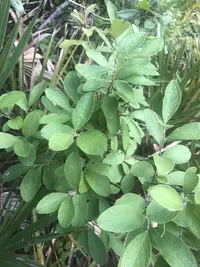
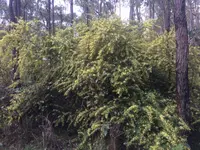
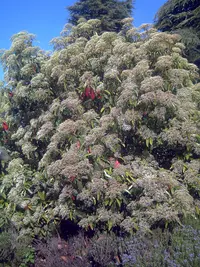
Transcaucasian birch, Betula medwediewii, is a deciduous ornamental tree or large shrub known for its dense, rounded crown and attractive peeling bark. The foliage is typically broad, glossy, and turns warm yellow tones in autumn.

This species is native to the Transcaucasus region, where it grows in cool, moist mountain environments. It is generally hardy but can be slower-growing and needs consistent moisture, which slightly raises the difficulty level for beginners.

Gardeners who care for Transcaucasian Birch should note its preference for cool climates, moderate light, and evenly moist, well-drained soil to keep it healthy and stable in the landscape.

Main Plant Requirements

Care Difficulty

Moderate Care

Light Preference

Full Sun

Water Requirements

Regular Water

Temperature Preference

Cold Hardy

Hardiness Zone

5–7

Soil Texture

Loamy, Clay, Organic-rich

Soil pH

Acidic (5.5–6.5), Slightly acidic (6.5–7.0)

Soil Drainage

Moist but well-drained

Fertilization

Minimal (feed rarely)

Get Personalized Care Plan

Scan your plant to receive care tips personalized for your specific plant

Available on iOS and Android

How to Care for the Transcaucasian Birch

This species prefers cool climates with consistent light but benefits from some protection from harsh afternoon sun.

  • Provide 4–6 hours of direct morning sun with light dappled or filtered shade in the afternoon, especially in warmer regions, to reduce leaf scorch risk.
  • Allow partial shade (bright, open shade or high, thin canopy) in hotter zones; in cooler areas, Transcaucasian Birch tolerates near full sun if soil stays evenly moist.
  • Watch foliage: pale, sparse leaves and weak new growth suggest too little light, while crisped leaf edges or bronzing indicate excessive sun exposure.

This birch prefers evenly moist, cool soil and is sensitive to both drought and prolonged saturation.

  • Check soil 5–7 cm deep; water only when this layer feels just slightly dry, allowing water to soak deeply into the root zone rather than frequent shallow watering.
  • Use a free-draining, loamy soil with organic matter so excess water moves away quickly yet the profile still holds consistent moisture for Betula medwediewii roots.
  • In summer, monitor more closely during hot, windy spells for wilting or curling leaves, while yellowing foliage, algae, or a sour smell around roots suggest overwatering.

This hardy birch is adapted to cool temperate climates with cold winters and mild summers.

  • Ideal growing temperatures during the active season are around 55–75°F (13–24°C), with steady soil moisture helping the tree handle short warm spells.
  • The tree tolerates winter lows near -20°F (-29°C) once established, entering dormancy and shedding leaves to withstand prolonged cold.
  • Extended heat above 86°F (30°C) can stress foliage; provide mulch to cool roots and avoid planting in heat-trapping sites such as south-facing walls or paved areas.

This species handles a wide humidity range but grows best with moderate ambient moisture.

  • Target 40–60% humidity, which suits outdoor conditions in most temperate gardens.
  • Tolerates brief dry air but prolonged hot, very dry winds can cause leaf browning at edges and earlier leaf drop.
  • Increase humidity around Transcaucasian Birch in exposed sites with mulch over the root zone and nearby underplanting to reduce moisture loss.

This birch prefers consistently moist, deep, fertile soil with ample air around the roots.

  • Use a loamy soil structure enriched with organic matter such as compost or well-rotted leaf mold for moisture retention and nutrients.
  • Ensure free drainage; soil should stay moist but never waterlogged, so avoid heavy, compacted clay that holds standing water.
  • Aim for slightly acidic to neutral pH, roughly 5.5–7.0, to support nutrient uptake and overall Betula medwediewii care.
  • Improve aeration and drainage by working in coarse sand or fine grit alongside organic matter, particularly in denser native soils.

This species can be grown in large containers for some years, but it is better suited to open ground long term.

  • Choose a broad, heavy container that resists tipping as the canopy becomes wider and catches wind.
  • Select a deep pot that allows a spreading root system rather than a tall, narrow one that concentrates roots at the base.
  • Use a thick-walled or insulated container material to reduce temperature and moisture swings around the root zone.

This slow-growing birch benefits from light, balanced feeding rather than heavy fertilization.

  • Apply a balanced slow-release fertilizer (for example 10-10-10) once in early spring as new growth starts.
  • Use a low to moderate rate, or half the label recommendation, to avoid forcing weak, lush growth on Transcaucasian Birch.
  • On richer soils, supplement instead with a thin layer of compost over the root zone in spring.
  • Do not feed in late summer or winter, as this can stimulate tender growth that may be damaged by cold.

Pruning needs for Betula medwediewii are modest and mainly focus on health and structure.

  • Carry out any pruning in late winter while the tree is dormant, before sap flow increases.
  • Remove dead, damaged, rubbing, or diseased branches first to maintain canopy health.
  • Thin crowded interior shoots lightly to improve airflow and preserve the tree’s natural rounded form.
  • Use clean, sharp bypass pruners or a pruning saw, making cuts just outside the branch collar.

This birch is usually grown in the ground, so transplanting young specimens correctly is more important than repotting.

  • Transplant in early spring or early fall when soil is workable and temperatures are mild.
  • Look for signs such as roots circling the container, dense root mass, or stalled growth in nursery stock before moving up a size.
  • Handle the root ball gently, loosening only the outer circling roots to limit shock and preserve fine feeder roots.
  • Plant at the same depth as in the container, water thoroughly, then keep soil evenly moist for the first growing season.

Propagation of Betula medwediewii is usually done by seed and is considered a task for patient growers or nurseries.

  • Collect ripe seed in late summer to early fall and sow in late fall or early spring.
  • Provide a cold stratification period of about 8–12 weeks at 34–41°F to break seed dormancy.
  • Use a well-drained, sterile seed mix, keep it just moist, and give bright, indirect light for germination.
  • Label seedlings clearly and grow them on in containers for 1–2 years before planting out.

This birch is cold hardy in suitable climates and usually needs minimal winter care once established.

  • Tolerates typical temperate frosts when planted in the ground with good drainage.
  • Apply a 5–8 cm layer of mulch over the root zone in late fall, keeping it slightly away from the trunk.
  • For container plants, move pots to a sheltered, unheated but frost-moderated spot and prevent the root ball from freezing solid.

Care Tips

Root zone mulching

Apply a 5–8 cm layer of shredded bark or leaf mold over the root zone, keeping mulch 5–8 cm away from the trunk to stabilize soil moisture and protect shallow feeder roots from heat and mechanical damage.

Summer stress reduction

During hot, dry spells, reduce competition by keeping grass and weeds cleared in at least a 60–90 cm radius around the trunk, which lowers water stress and helps prevent premature leaf scorch.

Wind and snow management

In exposed sites, install a permeable windbreak and, in heavy-snow regions, avoid piling snow against the canopy to reduce branch breakage and trunk wounds.

Trunk and bark protection

Use a light-colored, ventilated tree guard or hardware cloth around young trunks in winter to prevent rodent damage and minimize freeze–thaw bark splitting, removing or loosening it as the trunk thickens.

Soil monitoring routine

Once a year in late fall or early spring, carry out a basic soil test for pH and nutrients and adjust only as needed, which keeps Betula medwediewii care responsive to actual site conditions rather than routine, unnecessary amendments.

Common Pests and Diseases

Bronze birch borer

This pest is a wood-boring beetle whose larvae tunnel under the bark, disrupting water flow and causing dieback of upper branches. Symptoms include sparse foliage, top-down branch death, and D-shaped exit holes in the trunk or major limbs.

Solution

Reduce stress by maintaining even soil moisture and avoiding heat-reflective sites, since growing Transcaucasian Birch in cool, moist conditions greatly lowers borer pressure. Prune and destroy heavily infested branches, avoid trunk injury, and in high-risk regions consider preventive trunk or systemic treatments labeled for bronze birch borer, applied by a certified arborist when adult beetles are active.

Birch leafminer

This pest is a small sawfly whose larvae feed between the upper and lower leaf surfaces, creating pale, blotchy, papery patches. Symptoms include brown or tan blisters on leaves that can coalesce and reduce overall vigor if heavy year after year.

Solution

Rake and remove fallen leaves in autumn to reduce overwintering larvae, and encourage natural predators by minimizing broad-spectrum insecticide use. On young or high-value trees, monitor new spring growth and, if needed, use targeted systemic or contact products labeled for birch leafminer at the early larval stage according to label directions.

Aphids

These insects cluster on young shoots and leaf undersides, sucking sap and causing curling, distortion, and sticky honeydew that can lead to sooty mold. Symptoms include misshapen new growth and the presence of ants farming the honeydew.

Solution

Spray colonies off with a firm stream of water and repeat as needed, focusing on tender new shoots. For persistent infestations, apply insecticidal soap or horticultural oil thoroughly to leaf undersides, and limit excess nitrogen fertilization that encourages soft, aphid-prone growth.

Anthracnose

This disease is a fungal leaf and shoot blight that causes irregular brown or black lesions following veins, often with early leaf drop in cool, wet springs. Symptoms include distorted young leaves, scattered dead patches, and sometimes small twig cankers.

Solution

Prune out and dispose of infected twigs, improve airflow by thinning crowded branches, and avoid overhead irrigation that keeps foliage wet. In sites with repeated severe outbreaks, apply a preventive fungicide labeled for anthracnose at bud break and early leaf expansion, especially during prolonged wet weather.

Marssonina leaf spot

This disease is a foliar fungus that produces numerous small, dark brown to black spots which may merge into larger dead areas, leading to premature leaf drop later in summer. Symptoms include heavily speckled leaves, early thinning of the canopy, and worse expression in humid, stagnant conditions.

Solution

Collect and discard fallen leaves to reduce fungal carryover and maintain a clean area under the canopy. If defoliation is severe in consecutive years, use a preventive fungicide program starting as leaves unfold and repeat during wet periods, combined with site selection or pruning that improves light and air movement around the tree.

Interesting Facts

Naturally multi-stemmed birch

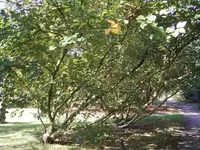
This species typically forms a broad, multi-stemmed shrub or small tree rather than a single-trunk tree, creating a dense, layered canopy quite different from most familiar birch species.

Coppery peeling bark

Mature plants develop warm copper to orange-brown bark that peels in thin, papery curls, providing strong year-round ornamental value even in winter.

Transcaucasian mountain origin

It is native to the western Transcaucasus, mainly in regions of Georgia and adjacent areas, where it grows in cool, moist mountain forests and subalpine zones at higher elevations.

Botan icon

Did you know?

This species is considered one of the most heat-tolerant birches in cultivation, which makes Betula medwediewii care particularly valuable for gardeners in warmer climates who struggle to grow more cold-adapted birch species.

FAQs about Transcaucasian Birch

Brown, crisp leaf edges usually indicate drought stress, hot drying winds, or high soil salts. Check soil moisture depth, mulch the root zone, and avoid heavy fertilization. Some browning in late summer can also be normal aging.

Grow Healthy Plants with Botan Care

Keep your plants happy and healthy with plant identification, disease detection, and easy care guidance.

Botan plant care app — identify plants on mobile

Explore More Plants