Taiwanese photinia Care (Photinia serratifolia)

Also known as: Chinese Photinia
Taiwanese photinia

About Taiwanese photinia

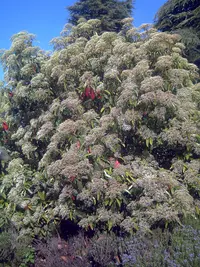
Taiwanese photinia (Photinia serratifolia) is an evergreen shrub or small tree often used for hedges, screens, and ornamental plantings. It has dense branching and a naturally upright, rounded form.

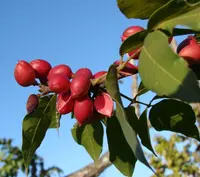
New leaves typically emerge in shades of bronze or red before maturing to glossy deep green, giving strong seasonal interest. Clusters of small white flowers may appear, followed by red berries in suitable conditions.

This species is native to Taiwan and parts of East Asia, where it grows in forest edges and open slopes. It adapts well to many garden situations, which makes it relatively straightforward to care for Taiwanese photinia.

It generally prefers bright light, moderate moisture, and well-drained soil, and can tolerate light pruning to maintain shape and size.

Main Plant Requirements

Care Difficulty

Easy Care

Light Preference

Full Sun

Water Requirements

Moderate Water

Temperature Preference

Warm Climate

Hardiness Zone

7–10

Soil Texture

Sandy, Loamy, Clay

Soil pH

Acidic (5.5–6.5), Slightly acidic (6.5–7.0)

Soil Drainage

Moist but well-drained

Fertilization

Minimal (feed rarely)

Get Personalized Care Plan

Scan your plant to receive care tips personalized for your specific plant

Available on iOS and Android

How to Care for the Taiwanese photinia

Photinia serratifolia thrives in bright outdoor light with some protection from harsh extremes.

  • Provide 4–6 hours of direct sun daily, ideally with morning sun and light afternoon shade for best red leaf color when growing Taiwanese photinia.
  • Plant in a spot with open sky or dappled light; it tolerates partial shade but dense shade leads to leggy growth and sparse foliage.
  • In hot summers, shield from intense midday sun to reduce leaf scorch; in winter, ensure at least bright open light to maintain vigor.

Photinia serratifolia prefers evenly moist, well-drained soil rather than constantly wet conditions.

  • Allow the top 3–5 cm of soil to dry between waterings; check by inserting a finger or a small tool into the soil near the root zone.
  • Increase watering during hot, dry periods and reduce it in cool or rainy seasons, relying more on soil moisture feel than a fixed calendar.
  • Watch for yellowing, dropping leaves and soft stems as signs of overwatering, and crisp leaf edges or premature leaf drop as signs of underwatering.

This shrub performs best in mild climates with moderate seasonal variation.

  • Optimal growth occurs around 60–80°F (16–27°C), where new foliage colors and overall vigor are most consistent.
  • Mature plants tolerate brief drops to about 10–15°F (-12 to -9°C), but young plants are more cold-sensitive and benefit from shelter from freezing winds.
  • In hot regions, plants handle up to about 90–95°F (32–35°C) if soil moisture is stable and roots are mulched to reduce heat stress.

This shrub handles typical outdoor humidity but performs best with mild, stable conditions.

  • Aim for 40–60% humidity in most planting sites, avoiding very arid or extremely saturated microclimates.
  • Taiwanese photinia usually tolerates brief dry air spells, but prolonged hot, desiccating wind can scorch new red growth.
  • Low humidity stress appears as crisp leaf edges and stalled new shoots, so use windbreaks or nearby planting to slightly shelter it.

This species prefers moderately fertile, well-structured soil that drains freely yet retains some moisture.

  • Use a loamy soil with some organic matter so it stays moist but not waterlogged, which Photinia serratifolia does not tolerate.
  • Aim for a slightly acidic to neutral pH around 6.0–7.0 to support nutrient availability and balanced growth.
  • In heavy clay, improve structure with 30–40% compost plus coarse sand or fine gravel to increase aeration and drainage.
  • Avoid compacted, permanently wet, or very shallow soils, which encourage root rot and weak, disease-prone plants.

This shrub can be grown in containers if the pot is large, stable, and drains efficiently.

  • Choose a deep, heavy container that resists tipping, as the plant becomes tall and wind-catching over time.
  • Select a potting mix formulated for shrubs, then lighten it with 10–20% pine bark or perlite to prevent soggy conditions near the roots.
  • Raise the container slightly on feet or bricks so drainage holes stay clear and excess water escapes quickly after rain or irrigation.

Photinia serratifolia responds well to modest, consistent feeding during the active growing season.

  • Apply a balanced slow-release fertilizer (around 10-10-10) in early spring for steady nutrient supply.
  • Supplement with a light top-dressing of compost once in spring to improve soil structure and biology.
  • During late spring–summer, use a balanced liquid feed at 1/2 strength every 4–6 weeks if growth is weak.
  • Stop feeding in late summer and avoid fertilizing in winter dormancy, especially when caring for Taiwanese photinia.

Pruning helps Photinia serratifolia maintain dense growth, good airflow, and strong structure.

  • Schedule main pruning in late winter or very early spring before new growth starts.
  • Remove dead, diseased, crossing, or inward-growing branches with clean, sharp bypass pruners or loppers.
  • Shorten overly long shoots to an outward-facing bud to encourage a compact, bushy habit and colorful new leaves.
  • Lightly thin crowded interior branches to improve light penetration and reduce fungal disease risk.

This shrub is usually grown in the ground, so focus on careful transplanting rather than frequent repotting.

  • Plan major transplanting for late winter–early spring while the plant is still dormant but soil is workable.
  • Move only when necessary, such as poor performance, wrong location, or roots circling a container.
  • Dig a wide root ball, keep as much soil around roots as possible, and set at the same soil level in the new site.
  • Water deeply after planting, then keep soil evenly moist and apply 5–8 cm mulch to limit stress and encourage new roots.

Photinia serratifolia is most often propagated from semi-ripe cuttings to maintain desired traits.

  • Take 10–15 cm semi-ripe stem cuttings in late summer, choosing non-flowering, healthy shoots.
  • Remove lower leaves, keep 2–3 at the tip, and optionally dip the cut base in rooting hormone to boost success.
  • Insert cuttings into a well-drained mix of 50% perlite and 50% peat-free compost or similar medium.
  • Maintain high humidity and warmth (68–75°F) with bright, indirect light until firm roots form in several weeks.

Mature Photinia serratifolia is fairly cold hardy and usually needs only light winter care in most mild to moderate climates.

  • Apply 5–8 cm of organic mulch around the root zone in late fall, keeping it slightly away from the trunk.
  • Water well before the ground freezes in colder regions to reduce winter drought stress.
  • For young or container plants in areas below about 10°F, wrap pots or move them to a sheltered, unheated but frost-light space.

Care Tips

Encourage Dense Hedging

Tip prune young shoots by 2–5 cm several times in spring to stimulate multiple side branches and create a fuller, more wind‑resistant screen.

Manage Leaf Spot

In regions with humid springs, rake and remove fallen leaves promptly and avoid overhead irrigation to reduce fungal leaf spot pressure on new growth.

Wind and Snow Shaping

In exposed or snowy sites, selectively thin long, upright shoots in late summer so the plant carries less leverage and is less likely to splay or break in winter storms.

Use Mulch Strategically

Apply a 5–8 cm mulch ring that stops 5–8 cm short of the stems to stabilize soil moisture, suppress weeds, and keep mower and string‑trimmer damage away from the base.

Plan Succession Renewal

Every 3–5 years, remove 1–3 of the oldest stems at the base to renew the framework, maintain vigor, and support long‑term success when growing Taiwanese photinia.

Common Pests and Diseases

Entomosporium leaf spot

This disease causes small purple or red leaf spots that expand, merge, and can lead to premature leaf drop, especially on young red leaves.

Solution

Remove and dispose of heavily spotted leaves, avoid overhead watering, and keep foliage as dry as possible; improve spacing and airflow. In landscapes with repeated problems, apply a registered fungicide labeled for leaf spot on photinia in early spring and repeat as directed to protect new growth as part of broader Photinia serratifolia care instructions.

Fire blight

This disease leads to blackened, wilted shoot tips that look scorched, often with a characteristic shepherd’s‑crook bend, and can progress down branches.

Solution

Prune out infected shoots at least 20–30 cm below visible symptoms during dry weather, disinfecting tools between cuts with 10% bleach or 70% alcohol. Avoid excessive nitrogen fertilization, which encourages susceptible soft growth, and remove any nearby infected rosaceous hosts when practical to reduce inoculum pressure.

Aphids

These insects cluster on tender new shoots and leaf undersides, sucking sap and causing curled, distorted growth and sticky honeydew that can lead to sooty mold.

Solution

Spray colonies off with a firm stream of water, then treat remaining infestations with insecticidal soap or horticultural oil, ensuring thorough coverage of leaf undersides. Encourage natural predators like lady beetles by minimizing broad‑spectrum insecticide use and avoiding unnecessary chemical treatments.

Scale insects

This pest appears as small, immobile bumps along stems and leaf veins, weakening plants through prolonged sap removal and often producing sticky honeydew.

Solution

Prune out heavily infested twigs and destroy them. For remaining scale, use a soft brush or cloth to manually remove them on small plants, then apply a horticultural oil spray during the recommended timing in late winter or when crawlers are active, following label directions carefully.

Spider mites

These pests are tiny and often overlooked, but symptoms include fine webbing, stippled or bronzed leaves, and general decline during hot, dry weather.

Solution

Increase humidity around the plant and wash foliage thoroughly with water, focusing on leaf undersides, to dislodge mites. If populations remain high, apply horticultural oil or a labeled miticide, and reduce plant stress by providing consistent water and avoiding unnecessary chemical sprays that harm natural predators.

Interesting Facts

Evergreen canopy tree

This species naturally grows as a large evergreen tree up to 10–15 m tall in its native East Asian range, forming dense, glossy foliage that provides year-round cover in warm temperate climates.

New growth turns red

Young leaves emerge bright red before maturing to dark green, a color change caused by temporary accumulation of protective pigments called anthocyanins that help shield tender tissues from strong light.

Heavy berry producer

After clusters of small white spring flowers, it produces abundant red berry-like pomes that can persist into winter and serve as a food source for birds and other wildlife in urban and suburban plantings.

Botan icon

Did you know?

In parts of East Asia, long-lived Photinia serratifolia specimens are traditionally planted as windbreaks and boundary markers around villages and temples, where their dense crowns and durable wood allow them to persist as living landmarks for many decades.

FAQs about Taiwanese photinia

This species is evergreen in mild to cool temperate climates, keeping foliage year-round. In very cold winters, leaves may scorch or drop partly, but the plant usually refoliates from buds once temperatures warm again.

Grow Healthy Plants with Botan Care

Keep your plants happy and healthy with plant identification, disease detection, and easy care guidance.

Botan plant care app — identify plants on mobile

Explore More Plants