Provide climbing support
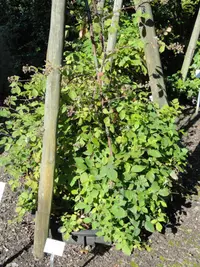
Install a narrow trellis, wire mesh, or tensioned strings early on so stems can twine naturally, which reduces breakage and produces more accessible flowering and fruiting wood.

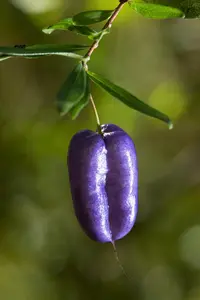
Purple apple-berry (Billardiera longiflora) is an evergreen climber or scrambling shrub native to cool, moist forests of southeastern Australia and Tasmania. It is grown mainly for its striking pendulous berries that ripen from green to deep purple or blue, contrasting with its fine, narrow leaves. The small, tubular flowers are usually cream to yellow-green and are followed by clusters of decorative fruits. It tends to be moderate in vigor and is easier to manage than many vigorous vines. In gardens, it prefers sheltered, partially shaded spots with consistently moist, well-drained soil. Understanding how to care for purple apple-berry starts with providing a cool root zone and protection from extreme heat or frost.

Care Difficulty
Moderate Care

Light Preference
Partial Shade

Water Requirements
Moderate Water

Temperature Preference
Cool Climate

Hardiness Zone
8–10

Soil Texture
Loamy, Sandy, Organic-rich

Soil pH
Acidic (5.5–6.5), Slightly acidic (6.5–7.0)

Soil Drainage
Moist but well-drained

Fertilization
Minimal (feed rarely)
Scan your plant to receive care tips personalized for your specific plant
Available on iOS and Android
Billardiera longiflora prefers bright, gentle light that mimics its woodland edge habitat.
This species prefers consistently moist but not waterlogged soil, with careful adjustment through the seasons.
This cool-temperate climber grows best in mild, frost-prone climates with moderate seasonal variation.
This species handles a wide range of humidity but benefits from moderately moist air in heated or very dry homes.
This climber prefers loose, well-drained, slightly acidic soil that stays evenly moist but not wet.
This species is well suited to container growing, especially where garden space or soil conditions are limited.
This Australian climber benefits from light feeding but purple apple-berry is sensitive to overfertilizing.
Pruning supports tidy growth and better flowering in Billardiera longiflora.
This climber is often grown in the ground, but container-grown plants need occasional transplanting to maintain vigor.
New plants are most often raised from seeds or semi-ripe cuttings of this species.
Established plants have moderate cold tolerance but need some winter attention in colder climates.

Plant Health Check
Not sure what's wrong with your plant? Check your plant's health inside the app.
This species is a woody, twining climber native mainly to cool, moist forests of Tasmania and parts of southeastern Australia, where it threads through shrubs and small trees rather than scrambling on the ground.
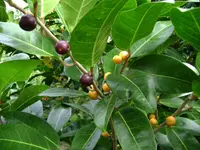
The berries develop from green to glossy deep purple as they mature, a visual signal that often indicates ripeness to fruit-eating animals, even though these fruits are considered inedible or mildly toxic for humans.
Individual plants are usually either male or female, a condition called dioecy, so fruit and seed are typically produced only when pollen from a male plant reaches a nearby female plant via insect pollinators.
This species was first described in 1805 by the Scottish botanist James Edward Smith, who placed it in the genus Billardiera in honor of French botanist Jacques-Julien Houtou de Labillardière, reflecting the intense period of botanical exploration of the Australian flora in the late 18th and early 19th centuries.
This species is a twining climber that wraps around nearby supports rather than self-clinging. Without something to climb, it will scramble along the ground or over neighboring plants, forming a loose, trailing mound of growth.
Keep your plants happy and healthy with plant identification, disease detection, and easy care guidance.