Tank water hygiene
After flowering, empty the central rosette by gently tipping the plant and refill with fresh water to prevent bacteria and mosquito larvae from building up in the tank.

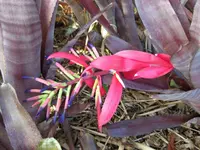
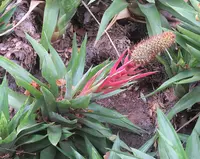
Billbergia distachya is a small to medium bromeliad, often grown as an ornamental for its colorful rosettes and long-lasting flower spikes. It usually forms a tight funnel of arching, strap-like leaves that can show banding or mottling, with bright bracts and tubular flowers. Native to Brazil, it typically grows as an epiphyte, anchoring to trees rather than rooting deeply in soil. This background makes it relatively adaptable indoors, as long as it has good air circulation and a free-draining mix. Once its basic needs are understood, it is straightforward to care for Billbergia distachya in bright, indirect light with moderate moisture.

Care Difficulty
Moderate Care

Light Preference
Bright Indirect Light

Water Requirements
Moderate Water

Temperature Preference
Tropical / Frost Sensitive

Hardiness Zone
10–11

Soil Texture
Sandy, Loamy, Organic-rich

Soil pH
Acidic (5.5–6.5), Slightly acidic (6.5–7.0)

Soil Drainage
Well-drained

Fertilization
Light (every 4–6 weeks)
Scan your plant to receive care tips personalized for your specific plant
Available on iOS and Android
This bromeliad prefers bright, filtered light that mimics dappled woodland sun.
Watering should keep the root zone lightly moist while avoiding prolonged saturation.
Stable, warm conditions support healthy growth and flowering.
This bromeliad prefers moderately humid air but copes with typical indoor conditions.
Use a very free-draining, airy mix that mimics an epiphytic bromeliad environment.
This species is well suited to container growing for both indoor and outdoor displays.
Moderate feeding supports healthy growth and flowering in Billbergia distachya grown in containers.
Pruning needs are light and mainly focus on keeping Billbergia distachya tidy and encouraging new offsets.
Container-grown plants benefit from occasional repotting to refresh the mix and accommodate new offsets.
Propagation of Billbergia distachya is most reliable through division of offsets rather than seed.
This bromeliad is frost-sensitive and needs protective winter care in most temperate climates.

Plant Health Check
Not sure what's wrong with your plant? Check your plant's health inside the app.
In its native range in southeastern Brazil, this species often grows both as an epiphyte on tree branches and as a lithophyte on rocky outcrops, anchoring with roots mainly for support rather than for nutrient uptake.
Its rosette of stiff, arching leaves forms a central tank that collects rainwater, leaf litter, and small insects, creating a tiny aquatic habitat that supports microorganisms and invertebrates.
The tubular flowers are typically pollinated by hummingbirds, but the plant also shows good color contrast and nectar presentation under low light, which helps attract crepuscular visitors at dawn and dusk.

This species sometimes forms natural hybrids with other Billbergia species in the wild, and these spontaneous crosses have contributed to the diverse range of ornamental cultivars used in horticulture today.
Lack of blooms often comes from insufficient light, a pot that is too large, or the plant being immature. Stable, bright conditions and allowing the central cup to form properly usually help trigger flowering.
Keep your plants happy and healthy with plant identification, disease detection, and easy care guidance.