Cool root zone
Use a thick layer of fine bark or leaf mold as mulch to keep the root zone cool and evenly moist, which reduces stress and frond scorch in warm rooms or patios.

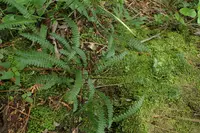
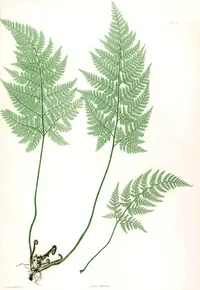
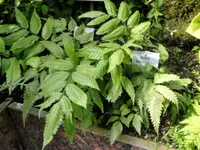
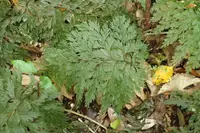
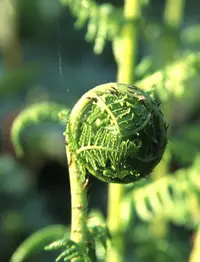
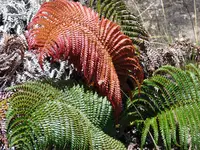
Blechnum membranaceum is a small to medium-sized evergreen fern, typically forming neat, arching rosettes of finely divided fronds. It has a compact, layered habit that suits shaded gardens and sheltered container plantings.
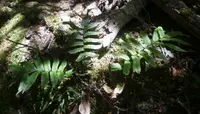
This species occurs naturally in moist, forested areas of South America, often near streams or in consistently damp soil. Its preference for stable moisture and humidity makes it slightly more demanding than many common houseplants.
Light, even moisture, and free-draining, humus-rich soil are the main factors that influence how to care for Blechnum membranaceum successfully.

Care Difficulty
Moderate Care

Light Preference
Partial Shade

Water Requirements
Keep Soil Moist

Temperature Preference
Warm Climate

Hardiness Zone
Unknown

Soil Texture
Loamy, Peaty, Organic-rich

Soil pH
Acidic (5.5–6.5)

Soil Drainage
Moist but well-drained

Fertilization
Minimal (feed rarely)
Scan your plant to receive care tips personalized for your specific plant
Available on iOS and Android
This fern prefers soft, filtered light that mimics a shaded forest floor.
This fern needs consistently moist, but not waterlogged, soil to stay healthy.
Stable, mild temperatures support steady growth and reduce stress for this fern.
This fern needs consistently high humidity to maintain healthy fronds and steady growth.
This species prefers a moist, airy, organic-rich substrate similar to a forest floor.
This fern adapts well to container growing when moisture and stability are carefully managed.
This fern grows in naturally fertile, moist forest soils and usually needs only light feeding in cultivation.
Pruning needs for Blechnum membranaceum are minimal and focus on hygiene rather than reshaping.
This fern resents disturbance, so repot or transplant Blechnum membranaceum only when clearly rootbound or declining.
Propagation of Blechnum membranaceum is possible but usually moderate in speed and requires stable humidity.
In mild climates this fern is relatively hardy but still benefits from thoughtful winter care, especially in containers.

Plant Health Check
Not sure what's wrong with your plant? Check your plant's health inside the app.
This fern is native to the temperate rainforests of southern Chile and Argentina, where it grows in cool, wet, often shaded habitats along streams and forest floors within the Valdivian and Magellanic forest regions.
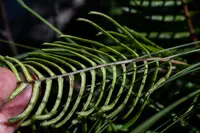
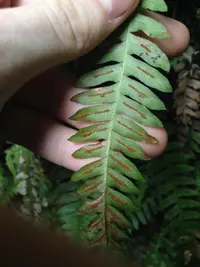
It shows clear frond dimorphism, meaning it produces different-looking sterile and fertile fronds; the fertile fronds are typically narrower and more erect, with spore-bearing structures densely arranged on the undersides.
In the wild it is usually found in acidic, humus-rich, constantly moist soils, often in sites with high rainfall and frequent mist, which is important to understand for Blechnum membranaceum care instructions in cultivation.
This fern is evergreen in mild, frost-free conditions, holding its fronds year-round. In cooler climates, some fronds may be damaged or semi-deciduous, but new growth usually emerges from the crown when conditions improve.
Keep your plants happy and healthy with plant identification, disease detection, and easy care guidance.