Cool roots management
Place the pot inside a slightly larger cachepot with damp sphagnum moss between the two containers to keep roots cool and evenly moist, which this fern prefers in warm indoor conditions.

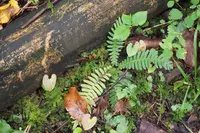
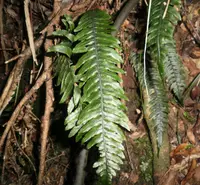
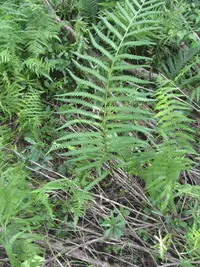
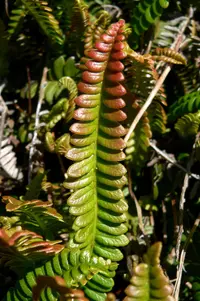
Blechnum niponicum, often called Japanese hard fern, is a compact, clumping fern valued for its finely divided, arching fronds. New growth often emerges coppery or reddish before maturing to deep green, giving the plant a subtle color contrast through the season.
This fern is native to woodland habitats in East Asia, where it grows in moist, shaded forest floors. In gardens or containers, it suits cool, sheltered spots and prefers consistently moist, humus-rich soil with good drainage.
Its slow, steady growth and preference for stable moisture make it moderately easy to manage if conditions are right. Understanding how to care for Blechnum niponicum starts with providing shade, cool temperatures, and protection from drying winds or strong sun.

Care Difficulty
Moderate Care

Light Preference
Partial Shade

Water Requirements
Keep Soil Moist

Temperature Preference
Cool Climate

Hardiness Zone
5–8

Soil Texture
Loamy, Peaty, Organic-rich

Soil pH
Acidic (5.5–6.5), Slightly acidic (6.5–7.0)

Soil Drainage
Moist but well-drained

Fertilization
Light (every 4–6 weeks)
Scan your plant to receive care tips personalized for your specific plant
Available on iOS and Android
This fern prefers soft, filtered light that mimics woodland conditions for steady growth.
This fern prefers consistently moist, but not waterlogged, soil throughout the growing season.
This fern grows best in cool to mild conditions that resemble a shaded woodland floor.
This fern prefers consistently moist air and reacts quickly to dry indoor conditions.
Blechnum niponicum prefers a loose, humus-rich substrate that stays evenly moist but not waterlogged.
This species grows reliably in containers when moisture and stability are well managed.
This fern grows acceptably in fertile soil but responds well to light, targeted feeding.
Blechnum niponicum needs only light, maintenance pruning to stay tidy and healthy.
Container-grown plants benefit from careful repotting to maintain root health and stable moisture.
Division is the most practical method for maintaining the same form and traits of this fern.
This fern is moderately cold hardy but benefits from some winter protection in colder regions.

Plant Health Check
Not sure what's wrong with your plant? Check your plant's health inside the app.
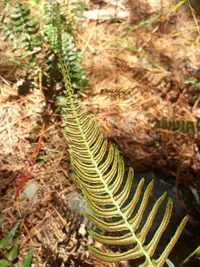
This fern often develops fertile fronds that are noticeably narrower and more upright than its sterile fronds, creating a two-tiered look within the same clump. The spore-bearing sori form in neat lines along the underside of these fertile fronds, a key feature used to distinguish it from similar woodland ferns.
The species is naturally distributed in Japan, Korea, parts of China, and nearby regions, where it grows on moist forest floors, stream banks, and shaded slopes. Its preference for cool, humid, low-light habitats reflects the understory conditions of these temperate Asian woodlands.
In regions with cool but not severe winters, this fern often keeps at least some fronds through the cold season instead of dying back completely. In colder areas it behaves more deciduous, with fronds dying back and new ones emerging from the rhizome in spring.
This fern is semi-evergreen to evergreen, depending on climate. In mild winters it often keeps most fronds, while in colder areas older fronds can brown and die back, then be replaced by fresh growth in spring.
Keep your plants happy and healthy with plant identification, disease detection, and easy care guidance.