Leaf litter mulch
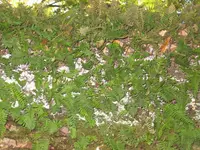
Maintain a thin, loose layer of shredded leaf litter around the plant to mimic woodland duff, keep the root zone cool, and protect the small fronds from splash damage during rain or watering.

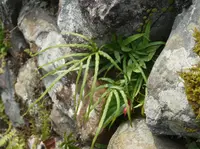
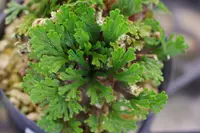
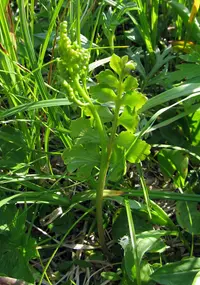
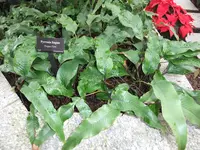
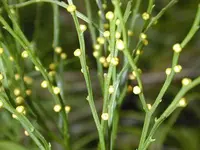
Sparselobe grapefern, Botrychium biternatum, is a small, terrestrial fern in the adder’s-tongue family. It produces a single, divided frond that often appears delicate but sturdy. The fertile frond bears bead-like spore clusters, giving the plant a distinctive, slightly upright appearance among low woodland vegetation.
This species is native to eastern North America, where it grows in open woods, moist meadows, and lightly shaded clearings with undisturbed soil. It can be slow to establish and is sensitive to soil disturbance and compaction, which makes it somewhat challenging to cultivate. To care for sparselobe grapefern, provide consistently moist, well-drained soil and light shade that mimics its natural woodland edge habitat.

Care Difficulty
Hard Care

Light Preference
Partial Shade

Water Requirements
Keep Soil Moist

Temperature Preference
Cool Climate

Hardiness Zone
5–9

Soil Texture
Loamy, Silty, Organic-rich

Soil pH
Acidic (5.5–6.5)

Soil Drainage
Moist but well-drained

Fertilization
Minimal (feed rarely)
Scan your plant to receive care tips personalized for your specific plant
Available on iOS and Android
This woodland fern prefers low to moderate light that mimics a shaded forest floor.
This species prefers consistently moist, cool soil without waterlogging.
This fern is adapted to temperate woodland climates with cool to mild conditions.
This fern prefers moderate to high humidity similar to a shaded woodland floor.
This species grows best in consistently moist, loose, organic-rich soil that mimics forest leaf litter.
This fern is possible but somewhat challenging to grow in containers because it prefers stable, cool, moist woodland soil.
This woodland fern is adapted to low-nutrient soils and usually needs no fertilizer when grown in the ground.
Botrychium biternatum needs minimal pruning, focused on hygiene rather than shaping.
This species is best grown undisturbed in the ground; transplanting is rarely successful and should be avoided when possible.
Propagation of Botrychium biternatum is specialized and rarely done by home growers.
This fern is cold hardy in its native range and generally requires no special winter care in the ground.

Plant Health Check
Not sure what's wrong with your plant? Check your plant's health inside the app.
Sparsely lobed grapefern produces a sterile frond that persists through winter and a separate fertile frond that appears in spring, then withers soon after releasing spores. This seasonal difference in frond form and timing is called seasonal dimorphism and helps the plant allocate resources efficiently.
This species relies heavily on associations with soil fungi, called mycorrhizae, for nutrient uptake, especially during its subterranean juvenile stages. Because of this dependence, the fern often occurs where specific fungi are present and tends to be difficult to transplant or cultivate.
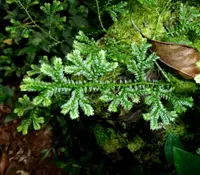
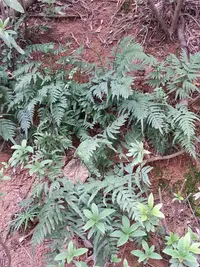
Sparselobe grapefern often grows low and inconspicuous among leaf litter in moist woods and forest edges, making it easy to overlook. Its scattered, sparse lobes and small stature mean that even established populations can be missed during casual surveys.

Genetic and morphological studies have shown that the sparsely lobed grapefern belongs to a distinct group within Botrychium that is more closely related to some North American grapeferns than to visually similar Eurasian species, illustrating how convergent leaf shapes can hide deeper evolutionary relationships.
This fern grows slowly, often taking several years to form noticeable clumps. Growth is limited to one frond flush per season, so patience is essential when trying to grow Botrychium biternatum in a garden setting.
Keep your plants happy and healthy with plant identification, disease detection, and easy care guidance.