

sideoats grama Identification (Bouteloua curtipendula)

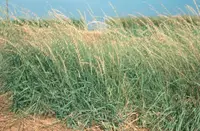
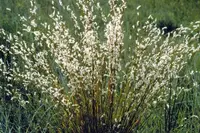
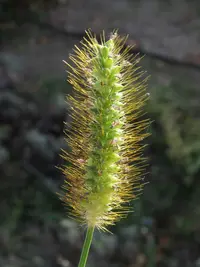
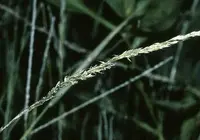
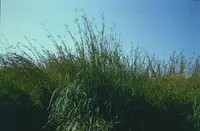
Recognize sideoats grama by its one-sided seed spikes: oat-like spikelets hang in two neat rows from one side of each flowering stem. The stems rise in clumps, and the leaves are narrow, flat to slightly folded blades along the lower part of the plant.

Most plants form upright tufts rather than spreading mats.

Bouteloua curtipendula Identification

Check Your Plant with Botan

Use a clear photo to confirm what plant you have.

Clear images work best. Avoid photos taken too close or too far away

  • 1 free identification
  • No sign-up
  • 30,000+ plants in database

Check the grass form and the one-sided seed head first.

  • Forms upright to arching clumps, usually 1-3 feet (30-90 cm) tall.
  • Flowering stems carry narrow spikes that hang mostly from one side of the stem.
  • Each spike is oatlike, flattened, and attached on a short stalk, creating a combed outline.
  • Leaves are narrow and mostly basal, often reaching about 4-12 inches (10-30 cm) long.
  • The base often shows a slight bend, giving stems a knee-like, angled look near the lower nodes.

The one-sided arrangement of the hanging spikes is the fastest field mark to confirm by eye.

Sideoats grama shows clear structural changes from sparse seedlings to distinctive flowering clumps.

  • Seedling: Seedlings appear as a few narrow, upright grass blades from a single base, without the dense tufted form or side-hanging spikelets seen later.
  • Young plant: Young plants form small basal tufts with several slender leaves and short stems, but still lack the taller culms and one-sided seed heads.
  • Mature plant: Mature plants become tufted bunches about 1-3 feet (30-90 cm) tall, with arching flowering stems rising above the basal leaves.
  • Flowering stage: Flowering stems show the key identifying change: oatlike spikelets hanging in rows along one side of each stem branch, often tinged reddish or purple.

In late spring to summer, Bouteloua curtipendula becomes easier to recognize when the flowering stems rise above the leaves and show rows of oat-like spikelets hanging mostly from one side of each stem. By late fall and winter, the plant often turns tan to straw-colored as it goes dormant. The dried seedheads can remain visible for a time, helping with identification after green growth fades.

Several prairie grasses can be mistaken for sideoats grama at a glance.

blue grama(Bouteloua gracilis)

Confusion happens because both are warm-season gramas with one-sided seed spikes. Blue grama usually has short, curved comb-like spikes at stem tips, while sideoats grama carries dangling spikelets lined along one side of longer stems.

hairy grama(Bouteloua hirsuta)

Both form tufts and show one-sided flowering branches. Hairy grama is typically shorter and has noticeably hairy leaf sheaths and stems, while Bouteloua curtipendula is usually taller with more obvious oat-like hanging spikelets.

Bouteloua curtipendula is native across much of North America, from southern Canada through most of the United States into Mexico. In the US, it is especially characteristic of the Great Plains, prairies, open plains, and dry hillsides. Habitat helps with identification because this grass is most often encountered in open, sunny grasslands rather than wetlands, forests, or shaded sites. Seeing it on prairie slopes or roadside grasslands can help narrow the ID.

Check Your Plant ID

Use Botan to identify or confirm a plant from a photo when you want a quicker, more confident answer.

FAQ

The most distinctive feature is the one-sided seedhead. Oat-like spikelets hang in two rows from one side of each flowering stem, often on short stalks, giving a comb-like outline useful in sideoats grama identification.

More Plant Identification Guides

Identify Your Plant and Learn More

Identify a plant from a photo with Botan, then get species-specific care information, plant details, and common problems.

Botan app identifying a plant from a photo
How to Tell if a Plant Is Dead

6 min read · 19 Aug 2026

How to Tell if a Plant Is Dead

A plant can lose its leaves, stop growing, or collapse and still remain alive. A closer look at the stems, roots, bulbs, and tubers can show whether the plant still has a chance to recover.

Beginner Guides
How to Tell if a Plant Is Dead
Best Bedroom Plants – Top 10 to Grow in Your Space

8 min read · 8 Jul 2026

Best Bedroom Plants – Top 10 to Grow in Your Space

Discover the top 10 houseplants that are suitable for growing in your bedroom. Compare their light and water needs, pet safety, and benefits. Find out where best to place greenery in your relaxation space and what species to avoid.

Plant Recommendations
Best Bedroom Plants – Top 10 to Grow in Your Space
12 Best Landscaping Trees for Your Garden

8 min read · 6 Oct 2026

12 Best Landscaping Trees for Your Garden

Choosing the landscape tree depends on what your garden needs most. These 12 options include compact flowering specimens, colorful deciduous trees, shade varieties, and evergreens suitable for screening and year-round structure.

Plant Recommendations
12 Best Landscaping Trees for Your Garden