

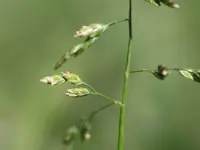

yellow foxtail Identification (Setaria pumila)

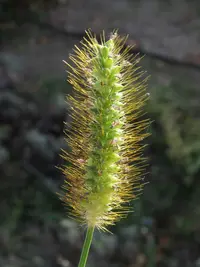
Recognize yellow foxtail by its dense, cylindrical seedhead, usually 1 to 4 inches (2.5 to 10 cm) long, covered in short yellow to golden bristles.

Leaves are flat and narrow on upright stems, and the leaf sheath and upper leaf surface are typically hairy.

Setaria pumila Identification

Check Your Plant ID

Upload a plant photo and check the identification in seconds.

Clear images work best. Avoid photos taken too close or too far away

Check the whole grass for a few easy structural clues.

  • An upright, tufted annual grass, usually 1-3 feet (0.3-0.9 m) tall.
  • Leaf blades are flat, narrow, and mostly 4-12 inches (10-30 cm) long, arising alternately along the stems.
  • Seed heads form dense, cylindrical spikes at stem tips, often 1-6 inches (2.5-15 cm) long.
  • Each spike is packed with short bristles, giving a soft foxtail look; the head often droops slightly.

Look closely at the bristly, tail-like seed head and the narrow alternate leaves together.

Setaria pumila shows useful visual shifts from early leaves to bristly seed heads.

  • Seedling: The first leaves are narrow and flat, while later seedling leaves stay soft and light green; no foxtail head is present yet.
  • Young plant: Plants form a tuft of broader grass blades and upright stems, often reaching about 12 inches (30 cm) before the distinctive dense terminal head appears.
  • Flowering stage: A compact, cylindrical flower head emerges at stem tips, packed with short bristles that give the inflorescence its foxtail outline and yellowish cast.
  • Fruiting stage: After flowering, the bristly head stays cylindrical but looks denser and more straw colored as small grains mature within the persistent bristles.

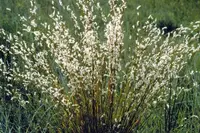
In summer, Setaria pumila becomes easier to identify when its dense, bristly seed heads appear above the leaves. These foxtail-like heads are usually yellowish to golden and stand out clearly. By late summer into fall, the seed heads often persist as the plant dries. The clumps then look straw-colored, with narrow leaves and upright stems still visible.

Several foxtail grasses are easy to confuse at a glance.

green foxtail(Setaria viridis)

Both are tufted annual grasses with bristly, bottlebrush seedheads. Green foxtail usually has green rather than golden-yellow heads, and its leaf blades and sheaths are typically less hairy than yellow foxtail.

giant foxtail(Setaria faberi)

This species also has dense foxtail-like seedheads and broad grass leaves. It is usually taller, often with larger, drooping heads, and the upper leaf surface is noticeably hairy, unlike the more modest hairiness in Setaria pumila.

Setaria pumila is native to much of Europe, temperate Asia, and North Africa. It is now widespread well beyond that range, so geography alone is not a strong identifier. Habitat is more useful. This grass commonly appears in disturbed ground, field margins, roadsides, gardens, and cultivated soil, especially in open, sunny sites. Finding it as a weed of regularly disturbed places helps narrow identification more than regional location does.

  • Bristly seed heads: The flower and seed head has stiff bristles. Skin contact can cause minor irritation, and the bristles can lodge around the mouth, nose, ears, or paws of pets, especially dogs, after brushing through the grass.
  • Ingestion risk for pets: The concern is mechanical irritation rather than poison. In pets, swallowed or inhaled bristles from the seed head can irritate tissues of the mouth, throat, or nose.

Does Your Plant Match?

Use Botan to compare a photo and help confirm the plant, so it is easier to rule out similar species.

FAQ

Flowers are packed into a dense, cylindrical, spike-like panicle, meaning a branched grass flower cluster that looks unbranched. The head is usually bristly and often yellowish from stiff golden bristles, a key trait for how to identify yellow foxtail.

More Plant Identification Guides

Identify the Plant and Get Its Profile

Upload a photo to Botan for an ID, then see plant details, care information, and common problems for that species.

Botan app identifying a plant from a photo
What Plants Don't Like Epsom Salt?

11 min read · 29 Jul 2026

What Plants Don't Like Epsom Salt?

Learn which plants can be seriously damaged by Epsom salt and which will thrive on it. We’ll explain when and how to use it properly, provide tips for indoor & outdoor plants — read on and enjoy a healthy garden.

Plant Care
What Plants Don't Like Epsom Salt?
How to Increase Humidity for Plants – 8 Simple Ways That Work

8 min read · 14 Aug 2026

How to Increase Humidity for Plants – 8 Simple Ways That Work

Dry indoor air stresses a lot of houseplants. You usually notice it first in the browning leaf tips. This guide describes 8 simple ways to raise the moisture around your plants, from humidifiers to pebble trays.

Plant Care
How to Increase Humidity for Plants – 8 Simple Ways That Work
Rice Water for Plants – Which Plants Love It and How to Make It

8 min read · 14 Jul 2026

Rice Water for Plants – Which Plants Love It and How to Make It

Rice water can be an ideal DIY solution for orchids, roses, or fruiting plants. It supports growth, leaf count, and height. We’ll share how to make and apply it correctly for your plant.

Plant Care
Rice Water for Plants – Which Plants Love It and How to Make It