Staggered Renewal Pruning
Each late winter, remove 1–3 of the oldest, woodiest stems at the base to encourage a steady supply of young flowering shoots without shocking the whole plant at once.

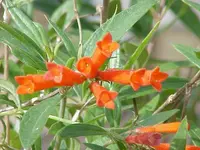
Firecrackerbush, Bouvardia ternifolia, is a woody perennial shrub known for its clusters of narrow, tubular red flowers that resemble tiny firecrackers. It typically forms a compact, branching shape with medium green leaves.
This species is native to dry, rocky habitats in the southwestern United States and Mexico, where it experiences strong sun and well-drained soils. Its drought tolerance and heat resilience make it suitable for low-water gardens in similar climates.
Gardeners who want to care for firecrackerbush should provide bright light, moderate but not constant moisture, and soil that does not stay wet for long periods.

Care Difficulty
Moderate Care

Light Preference
Full Sun

Water Requirements
Moderate Water

Temperature Preference
Warm Climate

Hardiness Zone
8–11

Soil Texture
Sandy, Loamy, Rocky

Soil pH
Slightly acidic (6.5–7.0), Neutral (7.0)

Soil Drainage
Well-drained

Fertilization
Light (every 4–6 weeks)
Scan your plant to receive care tips personalized for your specific plant
Available on iOS and Android
This sun-loving shrub flowers best with strong, consistent light exposure.
This species prefers moderate, deep watering with time for the soil surface to dry between soakings.
This plant is adapted to warm conditions and does best with mild winters and hot summers.
This species handles typical home humidity but benefits from slightly moist air in very dry climates.
Bouvardia ternifolia prefers light, well-aerated soil that drains quickly yet retains some moisture.
This shrub is suitable for container growing when the pot is chosen to support its woody root system and branching habit.
This sun-loving shrub appreciates light feeding in containers or poor soils but survives in the ground with minimal input.
Pruning supports compact growth and sustained flowering in Bouvardia ternifolia.
This shrub is more often grown in the ground, but container plants or young nursery stock benefit from thoughtful transplanting.
Bouvardia ternifolia is commonly propagated from cuttings and sometimes from seed for landscape use.
This species is moderately cold tolerant but benefits from simple winter care in colder regions.

Plant Health Check
Not sure what's wrong with your plant? Check your plant's health inside the app.
This shrub produces long, narrow, bright red tubular flowers with abundant nectar that are morphologically matched to hummingbird beaks, making it a key hummingbird nectar source in parts of its native range.
In its native habitats of Mexico and the southwestern United States, this species can re-sprout from its root crown after fire or cutting, allowing it to persist in disturbance-prone, open woodland and scrub environments.
The plant naturally occurs on rocky slopes, canyons, and pine-oak woodlands, often at moderate to high elevations, where it tolerates strong light, thin soils, and a pronounced dry season.

In some regions of Mexico, its bright red blossoms have been traditionally used as decorative elements in local festivities and religious celebrations, valued more for their vivid color and abundance than for fragrance or longevity as cut flowers.
Poor flowering usually comes from insufficient light, too much nitrogen fertilizer, or pruning at the wrong time that removes flower buds. Age also matters; young plants may need 1–2 seasons to begin reliable blooming.
Keep your plants happy and healthy with plant identification, disease detection, and easy care guidance.