Controlled spreading
Install a shallow rhizome barrier or edge regularly with a spade to keep clumps within bounds, as this grass can slowly spread by underground stems over several seasons.

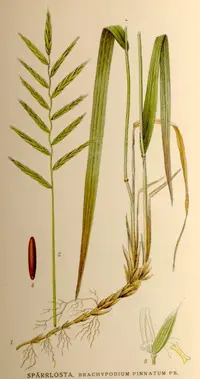
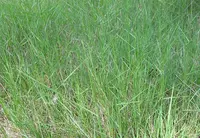
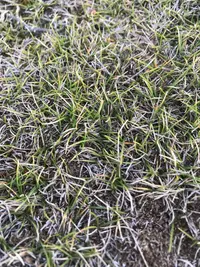
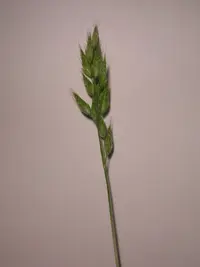
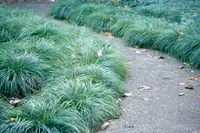
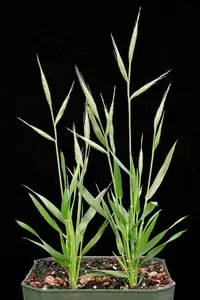
Heath false brome (Brachypodium pinnatum) is a perennial tuft-forming grass often found in dry meadows, open woodlands, and calcareous hillsides. It forms dense clumps with upright to arching stems and narrow, medium-green leaves. In summer it produces airy flower spikes that give a fine, textured look, useful in naturalistic plantings and meadow-style gardens. This species spreads slowly by short rhizomes, which makes it persistent but usually not aggressively invasive in managed settings. It is generally undemanding if planted in well-drained soil and given moderate moisture. Understanding how to care for heath false brome starts with providing sun to light shade and avoiding very wet, heavy ground.

Care Difficulty
Easy Care

Light Preference
Full Sun

Water Requirements
Moderate Water

Temperature Preference
Cold Hardy

Hardiness Zone
3–8

Soil Texture
Sandy, Loamy, Clay

Soil pH
Slightly acidic (6.5–7.0), Neutral (7.0)

Soil Drainage
Well-drained

Fertilization
Minimal (feed rarely)
Scan your plant to receive care tips personalized for your specific plant
Available on iOS and Android
This cool-season grass prefers stable, moderate light conditions to maintain dense growth.
This species prefers consistently moist but not saturated soil, especially during active growth.
This hardy grass tolerates a wide temperature range but grows best in cool to mild conditions.
This grass tolerates a wide humidity range and usually does not need special humidity control outdoors or in bright, airy spaces.
This species prefers moderately fertile, well-drained mineral soil that does not stay waterlogged.
This species can be grown in containers if the pot is large and free-draining.
This grass is adapted to low-nutrient soils and usually needs minimal feeding in the ground.
Pruning Brachypodium pinnatum is mainly about tidying and maintaining a healthy, dense clump.
This species is usually grown in the ground, so focus on thoughtful transplanting rather than frequent repotting.
Brachypodium pinnatum is commonly propagated by division or seed in garden settings.
Established plants are generally cold hardy and need little specific winter care in most temperate climates.

Plant Health Check
Not sure what's wrong with your plant? Check your plant's health inside the app.
This species forms dense, long-lived tussocks with extensive rhizomes that can dominate calcareous grasslands and strongly influence which other plants can establish nearby.
It commonly hosts arbuscular mycorrhizal fungi in its roots, which can improve its phosphorus uptake and drought tolerance while providing the fungi with carbohydrates.
Researchers use it as a perennial reference species alongside Brachypodium distachyon to study grass evolution, perennial growth, and traits relevant to forage and bioenergy crops.

Its rhizome network can allow genetically identical clones to extend over several square meters, so what appears to be a patch of many plants can actually be a single, long-lived genetic individual.
This grass spreads by short rhizomes and self-seeding, forming dense patches over time. In favorable conditions it can move into adjacent areas, so edging, regular division, and prompt removal of unwanted seedlings help keep it contained.
Keep your plants happy and healthy with plant identification, disease detection, and easy care guidance.