Encourage Compact Form
Rotate the pot 90° every 1–2 weeks and lightly pinch back overly long shoots in early spring to keep the plant dense and prevent sparse, one-sided growth.

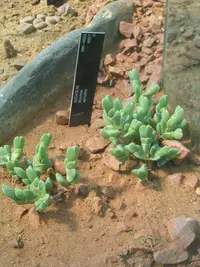
Ice hedgehogfig, Braunsia apiculata, is a compact succulent from South Africa, valued for its dense mat of small, triangular leaves and low, spreading habit. The foliage often has a gray-green, slightly frosted look that gives the plant its common name.
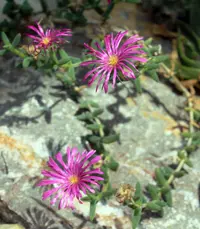
It typically grows as a ground-hugging cushion that can spill over pot edges, making it suitable for containers, rock gardens, and bright windowsills. Small daisy-like flowers appear in suitable conditions, adding seasonal interest without demanding complex care.
This species prefers bright light, sparse watering, and a very well-drained, gritty soil, which aligns with general guidelines on how to care for Ice Hedgehogfig. Its drought tolerance and slow, tidy growth make it approachable for beginners who are comfortable with basic succulent care.

Care Difficulty
Easy Care

Light Preference
Full Sun

Water Requirements
Low Water

Temperature Preference
Warm Climate

Hardiness Zone
9–11

Soil Texture
Sandy, Loamy, Rocky

Soil pH
Slightly acidic (6.5–7.0), Neutral (7.0)

Soil Drainage
Well-drained

Fertilization
Minimal (feed rarely)
Scan your plant to receive care tips personalized for your specific plant
Available on iOS and Android
Braunsia apiculata prefers bright, dry, sunny conditions similar to many small rock-garden succulents.
This compact succulent stores water in its leaves and needs infrequent but thorough watering.
This species prefers mild, dry conditions and does best where extremes of cold and humidity are limited.
This succulent tolerates low humidity and rarely needs special humidity care indoors.
This species needs a very fast-draining, gritty substrate to avoid root rot.
This species is well suited to container growing due to its compact, spreading succulent habit.
Braunsia apiculata is a light feeder that benefits from modest nutrition during active growth.
Braunsia apiculata accepts light pruning to maintain a compact, flowering mat.
Braunsia apiculata grows slowly and prefers minimal disturbance, but occasional repotting or transplanting is helpful.
Braunsia apiculata is commonly propagated from stem cuttings taken during the warm growing season.
Braunsia apiculata is not fully frost hardy and benefits from simple winter protection in cooler climates.

Plant Health Check
Not sure what's wrong with your plant? Check your plant's health inside the app.
This species forms opposite leaves that are partially fused at the base into a small, boat-shaped unit, creating a distinctive sculpted look compared with many other ice plant relatives.
The small, daisy-like pink to purple flowers typically open in the late afternoon to evening, an adaptation that likely targets crepuscular pollinators active in its native habitat.
It is naturally distributed in arid to semi-arid coastal regions of South Africa, where it grows in rocky, fast-draining soils and endures high light and episodic drought.
Lack of flowering usually comes from insufficient light, too much nitrogen fertilizer, or very young growth. Ensure several hours of bright light, avoid heavy feeding, and allow a cool, slightly drier rest period in winter to encourage buds.
Keep your plants happy and healthy with plant identification, disease detection, and easy care guidance.