Encourage Compact Growth
Rotate the pot 90° every 1–2 weeks so all sides receive similar light, which keeps the plant dense and prevents stems from stretching unevenly toward the window.

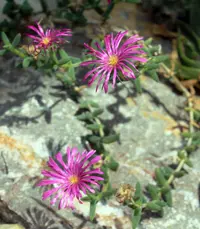
Bearded crownfig (Trichodiadema barbatum) is a compact succulent from arid regions of South Africa. It forms low, branching mats with small cylindrical leaves tipped with fine, hairlike bristles that create a bearded look.
In the right conditions it produces daisy-like, purple to magenta flowers that open in bright light and sit neatly above the foliage. Its growth habit stays small and tidy, which suits windowsills and other limited spaces.
This species prefers bright light, lean gritty soil, and careful watering with thorough drying between waterings. Once its basic needs are understood, it is fairly straightforward to care for Bearded Crownfig indoors or in a sunny, frost-free spot outdoors.

Care Difficulty
Moderate Care

Light Preference
Full Sun

Water Requirements
Low Water

Temperature Preference
Warm Climate

Hardiness Zone
9–11

Soil Texture
Sandy, Loamy, Rocky

Soil pH
Slightly acidic (6.5–7.0), Neutral (7.0)

Soil Drainage
Well-drained

Fertilization
Minimal (feed rarely)
Scan your plant to receive care tips personalized for your specific plant
Available on iOS and Android
This compact succulent prefers bright, direct light similar to its native South African habitat.
This species stores water in its fleshy leaves and needs infrequent, measured watering.
This drought-tolerant succulent prefers warm, dry conditions and dislikes prolonged cold or damp.
This succulent prefers dry indoor air and rarely suffers from low humidity.
This plant needs very sharply drained, mineral-based soil to prevent root rot.
This species is very suitable for container growing due to its compact, shallow root system.
This drought-tolerant succulent needs only light feeding to stay healthy in containers or poor soils.
Light pruning keeps Trichodiadema barbatum compact and encourages tidy, dense growth.
This succulent prefers slightly tight conditions and only needs infrequent repotting in containers.
New plants are most often produced from stem cuttings, with seeds used less frequently.
This succulent prefers cool, dry winter conditions and has limited frost tolerance.

Plant Health Check
Not sure what's wrong with your plant? Check your plant's health inside the app.
The fuzzy bristles around the leaf tips act like a small sunshade and dew trap, helping the plant reduce water loss and capture tiny amounts of moisture in its native arid habitats in South Africa.
Although often grown as a small potted succulent, this species gradually forms a woody, branching shrub with a compact, bonsai-like structure as it ages.
Its daisy-like flowers open in bright light and close in low light, a movement driven by changes in cell turgor pressure, which protects pollen during cool or overcast conditions.

In habitat, this species frequently grows on rocky slopes with very shallow, fast-draining soils, where its thickened roots anchor it into crevices and store enough water to survive extended dry periods that would kill many other succulents.
Lack of flowers usually comes from insufficient light, cool temperatures, or too much nitrogen fertilizer. This species also needs a short rest period and slightly drier conditions before flowering to set buds reliably.
Keep your plants happy and healthy with plant identification, disease detection, and easy care guidance.