Mark tiny plants
Flag new seedlings or small mats with unobtrusive stones or plant markers so you do not accidentally step on or cultivate them when weeding or working the bed.

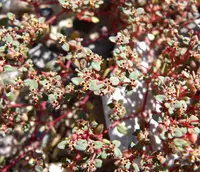
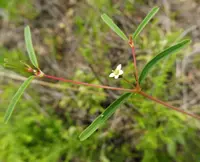
Sonoran sandmat (Euphorbia micromera) is a tiny, mat-forming annual herb native to arid regions of the southwestern United States and northern Mexico. It often appears as low, spreading patches that hug sandy or gravelly ground.
The plant has very small leaves and inconspicuous flowers, adapted to strong sun, heat, and drought. Its tough nature makes it relatively undemanding in cultivation, provided it has fast-draining soil.
Those who want to care for Sonoran Sandmat should know it prefers bright light, low to moderate moisture, and soils that dry quickly between waterings, similar to many desert natives.

Care Difficulty
Easy Care

Light Preference
Full Sun

Water Requirements
Low Water

Temperature Preference
Warm Climate

Hardiness Zone
8–11

Soil Texture
Sandy, Rocky, Loamy

Soil pH
Slightly acidic (6.5–7.0), Neutral (7.0)

Soil Drainage
Well-drained

Fertilization
Minimal (feed rarely)
Scan your plant to receive care tips personalized for your specific plant
Available on iOS and Android
This tiny desert euphorbia thrives in strong sun but benefits from some protection in extreme heat.
This species is strongly drought-adapted and needs sparse, infrequent watering.
This desert annual prefers warm to hot conditions and is not tolerant of frost.
This desert annual prefers very dry air and rarely suffers from low indoor humidity.
This species needs sharply draining, mineral-based soil that dries quickly between waterings.
This small, mat-forming species is suitable for shallow containers and troughs.
This desert annual needs minimal feeding, so any fertilization should stay very light to avoid stressing the roots.
Pruning Euphorbia micromera is rarely needed and is mainly for tidiness and plant health in garden or container settings.
This small desert euphorbia is usually grown in the ground, but container plants or nursery seedlings sometimes need careful transplanting.
Propagation of Euphorbia micromera is most reliable from seed, as the plant is small and short-lived.
This species is adapted to desert climates and usually needs little deliberate winter care where winters are mild and dry.

Plant Health Check
Not sure what's wrong with your plant? Check your plant's health inside the app.
This tiny annual forms low, mat-like patches on open sandy or gravelly soils in the Sonoran and Mojave Deserts, helping it avoid wind damage and reduce water loss near the ground surface.
The flowers are arranged in small cup-shaped structures called cyathia, a typical euphorbia feature, but in this species they are so small that the floral details are usually visible only with magnification.
Populations often occur on alkaline, saline, or gypsum-rich soils, showing a notable tolerance for mineral-rich substrates that many other desert annuals cannot colonize.

In parts of its range, this species can complete its entire life cycle rapidly after brief desert rains, producing seed and then disappearing from view, with the population persisting mainly as a long-lived soil seed bank until the next suitable rainfall event.
This species forms low, mat-like patches but is not typically aggressive. It spreads slowly through short, branching stems, especially in open, sandy spots. Regular edging or container use keeps growth neatly contained in gardens or rock beds.
Keep your plants happy and healthy with plant identification, disease detection, and easy care guidance.