

Use heavy pots
Choose a wide, heavy container (ceramic or clay with drainage) so the top-heavy stems do not tip the plant over as it matures and branches.

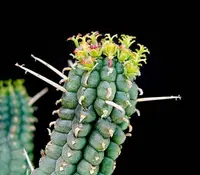
Euphorbia fimbriata is a small succulent shrub from South Africa, known for its ribbed, cactus-like green stems and sparse leaves. It forms clumping mounds that stay compact, making it suitable for containers and small indoor collections.
This species prefers bright light, very well-drained soil, and infrequent watering, which generally makes it low-maintenance once established. Understanding how to care for Euphorbia fimbriata mainly involves avoiding overwatering and protecting it from cold, prolonged damp, and intense frost.
Its growth is relatively slow, so it keeps its shape without frequent pruning. The unusual structure and modest size make it appealing to collectors who enjoy architectural succulents.

Care Difficulty
Moderate Care

Light Preference
Full Sun

Water Requirements
Low Water

Temperature Preference
Tropical / Frost Sensitive

Hardiness Zone
10–11

Soil Texture
Sandy, Loamy, Rocky

Soil pH
Slightly acidic (6.5–7.0), Neutral (7.0)

Soil Drainage
Well-drained

Fertilization
Minimal (feed rarely)
Scan your plant to receive care tips personalized for your specific plant
Available on iOS and Android
This succulent prefers bright, stable light that mimics open, dry habitats.
Watering should be infrequent and guided by soil dryness rather than a strict schedule.
This species prefers warm, dry conditions and does poorly in cold or damp environments.
This species handles typical indoor humidity and rarely needs special adjustment.
Provide a mineral, sharply draining substrate that mimics a rocky, arid habitat.
This species is well suited to growing in containers due to its compact, succulent habit.
Feeding Euphorbia fimbriata is useful but should stay light to avoid soft, weak growth.
Pruning needs are modest and mainly focused on safety, health, and shape control.
Container-grown plants benefit from occasional repotting into fresh, gritty medium.
Propagation is usually done from stem cuttings, which root reliably in warm, dry conditions.
This species dislikes prolonged cold and benefits from simple winter precautions in most climates.

Plant Health Check
Not sure what's wrong with your plant? Check your plant's health inside the app.
This species has distinctive fringed bracts around its cyathia (the specialized euphorbia flower structure), giving the flowering heads a finely fringed or lacy appearance that is unusual even within the genus.
It forms a swollen, tuberous base that produces many short, upright, ridged stems in tight clusters, allowing the plant to resprout from the caudex after minor damage or stem loss.
Like many Euphorbia species, it exudes a white latex sap that is irritating to skin and eyes; this latex helps protect the plant from herbivores and should be avoided during handling when following Euphorbia fimbriata care instructions.
This species contains a milky latex sap that is irritating and potentially toxic if ingested. It can cause mouth, stomach, and skin irritation. Always handle with gloves and keep it away from children, cats, and dogs.
Keep your plants happy and healthy with plant identification, disease detection, and easy care guidance.

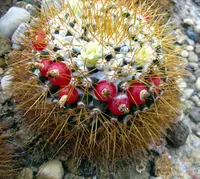
woolly nipple cactus
Mammillaria nivosa
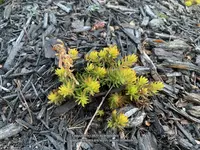
Sedum
Petrosedum rupestre subsp. rupestre 'Angelina'
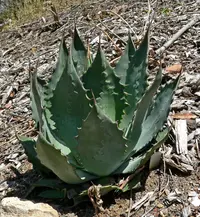
Agave wocomahi
Agave wocomahi
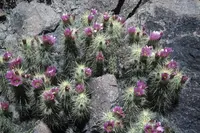
pinkflower hedgehog cactus
Echinocereus fendleri

Elephant's Foot Plant
Pachypodium rosulatum
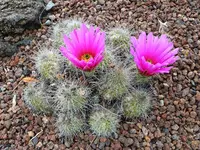
strawberry hedgehog cactus
Echinocereus stramineus
Crassula volkensii
Crassula volkensii
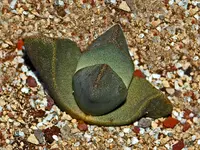
Stone Quaggafig
Pleiospilos bolusii