

Color-boosting stress
For stronger gold and orange tones, expose established plants to slightly lean soil and full sun with only light watering, as mild stress intensifies pigmentation without harming healthy clumps.

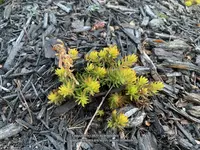
Sedum (Petrosedum rupestre subsp. rupestre 'Angelina') is a low-growing, mat-forming succulent often used as a groundcover or in rock gardens and containers. It forms dense cushions of small, needle-like leaves that are bright yellow-green, often turning orange or bronze in cooler weather.
This species originates from rocky slopes and dry, sunny sites in Europe, so it is naturally adapted to poor, shallow soils and periods of drought. Its tough, spreading habit and shallow root system make it forgiving for beginners who want to learn how to care for Sedum.
The plant prefers full sun, very well-drained soil, and only modest moisture, which keeps growth compact and foliage color intense.

Care Difficulty
Easy Care

Light Preference
Full Sun

Water Requirements
Low Water

Temperature Preference
Cold Hardy

Hardiness Zone
3–9

Soil Texture
Sandy, Loamy, Rocky

Soil pH
Slightly acidic (6.5–7.0), Neutral (7.0)

Soil Drainage
Well-drained

Fertilization
Minimal (feed rarely)
Scan your plant to receive care tips personalized for your specific plant
Available on iOS and Android
This hardy groundcover thrives in bright outdoor conditions with several hours of direct sun.
This succulent prefers infrequent, deep watering in quick-draining soil.
This plant is cold-hardy yet also tolerates typical summer heat when soil drains well.
This species handles typical household humidity well and rarely needs special humidity management.
This plant needs very sharply drained, mineral-rich soil to prevent root problems.
This species performs very well in containers, including shallow bowls and troughs.
This drought-tolerant Sedum needs only modest feeding to stay compact and colorful.
Light pruning keeps Petrosedum rupestre subsp. rupestre 'Angelina' dense, tidy, and well-colored.
This shallow-rooted succulent rarely needs frequent repotting but may benefit from occasional transplanting.
This plant is commonly propagated to expand groundcover or share with others.
This hardy succulent generally needs minimal winter care in the ground in most temperate climates.

Plant Health Check
Not sure what's wrong with your plant? Check your plant's health inside the app.
This cultivar’s needle-like leaves are yellow to chartreuse in full sun but often shift to orange and copper tones in cool weather, especially in autumn and winter. The color change is linked to increased production of protective pigments called carotenoids and anthocyanins under stress from strong light and low temperatures.
The plant spreads by trailing, rooting stems that form dense, low mats only a few cm high. This growth habit helps stabilize thin, rocky soils and makes it especially useful in rock gardens and green roofs where soil is shallow.
In early to midsummer, it produces small, star-shaped yellow flowers held above the foliage in clusters. These nectar-rich blooms are visited by bees and other pollinating insects, supporting local pollinator activity in sunny, dry sites.
This species forms a low, spreading mat but is not generally aggressive. It expands by short stems that root along the ground. In gardens, it is easy to contain by lifting or edging unwanted sections.
Keep your plants happy and healthy with plant identification, disease detection, and easy care guidance.

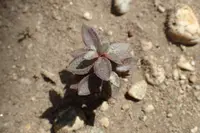
Crassula volkensii
Crassula volkensii
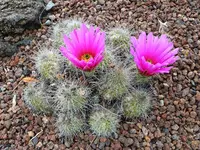
strawberry hedgehog cactus
Echinocereus stramineus
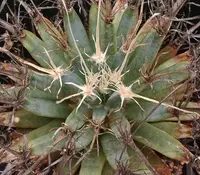
Agave cactus
Leuchtenbergia principis
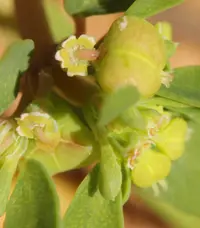
Geyer's Spurge
Euphorbia geyeri
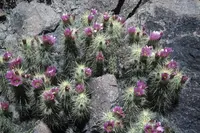
pinkflower hedgehog cactus
Echinocereus fendleri
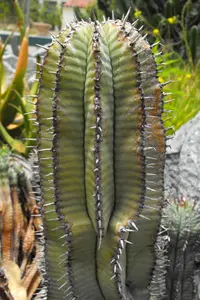
snowflake spurge
Euphorbia polygona
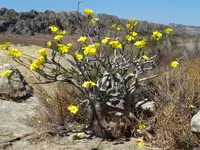
Elephant's Foot Plant
Pachypodium rosulatum
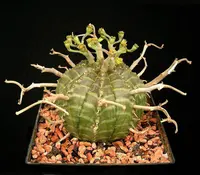
Zebra Milkball
Euphorbia meloformis