


Rock-crevice planting
Tuck the plant into narrow, well-drained rock crevices or between paving stones to mimic its natural alpine habitat and stabilize the roots against frost heave and wind.

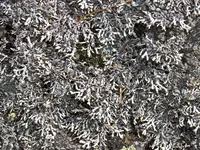
Brodoa intestiniformis is a small, mat-forming lichen that grows tightly pressed to rock surfaces. It often appears as pale, branched, tube-like lobes forming dense cushions. This species is mainly found in cold, often alpine or subarctic regions, where it tolerates strong winds, poor substrates, and long periods of low temperatures. Its slow growth and preference for undisturbed rocky habitats make it more of an observation plant than a garden subject. For those studying how to care for Brodoa intestiniformis in specialist collections, stable cool conditions, clean air, and consistently moist but not waterlogged surfaces are important.

Care Difficulty
Moderate Care

Light Preference
Partial Sun

Water Requirements
Moderate Water

Temperature Preference
Cool Climate

Hardiness Zone
Unknown

Soil Texture
Sandy, Rocky, Loamy

Soil pH
Slightly acidic (6.5–7.0)

Soil Drainage
Well-drained

Fertilization
Minimal (feed rarely)
Scan your plant to receive care tips personalized for your specific plant
Available on iOS and Android
This alpine species prefers open, cool sites with consistent light but limited scorching exposure.
Watering should mimic a rocky, free-draining mountain habitat with short wet periods and quick drying.
This plant is adapted to cool, exposed conditions and handles significant cold if soil drains freely.
This alpine species tolerates a wide humidity range but stays healthiest in moderately dry air.
Brodoa intestiniformis prefers sharply drained, mineral-rich soil that mimics rocky alpine slopes.
This species is suitable for container growing, especially in rock garden troughs or shallow, well-drained pots.
This species grows in nutrient-poor habitats and usually needs no additional feeding in gardens or containers.
Brodoa intestiniformis needs minimal pruning, mainly to keep clumps tidy and healthy.
In cultivation, this plant is usually left undisturbed, but occasional transplanting may be needed to refresh site conditions.
Propagation of this alpine species is possible but more advanced growers tend to have the best success.
This cold-hardy alpine generally survives normal winter conditions in suitable climates with limited intervention.

Plant Health Check
Not sure what's wrong with your plant? Check your plant's health inside the app.
This small lichen is typically found tightly attached to exposed maritime rock on coasts with strong wave action, especially in northern Europe and the North Atlantic region.
The species gets its epithet intestiniformis from its narrow, twisted, intestine-like branches, which form dense, often dark olive to blackish mats on rock surfaces.
It is adapted to survive regular salt spray, desiccation, and mechanical abrasion from waves, using its tough, tightly adherent thallus to stay anchored in one of the harshest terrestrial microhabitats.
This species is a perennial lichen, meaning it persists for multiple years and does not die back after one season. Individual colonies can live for many years if left undisturbed and environmental conditions remain relatively stable.
Keep your plants happy and healthy with plant identification, disease detection, and easy care guidance.

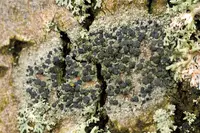
Tiny button lichen
Amandinea punctata
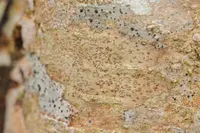
Coniocarpon cinnabarinum
Coniocarpon cinnabarinum
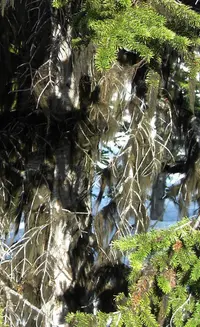
horsehair lichen
Bryoria fuscescens
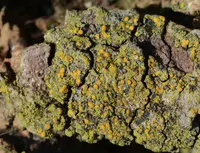
Scythioria phlogina
Scythioria phlogina
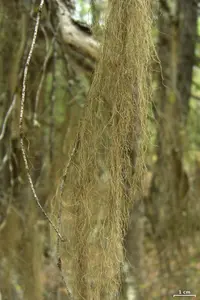
Gray horsehair lichen
Bryoria capillaris
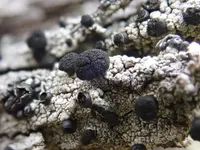
Cupped Soot Lichen
Acolium inquinans

Spiny gray horsehair lichen
Bryoria nadvornikiana
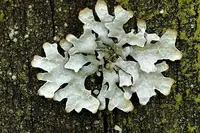
shield lichen
Parmelia sulcata