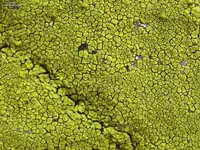
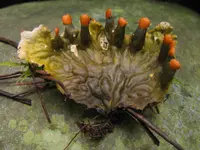
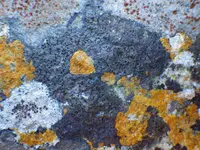
Select stable substrate
Attach thalli only to long-lasting, inert substrates such as unpainted rock, concrete, or old brick, since Buellia aethalea grows slowly and does best on surfaces that will not flake or erode quickly.

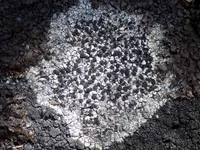
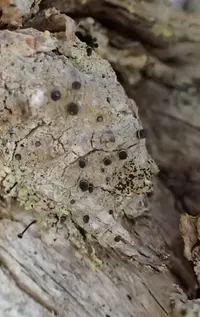
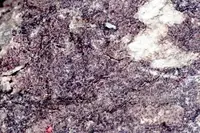
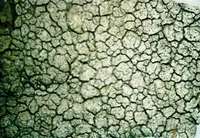
Disc lichen (Buellia aethalea) is a crustose lichen, not a traditional leafy plant. It forms thin, dark gray to almost black crusts tightly attached to rock surfaces. Small, rounded discs scattered across the crust hold its reproductive structures, giving it a speckled, textured look. In nature it is common on exposed rocks in coastal and inland temperate regions. This species tolerates harsh conditions, including wind, sun, and limited nutrients, but grows slowly. It is not a good choice for fast results, yet it suits patient growers interested in how to care for Disc lichen in specialized rock or terrarium setups.

Care Difficulty
Moderate Care

Light Preference
Full Sun

Water Requirements
Low Water

Temperature Preference
Cool Climate

Hardiness Zone
Unknown

Soil Texture
Rocky, Sandy

Soil pH
Slightly acidic (6.5–7.0)

Soil Drainage
Well-drained

Fertilization
Minimal (feed rarely)
Scan your plant to receive care tips personalized for your specific plant
Available on iOS and Android
This crustose lichen prefers stable, open light similar to exposed rock surfaces in nature.
Buellia aethalea relies on natural wetting and drying cycles rather than consistent soil moisture.
This species is adapted to exposed, often harsh climates and tolerates a wide temperature range.
Humidity is not a significant factor for Buellia aethalea, which is adapted to exposed, dry habitats.
This lichen anchors to hard, mineral surfaces rather than typical potting soil, so any substrate should mimic bare, well-drained rock.
This species is only marginally suitable for container culture and behaves more like a crust on rocks than a potted plant.
Buellia aethalea, a crustose lichen, normally gains nutrients from rain, dust, and its substrate, so added fertilizer is not needed.
Buellia aethalea does not require intentional pruning, as it is a crust-forming lichen rather than a typical garden plant.
This lichen is usually left in place on rocks or bark and is not suited to standard repotting.
Propagation of Buellia aethalea is slow and technically specialized, so it is rarely attempted by home growers.
Disc lichen is naturally cold hardy and generally needs no special winter care in outdoor settings.

Plant Health Check
Not sure what's wrong with your plant? Check your plant's health inside the app.
This crustose lichen is especially common on man-made siliceous substrates such as concrete, asphalt, and building stone, often forming dark, tar-like patches in urban environments.
It is known to tolerate relatively high levels of air pollution compared with many other lichens, so its presence in cities does not necessarily indicate clean air.
The species forms numerous tiny, black, disk-shaped fruiting bodies (apothecia) that are slightly immersed in the thallus and help distinguish it from other dark crustose lichens in the field.

Buellia aethalea is considered a cosmopolitan species and has been recorded from multiple continents, occupying a broad climatic range from temperate coastal zones to inland urban habitats, which reflects a high ecological amplitude for a lichenized fungus.
This crustose lichen grows very slowly, often only fractions of a millimeter per year. Growth rate depends on clean air, stable rock surfaces, moisture from rain or fog, and limited physical disturbance or scraping.
Keep your plants happy and healthy with plant identification, disease detection, and easy care guidance.