Yellow Cat's Tail Care (Bulbine abyssinica)

Also known as: African Beardstyle, African Kopieva, Bushy Bulbine
Yellow Cat's Tail

About Yellow Cat's Tail

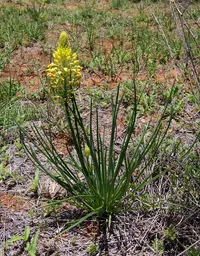
Yellow cat's tail, Bulbine abyssinica, is a small, clumping succulent perennial known for its narrow, grass-like leaves and upright spikes of yellow star-shaped flowers. It stays compact and forms neat tufts, making it suitable for rock gardens, mixed borders, and containers.

This species occurs naturally in grasslands and rocky slopes of eastern and southern Africa, where it experiences strong light and well-drained, often poor soils. Its drought tolerance and modest nutrient needs generally make it easy to grow, especially in warm, low-maintenance plantings.

In cultivation it prefers bright light, freely draining soil, and moderate watering with time to dry between waterings, which guides how to care for Yellow Cat's Tail.

Main Plant Requirements

Care Difficulty

Easy Care

Light Preference

Full Sun

Water Requirements

Low Water

Temperature Preference

Warm Climate

Hardiness Zone

8–11

Soil Texture

Sandy, Loamy, Rocky

Soil pH

Slightly acidic (6.5–7.0), Neutral (7.0)

Soil Drainage

Well-drained

Fertilization

Minimal (feed rarely)

Get Personalized Care Plan

Scan your plant to receive care tips personalized for your specific plant

Available on iOS and Android

How to Care for the Yellow Cat's Tail

Bulbine abyssinica prefers bright conditions that mimic open, sunny grasslands.

  • Provide 6–8 hours of direct sun daily; morning sun is ideal, with light afternoon shade in very hot climates to reduce leaf scorch.
  • It tolerates partial shade, but flowering and compact growth decline if daily direct sun drops below about 4 hours.
  • In winter, ensure it is not shaded by taller plants or structures, as low seasonal sun can already reduce energy for next season’s growth.

This species stores moisture in its roots and prefers slightly dry conditions between waterings.

  • Allow the top 3–5 cm of soil to dry before watering; soil should feel dry and loose, not cool and soggy, when checked by hand.
  • Use sharply drained, gritty or sandy soil so water runs through quickly; standing water or heavy clay promotes root rot in Bulbine abyssinica.
  • In hot, dry weather, leaves that wrinkle or curl inward indicate it is time to water, while yellowing, mushy bases point to overwatering.

This plant comes from mild climates and grows best in warm, frost-free conditions.

  • Optimal growth occurs around 65–80°F (18–27°C), with good flowering and steady leaf production in this range.
  • It tolerates short heat spikes up to about 95°F (35°C) if soil is well drained and not kept wet during very hot periods.
  • Frost is the main risk; sustained temperatures below 30°F (−1°C) can damage foliage, and below 25°F (−4°C) may kill roots unless mulched or protected.

Bulbine abyssinica handles a wide humidity range and rarely needs special humidity control indoors.

  • Target 30–50% humidity, similar to average indoor air, for stable growth of Yellow Cat's Tail.
  • Dry indoor air is usually tolerated; only very hot, forced-air heating can cause leaf-tip browning or shriveling.
  • If stress appears, move the plant away from heat vents and group it with other plants instead of misting frequently.

Bulbine abyssinica prefers lean, fast-draining soil that mimics rocky, sandy habitats.

  • Use a sandy or gritty mix, such as 50–60% cactus mix blended with coarse sand or fine gravel, to prevent waterlogging.
  • Keep pH slightly acidic to neutral (pH 6.0–7.2), avoiding strongly acidic or highly alkaline substrates that limit nutrient uptake.
  • Increase aeration with 20–30% perlite or pumice so roots receive ample oxygen and excess water drains quickly.
  • Avoid heavy clay or peat-heavy mixes that stay wet for long periods and promote root or crown rot.

This species is well suited to container growing in sunny outdoor spots or bright patios.

  • Choose a wide, shallow pot so the fibrous roots can spread while the mix dries evenly between waterings.
  • Select a heavier material such as terracotta or ceramic to keep tall flower stalks stable in wind.
  • Elevate the pot on feet or a plant stand so drainage holes clear freely and runoff does not reabsorb into the root zone.

Bulbine abyssinica grows well in lean soil but benefits from light feeding during active growth for better flowering and foliage.

  • Use a balanced, dilute liquid fertilizer (around 10-10-10 NPK) at 1/2 strength every 4–6 weeks in spring and summer.
  • Alternatively, apply a thin layer of compost or a low-rate slow-release fertilizer at the start of the growing season.
  • Avoid feeding in fall and winter, when growth slows, to prevent weak, soft tissue.
  • Ensure soil is moist before applying fertilizer to reduce root burn and support healthy Yellow Cat's Tail growth.

Bulbine abyssinica responds well to light, periodic pruning that keeps clumps tidy and flowering well.

  • Best time for pruning is late winter to early spring, before strong new growth starts.
  • Remove dead flower stalks at the base to encourage repeat blooming and a neater look.
  • Trim yellowing, damaged, or overcrowded leaves with clean, sharp scissors or hand pruners.
  • Cut back any weak or leggy shoots to maintain a compact, dense clump.

Mature clumps of Bulbine abyssinica need only infrequent repotting or transplanting when crowded or declining in vigor.

  • Check for roots circling the pot holes, compacted soil, or slow growth as signs it needs a larger container or division.
  • Plan to repot or transplant every 3–4 years in early spring, when new growth begins and temperatures are mild.
  • Lift the root ball gently, tease roots apart with fingers, and trim any rotten or broken sections to reduce stress.
  • Replant into well-drained soil at the same depth, water lightly, then shade from intense sun for a few days while it re-establishes.

Bulbine abyssinica is commonly multiplied by division, with seeds used when larger numbers of plants are needed.

  • Divide established clumps in early spring, lifting and separating sections with several shoots and healthy roots.
  • Replant divisions into gritty, well-drained soil, firm gently, then water lightly to settle the roots.
  • For seed, sow fresh seed in spring on the surface of a sandy mix and barely cover.
  • Keep the medium slightly moist in bright, indirect light at 65–75°F until germination.

Bulbine abyssinica is moderately frost tolerant but benefits from simple winter care in colder regions.

  • In USDA zones 8–9, plants often overwinter outdoors with minimal damage, though foliage may die back.
  • Apply a 5–8 cm layer of dry mulch around the root zone in late fall to moderate soil temperature.
  • In containers, move plants indoors or into a frost-free garage when temperatures drop below 25°F.
  • Reduce watering in winter, keeping soil just barely moist to avoid root rot in cool conditions.

Care Tips

Encourage Clump Renewal

Every 2–3 years, lift and divide crowded clumps in late winter or very early spring to maintain vigorous growth and prevent the center from becoming woody and sparse.

Improve Winter Drainage

In regions with wet winters, plant on a slight mound or in a raised bed with added coarse grit so the crown stays drier, which greatly reduces the risk of rot and dieback.

Manage Flowering Stems

Cut back spent flower spikes close to the base throughout the blooming season to promote new flushes of flowers and keep the plant compact and tidy.

Use Gravel Mulch

Apply a 1–2 in layer of coarse gravel or small stones around the base instead of organic mulch to suppress weeds, protect the crown, and keep the foliage dry at soil level, which suits Bulbine abyssinica care in low-rainfall gardens.

Prepare For Transplanting

Water the plant lightly 1 day before relocating it, then transplant in the cooler part of the day and trim back any excessively long or damaged leaves to reduce stress and help roots re-establish quickly.

Common Pests and Diseases

Aloe mite

This pest causes distorted, swollen, or broom-like growths on leaves and flower stalks, often with rough or warty tissue. Symptoms include abnormal clumping and failure of affected shoots to develop normally.

Solution

Remove and discard all visibly distorted or swollen leaves and flower stems, cutting well into healthy tissue with sterile tools. Avoid overhead watering of crowns, quarantine affected plants, and if infestation is advanced, destroy the entire plant to prevent spread to other Bulbine or aloe relatives.

Leaf spot

This disease produces small, irregular brown to dark purple spots on the succulent leaves, sometimes with a yellow halo. Symptoms include gradual coalescing of spots that reduce leaf vigor and appearance.

Solution

Improve air circulation around the clump, avoid wetting the foliage when watering, and promptly remove heavily spotted leaves. In very wet climates, use a copper-based fungicide according to label directions if new spots continue to appear despite cultural adjustments.

Mealybugs

These insects form white, cottony clusters at leaf bases and on flower stems, sucking sap and causing yellowing and stunted growth. This pest also excretes sticky honeydew that can attract sooty mold.

Solution

Isolate the plant, then dab visible insects with cotton swabs dipped in 70% isopropyl alcohol and repeat weekly until no new clusters appear. For larger outdoor plantings, use a strong water spray to dislodge insects and consider a horticultural oil or insecticidal soap, applied thoroughly to leaf bases and undersides.

Aphids

These insects gather on young shoots and flower stalks, causing curling, distortion, and sticky honeydew deposits. This pest can reduce flowering and attract ants that protect the colony.

Solution

Rinse colonies off with a firm stream of water, focusing on new growth and flower stalks, and repeat as needed. For persistent infestations, apply insecticidal soap or a light horticultural oil spray in the early morning, ensuring full coverage of tender growth while avoiding application during high heat.

Interesting Facts

Eastern Cape specialist

This species occurs naturally in rocky grasslands and open slopes of the Eastern Cape and KwaZulu-Natal in South Africa, often forming small, scattered colonies among grasses rather than dense carpets.

Tubers for survival

It develops small, tuber-like storage organs on its roots that store water and nutrients, helping the plant survive periodic drought and grassland fires in its native habitat.

Bee-friendly flowers

The yellow, star-shaped flowers with fuzzy-looking central filaments provide both pollen and nectar and are frequently visited by bees and other small pollinating insects in its home range.

Botan icon

Did you know?

In South African grasslands, this species often resprouts quickly after fire, using its underground storage organs to re-establish foliage and flowers before many surrounding plants have recovered.

FAQs about Yellow Cat's Tail

Sparse or absent flowers usually result from insufficient light, depleted soil nutrients, or old, woody clumps. Increase sun exposure, apply a balanced, low-dose fertilizer in spring, and divide congested clumps every few years to refresh growth.

Grow Healthy Plants with Botan Care

Keep your plants happy and healthy with plant identification, disease detection, and easy care guidance.

Botan plant care app — identify plants on mobile

Explore More Plants