

Summer growth push
Use the plant’s active summer period to repot, divide offsets, and adjust its position, because it recovers and roots fastest while leaves are plump and growth is visible.

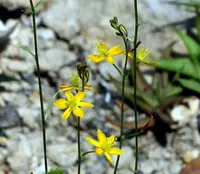
Stone Kopieva, Bulbine mesembryanthemoides, is a compact succulent from arid regions of South Africa. It stores water in small, rounded, stone-like leaves that sit close to the soil. New growth emerges from the center, and the plant stays low, forming a solitary rosette rather than spreading widely.
This species often produces delicate yellow flower spikes above the foliage during its active season. Its strong drought tolerance makes it suitable for careful indoor succulent collections, but it dislikes overwatering and poorly drained soil.
Light, fast-draining mineral soil, and restrained watering are key when learning how to care for Stone Kopieva, especially in cooler or low-light homes.

Care Difficulty
Moderate Care

Light Preference
Full Sun

Water Requirements
Low Water

Temperature Preference
Warm Climate

Hardiness Zone
10–11

Soil Texture
Sandy, Loamy, Rocky

Soil pH
Slightly acidic (6.5–7.0), Neutral (7.0)

Soil Drainage
Well-drained

Fertilization
Minimal (feed rarely)
Scan your plant to receive care tips personalized for your specific plant
Available on iOS and Android
This compact South African succulent thrives in bright, cool sun with strong light but minimal leaf scorch.
This species prefers infrequent, deep watering and fast-drying, gritty soil to protect its swollen roots.
This dwarf succulent prefers mild, dry conditions with cool nights and is sensitive to hard frost.
This succulent prefers dry air and does not need added humidity.
Bulbine mesembryanthemoides needs a very fast-draining, mineral-rich mix to protect its tuberous roots from rot.
This species is very suitable for container growing due to its compact, tuberous habit.
Bulbine mesembryanthemoides is a slow-growing succulent that needs only light, careful feeding to stay healthy in pots.
Bulbine mesembryanthemoides requires minimal pruning, mainly for cleanliness and to maintain a compact rosette.
This compact succulent prefers a snug pot and infrequent repotting to keep the root system stable.
Propagation of Bulbine mesembryanthemoides is usually done by seed and requires some patience and attention to moisture levels.
This species is not frost hardy and needs a cool, dry, and bright winter rest in many climates.

Plant Health Check
Not sure what's wrong with your plant? Check your plant's health inside the app.
This dwarf succulent has swollen, partly translucent leaf tips that rest at soil level, an adaptation that allows photosynthesis while helping the plant blend into the stony terrain of its South African habitat.
During extreme drought or heat, the leaves can retract and shrivel back toward the bulbous leaf bases, reducing exposed surface area and water loss while the plant waits for better conditions.
In its native winter-rainfall regions of the Western and Eastern Cape, this species grows mainly in the cooler, wetter autumn–winter season and often becomes semi-dormant in the hot, dry summer.

Bulbine mesembryanthemoides is considered one of the most geographically restricted members of its genus, occurring naturally only in small, scattered populations on quartz and shale flats in the South African Cape region, which makes habitat protection especially important for its long-term conservation.
This species does best outdoors in bright, dry conditions with good airflow. Indoors it stays smaller and is harder to keep dry enough, so Stone Kopieva indoor care is usually more challenging than outdoor cultivation.
Keep your plants happy and healthy with plant identification, disease detection, and easy care guidance.

 POPULAR
Ladyfinger Cactus
Mammillaria elongata
Thumb Cactus
Mammillaria matudae
Haworthia
Haworthia 'Big Band'
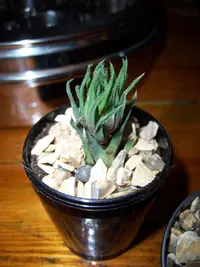
Haworthia angustifolia
Haworthia angustifolia
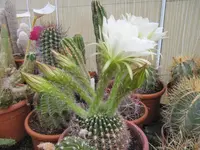
Lobivia mamillosa
Lobivia mamillosa
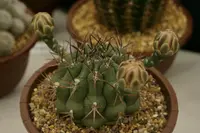
Gymnocalycium schickendantzii
Gymnocalycium schickendantzii
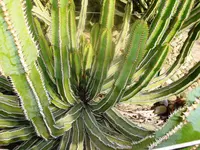
Slender Candelabra Naboom
Euphorbia avasmontana
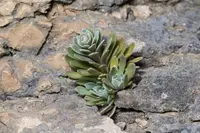
Saw-leaved Liveforever
Rosularia serrata