


Substrate renewal
Refresh part of the host wood or substrate every 1–2 years by adding a fresh section of untreated hardwood, which provides new material for the fungus to colonize and helps maintain vigorous, even fruiting.

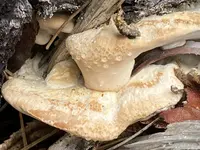
Calcipostia guttulata is a wood-decaying fungus rather than a leafy houseplant. It typically forms crust-like, resupinate fruiting bodies that spread over dead or decaying wood. The surface is usually pale to cream-colored with small droplets or guttules, which give the species its name.
This fungus naturally occurs in forested regions, most often on fallen branches and logs. It is not commonly grown intentionally, but understanding how to care for Calcipostia mainly involves preserving suitable deadwood substrates and stable, humid conditions.
Because it depends on decomposing wood, it does not adapt well to typical indoor pot culture. It is best appreciated in naturalistic woodland or outdoor decay habitats where moisture and shade are consistent.

Care Difficulty
Moderate Care

Light Preference
Partial Shade

Water Requirements
Moderate Water

Temperature Preference
Warm Climate

Hardiness Zone
Unknown

Soil Texture
Loamy

Soil pH
Slightly acidic (6.5–7.0)

Soil Drainage
Well-drained

Fertilization
Minimal (feed rarely)
Scan your plant to receive care tips personalized for your specific plant
Available on iOS and Android
This species prefers bright conditions with protection from intense midday sun.
Watering should balance consistent moisture with fast drainage to protect the roots.
Stable, moderate temperatures support healthy growth and reduce stress for this species.
This species prefers moderate air moisture but usually adapts to typical household conditions if not extremely dry.
This fungus-like organism needs consistently moist, well-structured substrate with free drainage around its host material.
This species can be associated with container-grown woody material if the pot environment mimics moist but freely draining woodland conditions.
This species is typically self-sufficient on modest soils, so use fertilizer sparingly for Calcipostia guttulata in cultivation.
Pruning Calcipostia guttulata is mainly corrective, focused on safety, structure, and plant health.
This species is usually grown in the ground, so focus on careful transplanting rather than frequent container repotting.
Propagation of Calcipostia guttulata is possible but usually undertaken by more experienced growers or nurseries.
This species is generally cold hardy in its suitable climate range and often needs only basic winter care.

Plant Health Check
Not sure what's wrong with your plant? Check your plant's health inside the app.
This fungus is a white-rot polypore that breaks down lignin, the tough structural polymer in wood, leaving a lighter, fibrous residue and playing an important role in nutrient recycling in forests.
Its spores are typically smooth, cylindrical to ellipsoid, and often contain small oil droplets called guttules, a microscopic trait that helps confirm Calcipostia guttulata care instructions in scientific identification.
This species was historically placed in other polypore genera, but molecular phylogenetic studies led to its transfer into the genus Calcipostia, reflecting a more accurate understanding of its evolutionary relationships.
This species generally performs better outdoors in a sheltered, lightly shaded spot with steady airflow and natural humidity. Indoors, stable conditions are harder to maintain, so Calcipostia indoor care usually demands more monitoring, especially of moisture and air movement.
Keep your plants happy and healthy with plant identification, disease detection, and easy care guidance.

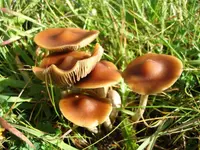
Psilocybe subaeruginosa
Psilocybe subaeruginosa
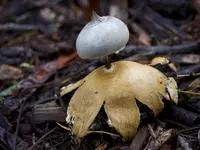
Beaked Earthstar
Geastrum pectinatum
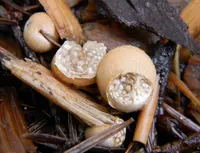
amorphous bird's nest fungus
Nidularia deformis
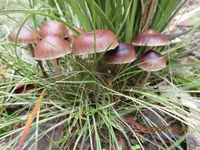
Psilocybe tasmaniana
Psilocybe tasmaniana
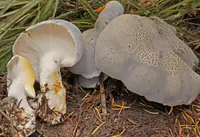
blue knight
Albatrellopsis flettii
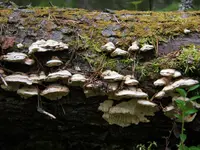
Antrodia heteromorpha
Antrodia heteromorpha
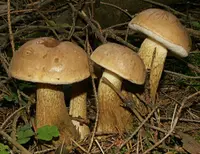
Bitter Bolete
Tylopilus felleus
fused polypore
Albatrellopsis confluens