Psilocybe subaeruginosa Care

Psilocybe subaeruginosa

About Psilocybe subaeruginosa

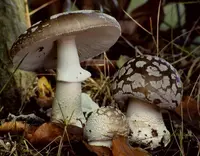
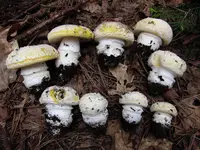
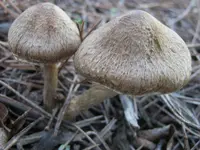
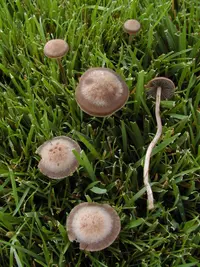
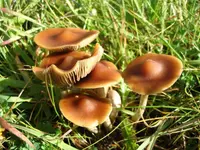
Psilocybe subaeruginosa is a wood-inhabiting mushroom, not a typical houseplant, known for its small to medium caramel-brown caps and slender, pale stems. It commonly fruits in clusters or scattered groups on decaying wood and woody debris.

This species occurs mainly in southern Australia and New Zealand, often in eucalypt forests, shelterbelts, and woodchip mulch in cool, moist conditions. It is considered difficult to reliably cultivate because it depends on specific wood-based substrates, stable moisture, and suitable cool temperatures.

Anyone wanting to learn how to care for Psilocybe subaeruginosa should understand that it is a specialized fungus with narrow environmental requirements and is not suited to casual indoor growing setups.

Main Plant Requirements

Care Difficulty

Hard Care

Light Preference

Partial Shade

Water Requirements

Keep Soil Moist

Temperature Preference

Cool Climate

Hardiness Zone

Unknown

Soil Texture

Loamy, Silty, Organic-rich

Soil pH

Acidic (5.5–6.5)

Soil Drainage

Moist but well-drained

Fertilization

Minimal (feed rarely)

Get Personalized Care Plan

Scan your plant to receive care tips personalized for your specific plant

Available on iOS and Android

How to Care for the Psilocybe subaeruginosa

This wood-loving mushroom prefers low to moderate light that mimics a shaded forest floor.

  • Provide bright shade or dappled light under shrubs or trees, with at most 1–2 hours of gentle morning sun and no direct afternoon sun to avoid drying the substrate.
  • Aim for conditions where you could comfortably read a book but strong shadows are softened by foliage, mulch, or shade cloth acting as filtered light.
  • In summer, increase shade to prevent substrate overheating; in cooler months, allow slightly more indirect light, as Psilocybe subaeruginosa fruits best when moist and protected from harsh sun.

Moist but not waterlogged conditions are essential for reliable fruiting and mycelium health.

  • Maintain evenly moist substrate by watering when the top 1–2 cm feel just starting to dry, then re-wet to a consistent damp, spongy feel without standing water.
  • Use loose, well-drained woodchip or woody mulch so excess water can run off; avoid compacted soils that stay saturated and encourage anaerobic conditions and rot.
  • Reduce watering frequency in cool, wet seasons and increase light, gentle watering in warm, dry periods; watch for pale, shriveling pins as a sign of dryness and sour, swampy odor as a sign of overwatering.

This species favors cool to mild conditions and is sensitive to both hard frost and strong heat.

  • For colonization, aim for 55–68°F (13–20°C); for fruiting, 46–59°F (8–15°C) with steady moisture often gives best results in many temperate regions.
  • Tolerate brief dips to about 32°F (0°C), but protect substrate from repeated hard frosts using mulch, leaf litter, or location under shrubs to buffer temperature swings.
  • In hot periods above 77°F (25°C), provide deep shade and extra moisture, and avoid exposed, heat-reflective spots that can overheat and stall mycelium growth.

This species has demanding humidity needs and should be managed as a specialized cultivation project, not a casual home plant.

  • Maintain 90–95% humidity using a controlled fruiting chamber; brief drops to 80% are usually tolerated if substrate stays moist.
  • Low humidity causes cap cracking, pale drying margins, and stalled pin development, signaling the need to raise ambient moisture.
  • Increase humidity with fine-mist spraying of chamber walls, tight but ventilated lids, and moistened perlite or similar evaporative reservoirs.

Substrate choice for Psilocybe subaeruginosa is highly specialized and differs from typical potting mixes used for houseplants.

  • Use a moist, airy, wood-based substrate such as chipped eucalyptus or mixed hardwood, combined with some well-aged leaf litter for structure.
  • Ensure free drainage so water does not pool; substrate should feel springy and moist, never soggy or compacted.
  • Keep pH slightly acidic to neutral, around 5.5–7.0, avoiding liming materials that push it clearly alkaline.
  • Improve aeration by mixing in coarse chips and avoiding fine, peaty or clay-heavy materials that reduce oxygen diffusion to the mycelium.

This species is sometimes grown in containers outdoors, but only under very controlled, specialized conditions.

  • Choose a deep, rigid tub or box that can hold a thick woodchip layer while staying stable against wind and animal disturbance.
  • Drill multiple side and bottom holes to balance drainage with some air exchange, then elevate the container so water can fully escape.
  • Use a light-colored container to reduce overheating of the substrate surface, especially in exposed sites with strong sun or warm weather.

This wild wood-inhabiting fungus is adapted to nutrient-poor substrates and usually performs best without added fertilizer.

Pruning is not applicable for this mushroom-forming fungus, which naturally completes its life cycle without structural shaping.

Transplanting focuses on moving colonized substrate rather than handling Psilocybe subaeruginosa as a conventional potted plant.

  • Transplant only during active mycelial growth in mild weather to limit stress and contamination risk.
  • Move intact colonized wood chips or debris as a block, avoiding disturbance or crumbling of the mycelium network.
  • Re-establish in a similar shaded, moist, woody substrate layer, matching depth and composition as closely as possible.
  • Water gently after transplanting to settle the substrate, then keep evenly moist without waterlogging to support recovery.

This species is usually left to reproduce naturally, and deliberate propagation is specialized, technical, and often restricted by local laws.

Outdoor colonies in suitable climates generally overwinter without intervention, functioning as part of the natural forest floor community.

Care Tips

Substrate depth control

Maintain a relatively shallow but even substrate layer (3–6 cm) to balance moisture and oxygen, and top up only in thin increments so the mycelium does not get buried and stressed.

Patch edge management

Regularly extend the patch gradually at the edges by adding freshly pasteurized wood-based material, rather than disturbing the center, to keep the most active mycelium zone productive for more seasons.

Mulch layer tweaking

Use a light, airy mulch layer such as fine wood chips or shredded leaf litter over the colonized bed, and adjust thickness seasonally to protect from drying winds in summer while avoiding soggy, compacted cover in wet months.

Moisture monitoring aids

Place a few clean wooden dowels or bamboo skewers vertically into the bed and check them periodically; if they come out almost dry instead of evenly damp, the substrate needs careful, low-pressure rehydration.

Targeted fruiting microclimate

Encourage fruiting by creating a slightly cooler, shaded, and wind-sheltered micro-zone with low plant groundcover or breathable shade cloth, which stabilizes surface humidity without sealing the bed or restricting air exchange when growing Psilocybe subaeruginosa.

Everything About Psilocybe subaeruginosa

Common Pests and Diseases

Fungus gnats

These insects are small dark flies whose larvae feed in moist, carbon-rich substrates used for mushroom cultivation. Symptoms include tiny flying adults around trays and possible damage to mycelium and primordia as larvae tunnel through the substrate.

Solution

Reduce excess surface moisture, allow the top layer of substrate or casing to dry slightly between mistings, and improve ventilation without causing strong drafts. Use fine mesh screens on vents, sticky traps for adults, and, if needed, apply a biological control such as Bacillus thuringiensis israelensis (BTi) to the substrate according to label directions.

Mites

This pest includes several tiny arthropods that may colonize mushroom beds, feeding on mycelium, pins, or decaying material. Symptoms include slow or patchy colonization, deformed fruiting bodies, and fine moving specks on substrate or caps under close inspection.

Solution

Quarantine any suspect cultures, discard heavily infested blocks or trays, and thoroughly clean the growing area, shelving, and tools. Lower excessive humidity, remove spilled organic matter, and where appropriate use predatory mites sourced for mushroom production to reduce problem species over time.

Green mold (Trichoderma)

This disease is caused by aggressive competitor molds that colonize substrate or casing, first appearing as white mycelium that rapidly turns bright to dark green. Symptoms include stalled mushroom growth, sour or sharp odors, and dense green patches that spread from a contamination point.

Solution

Promptly bag and remove contaminated blocks or trays from the grow space to prevent spore spread, and avoid disturbing dry moldy surfaces. Disinfect work areas and tools, improve substrate hygiene and pasteurization or sterilization steps, and tighten cleanliness during spawning and any Psilocybe subaeruginosa care instructions followed indoors.

Bacterial blotch

This disease is usually caused by Pseudomonas species thriving on overly wet mushroom surfaces. Symptoms include yellow to brown greasy spots on caps, slimy lesions, and an unpleasant odor, often following condensation or persistent water droplets.

Solution

Reduce overhead misting and instead maintain even humidity with fine fog or indirect moisture; avoid water standing on caps. Increase air exchange to clear condensation, remove and discard affected fruiting bodies, and sanitize surfaces and any reusable trays between flushes with an appropriate disinfectant.

Cobweb mold

This disease is caused by fast-growing Cladobotryum species that form very thin, grayish webs over casing or mushrooms, sometimes mistaken for mushroom mycelium at first. Symptoms include rapidly spreading, cottony growth that can engulf pins and caps, leading to soft rot and collapse.

Solution

Isolate or discard heavily affected trays to limit spore spread and lower humidity slightly while improving gentle air movement. At the very first appearance, some growers carefully spot-treat with a dilute 3% hydrogen peroxide solution on the affected area and surrounding margin, and then tighten sterile technique and room cleaning before starting new cultures.

Interesting Facts

Distinct blue bruising

This fungus reliably stains blue where the tissue is handled or damaged, due to oxidation of psilocin and related compounds in the fruiting body.

Australasian woodlover

It is native to southern Australia and New Zealand and typically fruits from colonized woody debris, bark chips, and eucalypt litter rather than directly from soil.

Cold-season fruiting

In its natural range it usually fruits in cool, wet conditions from late autumn to early winter, often after extended periods of rainfall and dropping night temperatures.

Botan icon

Did you know?

Molecular studies have shown that this species is closely related to Psilocybe cyanescens and other wood-inhabiting blue-bruising taxa, and has been an important taxon for clarifying the evolutionary history of the Psilocybe genus in the Southern Hemisphere.

FAQs about Psilocybe subaeruginosa

This mushroom contains psychoactive compounds that can affect the central nervous system and cause nausea, confusion, and other symptoms. It should be treated as toxic for children, pets, and uninformed adults, and never consumed casually or unsupervised.

Grow Healthy Plants with Botan Care

Keep your plants happy and healthy with plant identification, disease detection, and easy care guidance.


Botan plant care app — identify plants on mobile

Explore More Plants