Sterile workspace setup
Disinfect tools, work surfaces, and containers with 70% isopropyl alcohol before handling spores or substrate to reduce contamination from molds and bacteria when growing Psilocybe tasmaniana.

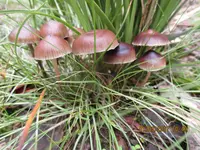
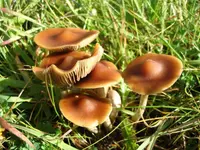
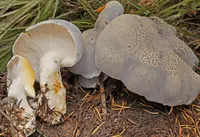
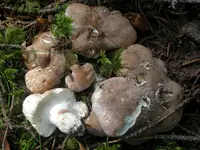
Psilocybe tasmaniana is a small saprotrophic fungus, not a typical ornamental houseplant. It produces slender stems with small, brownish caps that change tone as they dry. The fruiting bodies usually appear in clusters on decaying organic material.
This species is reported from parts of Australia and nearby regions, where it grows in cool, moist habitats rich in woody debris or manured soils. It is not considered a beginner-friendly species, since it has specific environmental needs and is sensitive to contamination.
Those interested in how to care for Psilocybe tasmaniana should understand that it prefers stable moisture, high humidity, and a nutrient-rich but well-aerated substrate, often under controlled conditions.

Care Difficulty
Hard Care

Light Preference
Partial Shade

Water Requirements
Keep Soil Moist

Temperature Preference
Warm Climate

Hardiness Zone
Unknown

Soil Texture
Loamy, Peaty, Organic-rich

Soil pH
Acidic (5.5–6.5)

Soil Drainage
Moist but well-drained

Fertilization
Minimal (feed rarely)
Scan your plant to receive care tips personalized for your specific plant
Available on iOS and Android
This fungus prefers low to moderate light that mimics a shaded forest floor.
Moisture management is critical, as the mycelium is sensitive to both drought and waterlogging.
Stable, cool to mild temperatures support healthy mycelial growth and fruiting.
This species needs carefully controlled high humidity to form healthy fruiting bodies.
Psilocybe tasmaniana is not grown in soil but on sterilized or pasteurized substrates with specific structure and moisture.
This species is typically suitable for controlled container systems such as tubs or boxes rather than ornamental pots.
In natural conditions Psilocybe tasmaniana relies mostly on nutrient-rich organic substrates rather than added fertilizer.
This fungus does not require pruning, since fruiting bodies are temporary and the main organism remains hidden in the substrate.
Cultivation focuses on renewing substrate rather than traditional repotting for this fungus.
Propagation of this species is typically handled by experienced growers using controlled sterile methods rather than casual home techniques.
Outdoor winter care is usually not relevant, as this species is normally maintained in controlled indoor conditions.

Plant Health Check
Not sure what's wrong with your plant? Check your plant's health inside the app.
Described from Tasmania in 1978, this species was later reported from mainland Australia and New Zealand, but molecular studies have suggested that some of those collections may represent different, misidentified taxa, so the exact distribution and limits of the species remain under review.
It is reported primarily from dung or very dung-enriched soils in cool to temperate regions, often appearing in grazed pastures where livestock create the nutrient-rich microhabitat it prefers.
This species is distinguished microscopically by its spore size and shape, the structure of its cystidia (specialized sterile cells on the gill edge and face), and other subtle features, which mycologists rely on because macroscopic traits alone can be misleading.
This species contains psychoactive compounds that affect the central nervous system. Ingestion can cause hallucinations, nausea, anxiety, and disorientation. It should be kept away from children and pets and must not be consumed as food.
Keep your plants happy and healthy with plant identification, disease detection, and easy care guidance.