Root-zone protection
In cold-winter areas, apply a 5–8 cm layer of coarse gravel or decomposed granite over the root zone to reduce soil temperature swings and protect shallow feeder roots from freeze–thaw damage.

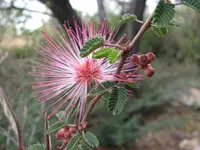
Fairyduster, Calliandra eriophylla, is a small desert shrub known for its fine, fernlike leaves and showy pink powder-puff flowers. It stays compact and often forms low, spreading mounds.
This species is native to arid regions of the southwestern United States and northern Mexico, where it thrives in full sun and rocky, well-drained soils. It is highly drought tolerant once established, which makes it suitable for low-water landscapes.
The plant grows slowly but is long lived and generally low maintenance if given dry conditions and strong light. Understanding how to care for fairyduster starts with respecting its need for sun, airflow, and infrequent watering.

Care Difficulty
Easy Care

Light Preference
Full Sun

Water Requirements
Low Water

Temperature Preference
Warm Climate

Hardiness Zone
8–11

Soil Texture
Sandy, Loamy, Rocky

Soil pH
Slightly acidic (6.5–7.0), Slightly alkaline (7.0–7.5)

Soil Drainage
Well-drained

Fertilization
Minimal (feed rarely)
Scan your plant to receive care tips personalized for your specific plant
Available on iOS and Android
This desert shrub thrives with strong sun but benefits from some seasonal protection.
This species is drought-adapted and prefers deep, infrequent watering once established.
This desert native handles heat very well but is only moderately cold tolerant.
This desert shrub handles very low humidity and usually does not need special moisture management indoors or outdoors.
This species prefers fast-draining, mineral soils that mimic its native desert washes.
This species can be grown in containers if the pot is set up to keep roots dry and well aerated.
Native Calliandra eriophylla usually needs little feeding, but light fertilization can support container or landscape plants in poor soils.
Pruning Calliandra eriophylla is mainly done to maintain shape and remove problem growth rather than to control size.
Fairyduster is usually grown in the ground, so care focuses on thoughtful transplanting rather than frequent repotting.
Calliandra eriophylla is most commonly propagated from seed, with semi-woody cuttings used less often.
Calliandra eriophylla is quite cold hardy in arid, mild-winter regions and usually needs only basic winter care.

Plant Health Check
Not sure what's wrong with your plant? Check your plant's health inside the app.
This shrub survives in the Sonoran and Chihuahuan deserts by going semi-dormant in extreme drought, dropping many leaves and relying on deep, wide-spreading roots to access limited soil moisture.
In its native range, several native solitary bees specialize on its spring bloom, using the abundant pollen from the powder-puff flowers as an early-season food source.
The flower buds mature overnight and often open early in the day, releasing large amounts of accessible pollen right when many desert pollinators begin foraging.

The seeds are explosively dehiscent, meaning the pods dry and suddenly spring open, flinging seeds away from the parent plant to help seedlings establish in scattered microsites across the desert landscape.
Poor flowering usually relates to age, stress, or nutrients. Young plants may take a few seasons to flower. Excess nitrogen, heavy pruning at the wrong time, or root disturbance reduce buds. Stable, low-fertility conditions favor better display.
Keep your plants happy and healthy with plant identification, disease detection, and easy care guidance.