dwarf stickpea Care (Calliandra humilis)

About dwarf stickpea

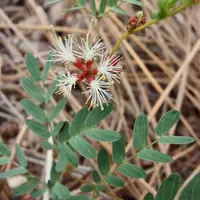
Dwarf stickpea, Calliandra humilis, is a low-growing leguminous shrub native to arid and semi-arid regions of the southern United States and northern Mexico. It typically forms compact mounds with fine, feathery foliage and small, brush-like flower clusters in pink to reddish tones.

This species is adapted to dry, open habitats and often thrives in poor, rocky soils. Its drought tolerance and modest size make it suitable for water-wise gardens and naturalistic plantings.

Plants that are kept close to their native conditions are usually easier to care for dwarf stickpea, especially when given good drainage, full sun, and low to moderate moisture.

Main Plant Requirements

Care Difficulty

Moderate Care

Light Preference

Full Sun

Water Requirements

Moderate Water

Temperature Preference

Warm Climate

Hardiness Zone

8–11

Soil Texture

Sandy, Loamy, Rocky

Soil pH

Acidic (5.5–6.5), Slightly acidic (6.5–7.0)

Soil Drainage

Well-drained

Fertilization

Minimal (feed rarely)

Get Personalized Care Plan

Scan your plant to receive care tips personalized for your specific plant

Available on iOS and Android

How to Care for the dwarf stickpea

Calliandra humilis prefers bright outdoor conditions with several hours of direct sun, balanced by some daily shade.

  • Provide 4–6 hours of direct sun, ideally morning sun with light afternoon shade to protect fine leaflets and flowers.
  • Plant in a spot with open exposure but access to dappled or filtered light during the hottest midday hours in summer.
  • If grown as dwarf stickpea in cooler or cloudy regions, choose the sunniest site available; sparse flowering and lanky stems indicate insufficient light.

Calliandra humilis prefers evenly moist, well-drained soil that dries slightly between waterings.

  • Outdoors in the ground, allow the top 3–5 cm of soil to dry before deep watering, then soak the root zone rather than giving light surface sprinkles.
  • Reduce watering in cool seasons when growth slows, but do not let the soil stay bone dry long enough for leaves to curl or drop.
  • Use a sharply drained soil or sandy loam; yellowing leaves, soft stems, or persistent wetness around the roots indicate overwatering or poor drainage.

This species grows best in warm, frost-free climates with moderate seasonal variation.

  • Aim for an active growth range of 70–90°F (21–32°C), where flowering and shoot growth remain strong.
  • Protect plants when temperatures approach 32°F (0°C); brief light frosts may burn foliage, while harder freezes can kill stems or roots.
  • In hot spells above 95°F (35°C), provide extra mulch and soil moisture, as prolonged extreme heat can stress the plant and reduce flowering.

This species tolerates relatively dry air but grows best with moderate ambient humidity.

  • Aim for 40–60% humidity to support steady growth and flowering in dwarf stickpea.
  • Crisping leaf edges, stalled new growth, and repeated bud drop can signal air that is too dry.
  • Increase humidity by grouping plants, placing containers on pebble trays with water, or positioning them away from heating or air-conditioning drafts.

Calliandra humilis prefers lean, well-drained soils that still hold some moisture around the root zone.

  • Use a sandy or sandy-loam mix with moderate organic matter to balance drainage and moisture retention.
  • Combine roughly 50–60% cactus or sandy potting mix with 20–30% coarse sand and 20% compost for structure and nutrients.
  • Keep pH slightly acidic to neutral, around 6.0–7.2, which supports nutrient uptake without extra amendments.
  • Avoid heavy clay, compacted, or waterlogged substrates; improve aeration by adding coarse sand or perlite if water lingers on the surface.

This small shrub adapts well to container cultivation outdoors in warm climates.

  • Choose a wide, relatively shallow pot to accommodate its spreading root system without creating a deep, water-retentive column of soil.
  • Select a heavier material such as ceramic or clay to stabilize the container against wind and the plant’s branching canopy.
  • Ensure drainage holes are large and unobstructed, and elevate the pot slightly so excess water can exit quickly after rain or irrigation.

Calliandra humilis is a low-nutrient native shrub that benefits from light feeding in poor soils.

  • Use a balanced, slow-release fertilizer (around 10-10-10) or a thin layer of compost in spring.
  • Feed once at the start of the growing season; a second light feeding in midsummer is enough for dwarf stickpea.
  • Apply at half the label rate to avoid lush, weak growth and salt buildup.
  • Skip feeding in late fall and winter to allow natural dormancy.

Calliandra humilis responds well to light, timed pruning that maintains a compact, flowering shape.

  • Carry out main pruning in late winter or very early spring before vigorous new growth starts.
  • Remove dead, damaged, crossing, or overly crowded stems to improve air flow and light penetration.
  • Shorten long, leggy shoots to encourage branching and denser flowering canopy.
  • Use clean, sharp hand pruners and make angled cuts just above healthy buds.

This shrub is more often grown in the ground, so focus on careful transplanting rather than frequent repotting.

  • Plan transplants or container up-potting in early spring or early fall, avoiding extreme heat or cold.
  • Look for roots circling the pot, slow growth, or quick drying soil as signs a container plant needs more space.
  • Shift to a container 2–5 cm wider or a prepared garden site with well-drained soil and similar light conditions.
  • Water thoroughly before and after moving, handle the root ball gently, and keep soil evenly moist until re-established.

Calliandra humilis is commonly propagated from both seeds and semi-hardwood cuttings when warmth and moisture are consistent.

  • Sow fresh seeds in late spring, lightly scarify the seed coat, then keep at 70–80°F in bright, indirect light.
  • Use a well-drained, sandy mix and maintain light, even moisture without waterlogging.
  • Take semi-hardwood cuttings in late spring or summer, 8–10 cm long, with 2–3 nodes.
  • Dip cut bases in rooting hormone, insert into moist mix, and cover with a vented dome to retain humidity.

In suitable climates this species is fairly cold tolerant, but some winter care improves survival and spring growth.

  • Most forms tolerate light frosts, but prolonged hard freezes can damage top growth.
  • Apply a 5–8 cm layer of mulch around the root zone in late fall, keeping mulch off the stems.
  • For containers, move plants into a bright, frost-free area or an unheated but insulated garage or porch.

Care Tips

Encourage Compact Form

Pinch back soft shoot tips in late spring to early summer to keep plants low, bushy, and better covered in flowers when growing dwarf stickpea outdoors or in containers.

Root-Zone Mulching

Apply a 3–5 cm layer of fine bark or leaf mulch around, but not touching, the stems to keep roots cooler, reduce evaporation, and buffer the soil from sudden moisture swings.

Support In Windy Sites

In exposed locations, use a low ring stake or short bamboo canes to gently support young plants and prevent rocking that can damage new roots.

Targeted Deadheading

Snip off spent flower heads just above a leaf node through the flowering season to reduce unwanted self-seeding and help direct energy into new blooms and foliage.

Autumn Stress Check

Inspect plants in late summer to early autumn for stem dieback, scale insects, or spider mites and address issues then, as healthier wood overwinters better and resprouts more strongly in spring.

Common Pests and Diseases

Spider mites

This pest thrives on Calliandra foliage in hot, dry conditions, causing fine stippling, bronzing, and webbing on leaves. Symptoms include slow decline and premature leaf drop when populations are high.

Solution

Rinse foliage thoroughly with a strong but gentle stream of water, including the undersides of leaves, then repeat every few days until mites are controlled. For persistent infestations, use horticultural oil or insecticidal soap labeled for mites, and increase ambient humidity and air movement to make conditions less favorable.

Thrips

These insects feed on tender leaf and flower tissues, leading to distorted new growth, silvery streaks, and browned edges on the fine leaflets. Flowers may appear deformed or fail to open properly.

Solution

Prune and dispose of heavily affected shoots and spent flowers, then wash the plant thoroughly to dislodge insects. Apply insecticidal soap or a neem-based product to all green parts on a 7–10 day schedule, and reduce nearby weeds or tall grass that can act as thrips reservoirs.

Leaf spot

This disease causes small brown, tan, or purplish spots on leaflets that may merge into larger patches, especially during warm, humid weather. Symptoms include thinning foliage and early leaf drop on lower branches.

Solution

Remove and discard affected leaves and any fallen debris around the plant to reduce inoculum. Improve spacing and airflow, avoid overhead watering, and if spotting continues, use a copper-based or other labeled ornamental fungicide applied according to instructions for Calliandra humilis plant care.

Powdery mildew

This disease produces white or grayish powdery patches on leaf surfaces, stems, and sometimes flower buds, most often in warm days and cool nights with poor air circulation. Symptoms include curling or distorted leaves and reduced flowering.

Solution

Increase airflow by thinning crowded branches and avoiding dense plantings, and water at the base to keep foliage dry. Remove heavily infected leaves and, if needed, apply a sulfur or potassium bicarbonate fungicide labeled for ornamental shrubs, repeating as directed until new growth emerges clean.

Scale insects

This pest appears as small, stationary bumps on stems and leaf midribs, extracting sap and causing yellowing, weakened growth, and sticky honeydew that can lead to sooty mold. Infestations may start on woody stems and spread along branches over time.

Solution

Physically remove individual scales from stems with a cotton swab or soft brush dipped in alcohol, and prune severely infested twigs. For broader infestations, treat with horticultural oil applied thoroughly to stems and leaf undersides, repeating at intervals to target newly hatched crawlers.

Interesting Facts

Southwestern desert specialist

This small shrub is native to arid regions of the south-central United States and northern Mexico, where it naturally grows on rocky slopes, grasslands, and open scrub in well-drained, often calcareous soils.

Nitrogen-fixing legume

As a member of the legume family, it forms root nodules with symbiotic bacteria that fix atmospheric nitrogen, helping it survive in low-fertility soils and subtly enriching the surrounding plant community.

Brush-like pink blooms

Its inflorescences are composed mostly of long, pink stamens with very small petals, creating the distinctive powderpuff or tassel-like flowers that are primarily visited by bees and other small pollinators.

FAQs about dwarf stickpea

Lack of flowers usually comes from insufficient light, excessive nitrogen fertilizer, or pruning at the wrong time that removes flower buds. Ensure strong sun exposure, use a balanced fertilizer, and prune lightly right after flowering only.

Grow Healthy Plants with Botan Care

Keep your plants happy and healthy with plant identification, disease detection, and easy care guidance.

Botan plant care app — identify plants on mobile

Explore More Plants