Callicarpa candicans Care

About Callicarpa candicans

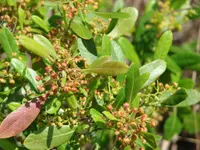
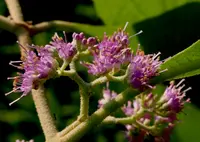
Callicarpa candicans is an evergreen shrub known for its dense foliage and clusters of small, pale berries that follow tiny white to pink flowers. It typically forms a rounded, bushy shape that suits hedges or informal screens in mild climates.

This species is native to tropical and subtropical regions of Southeast Asia and the Pacific, where it grows in forest edges and open woodland. It adapts fairly well in cultivation, but young plants benefit from some shelter from strong winds.

In gardens it prefers bright light, moderate moisture, and well-drained soil, which makes how to care for Callicarpa candicans relatively straightforward for most home growers.

Main Plant Requirements

Care Difficulty

Moderate Care

Light Preference

Full Sun

Water Requirements

Moderate Water

Temperature Preference

Tropical / Frost Sensitive

Hardiness Zone

10–12

Soil Texture

Sandy, Loamy, Organic-rich

Soil pH

Acidic (5.5–6.5), Slightly acidic (6.5–7.0)

Soil Drainage

Moist but well-drained

Fertilization

Minimal (feed rarely)

Get Personalized Care Plan

Scan your plant to receive care tips personalized for your specific plant

Available on iOS and Android

How to Care for the Callicarpa candicans

This shrub prefers bright outdoor conditions with a balance of direct sun and light shade for strong growth and fruiting.

  • Provide 4–6 hours of direct sun daily, ideally with morning sun and light afternoon shade, especially in hotter regions.
  • Tolerates partial shade, but flowering and berry production of Callicarpa candicans decrease if it receives less than about 3–4 hours of direct light.
  • In very hot summers, protect from harsh afternoon sun with dappled shade to reduce leaf scorch and moisture stress.

Watering should keep the soil moderately moist but never saturated, with brief dry periods at the surface.

  • Allow the top 3–5 cm of soil to dry before watering again, using slow, deep watering so moisture reaches the root zone.
  • Ensure well-drained soil; frequent puddling, sour smell, or yellowing soft leaves indicate overwatering and poor aeration around the roots.
  • In hot, dry weather, expect to water more often, while in cool or rainy seasons natural rainfall may be sufficient if leaves remain firm and not drooping.

This species prefers warm, frost-free outdoor climates and shows best growth in stable, mild temperatures.

  • Aim for growing-season temperatures around 70–85°F (21–29°C) to support strong shoot growth and good berry set.
  • Plants are damaged by frost; growth usually stops below about 50°F (10°C) and stems may die back near or just below 32°F (0°C).
  • In hotter areas, brief heat up to 95°F (35°C) is tolerated if soil moisture is maintained, but prolonged extremes above this can cause leaf scorch and stress.

This shrub handles a wide humidity range but benefits from moderate ambient moisture.

  • Aim for 40–60% humidity, typical of outdoor garden conditions in many regions.
  • It tolerates brief dry air, but prolonged hot, very dry winds can cause leaf edge browning and premature leaf drop.
  • Increase humidity around young plants by mulching the root zone and sheltering from drying winds rather than misting foliage.

This species prefers well-drained, moderately fertile mineral soils with some organic matter.

  • Use a loamy or sandy-loam soil with 20–30% compost to provide structure, nutrients, and stable moisture without waterlogging.
  • Ensure drainage is free by avoiding heavy, unamended clay that stays wet, which can promote root rot and poor establishment.
  • A slightly acidic to neutral pH of 6.0–7.0 suits Callicarpa candicans, so avoid highly alkaline sites or add sulfur to gently lower pH.
  • Improve aeration and drainage in heavier soils by incorporating coarse sand or fine gravel into the top 20–30 cm before planting.

This shrub can be grown in containers if the pot size and stability are managed carefully.

  • Choose a large, heavy container to provide root volume and prevent the shrub from tipping in wind as the canopy enlarges.
  • Select a potting mix that drains faster than garden soil to avoid water accumulation around woody roots.
  • Elevate the container slightly on feet or blocks so drainage holes stay clear and excess water can escape quickly after irrigation or rain.

This shrub benefits from light, balanced feeding but often grows acceptably in average garden soil without extra fertilizer.

  • Apply a balanced slow-release fertilizer (around 10-10-10) at half strength once in early spring as growth begins.
  • In poorer soils, supplement with a thin layer of compost over the root zone instead of heavy granular feeding.
  • Avoid additional fertilizer from late summer onward to prevent soft growth before winter.
  • Skip feeding during winter dormancy, especially for established Callicarpa candicans in the ground.

Pruning supports a tidy shape and strong flowering on Callicarpa candicans without heavy intervention.

  • Carry out main pruning in late winter or very early spring before new growth starts.
  • Remove dead, damaged, crossing, or inward-growing branches with clean, sharp bypass pruners.
  • Thin congested stems at the base to open the center and encourage vigorous new flowering shoots.
  • Shorten overly long branches to maintain a balanced outline, cutting just above outward-facing buds.

This shrub is usually grown in the ground, so care focuses on thoughtful transplanting rather than frequent repotting.

  • Plan transplanting for late winter to early spring when the plant is still dormant and stress is lower.
  • Look for slow growth, poor vigor, or roots circling a nursery container as signs it needs a larger space.
  • Lift with as much root ball as possible, keep roots shaded and moist, and replant at the same depth.
  • Water thoroughly after planting, then mulch 5–8 cm deep to limit moisture loss and temperature swings.

Gardeners often increase Callicarpa candicans by semi-ripe cuttings or seeds under controlled conditions.

  • Take semi-ripe cuttings in late summer, 8–12 cm long, and remove lower leaves.
  • Insert cuttings into a free-draining mix, keep at 70–75°F, and maintain high humidity until roots form.
  • Sow fresh seed in autumn or spring in a gritty seed mix and keep evenly moist, not waterlogged.
  • Provide bright, indirect light and shelter from wind for young plants until roots are well established.

This shrub is moderately frost tolerant but benefits from basic winter care in colder regions.

  • In zones near its hardiness limit, add a 5–8 cm mulch layer around the root zone in late fall.
  • Avoid piling mulch directly against stems to reduce rot risk.
  • Move container plants to a sheltered, frost-free or slightly heated area before hard freezes.
  • Delay major pruning until late winter so dead-looking wood is not removed unnecessarily.

Care Tips

Berry bud protection

In late spring, avoid hard pruning and protect young flower clusters from mechanical damage or heavy traffic, since these are the sites that form the decorative berry display later in the season.

Wind-aware siting

Place shrubs where strong prevailing winds are reduced by a fence or taller planting, as this species has relatively brittle young shoots that can snap and lose future berry and foliage structure.

Mulch for root stability

Maintain a 5–8 cm layer of organic mulch over the root zone, keeping it a few cm away from stems, to buffer soil temperature and moisture swings that can stress the plant during hot or dry periods.

Low-branch management

Remove or shorten low, congested interior branches in late winter to improve air circulation at the base and make it easier to monitor stems for scale insects or borers.

Wildlife-friendly underplanting

Underplant with shallow-rooted, drought-tolerant groundcovers rather than digging frequently around the base, which preserves fine feeder roots and supports long-term vigor when growing Callicarpa candicans.

Common Pests and Diseases

Whitefly

This pest often builds up on the undersides of leaves, especially in warm, sheltered garden spots or when plants are grown near other infested ornamentals. Symptoms include sticky honeydew, sooty mold growth, and gradual leaf yellowing or decline.

Solution

Reduce numbers by regularly shaking branches and using a strong but gentle stream of water to dislodge adults and nymphs, then place yellow sticky traps nearby to monitor populations. In heavier infestations, treat the undersides of leaves with insecticidal soap or a light horticultural oil, repeating every 7–10 days until activity drops, and avoid overfertilizing, which encourages soft, attractive new growth.

Scale insects

These insects attach to stems and older wood, where they suck sap and can cause localized dieback, poor flowering, and a general lack of vigor. This pest may appear as small, dome-shaped bumps that do not move when touched, often accompanied by honeydew and sooty mold.

Solution

For light infestations, gently scrape or rub off individual scales with a gloved hand or soft brush, then prune out heavily encrusted twigs. Where coverage is broader, apply a horticultural oil spray during the growing season to smother crawlers and young scales, ensuring thorough coverage of stems, branch crotches, and the undersides of leaves.

Leaf spot

This disease shows as small, brown to purplish spots that may enlarge and sometimes merge, mainly on older foliage in humid or poorly ventilated conditions. Symptoms include premature leaf drop and a somewhat bare, open appearance if many leaves are affected.

Solution

Remove and dispose of heavily spotted, fallen, or yellowing leaves to reduce the source of infection, and avoid overhead watering so foliage stays dry. If the problem persists year after year, consider a preventive copper or broad-spectrum fungicide spray at the start of the wet season, and thin dense growth slightly to improve air movement around the plant.

Powdery mildew

This disease presents as a white, powdery coating on upper leaf surfaces, young shoots, and sometimes flower clusters during warm days and cool, humid nights. Symptoms include distorted new growth and reduced ornamental quality, especially when plants are crowded or shaded.

Solution

Improve air circulation by spacing shrubs adequately and lightly thinning congested stems, and try to keep foliage dry by watering at the base in the morning. At the first signs of disease, remove the worst-affected shoots and, if needed, apply a labeled sulfur or potassium bicarbonate fungicide, repeating according to label directions until new growth emerges clean.

Aphids

These insects cluster on soft shoot tips, young stems, and the undersides of leaves, where they feed on sap and can cause leaf curling and distorted new growth. This pest also produces sticky honeydew that can attract ants and lead to sooty mold on leaves and nearby surfaces, which is a consideration when growing Callicarpa candicans near seating or paths.

Solution

Knock aphids off with a firm stream of water, repeating every few days, and pinch back heavily infested shoot tips. Encourage or conserve natural predators such as lady beetles, and if populations remain high, spot-treat colonies with insecticidal soap or a light horticultural oil, coating the insects directly for best control.

Interesting Facts

Variable leaf surfaces

Callicarpa candicans has strikingly dimorphic foliage, with the leaf undersides densely covered in pale hairs while the upper surfaces are much smoother and greener, creating a two-tone effect when stirred by wind. This hairiness reduces water loss and may protect against herbivory and intense sunlight in its native tropical habitats.

Bird-dispersed violet berries

The shrub produces tight clusters of glossy violet to purple drupes along the stems, a hallmark of Callicarpa candicans plant care observations in the landscape. These fruits are a food source for birds, which disperse the seeds and help maintain populations in coastal forests and thickets.

Tolerance of coastal exposure

In parts of its native range, Callicarpa candicans occurs naturally in coastal scrub and open secondary forest, where it experiences wind, salt spray, and high light. This ecological setting has selected for a relatively tough shrub that can handle bright conditions and some exposure compared with many other understory tropical species.

Botan icon

Did you know?

Some wild populations of Callicarpa candicans have leaves so densely felted on the underside that they appear almost silvery-white from a distance, making entire shrubs stand out as pale masses against the darker surrounding vegetation in coastal thickets and forest edges.

FAQs about Callicarpa candicans

Poor flowering usually comes from insufficient light, heavy or incorrect pruning, or nutrient imbalance, especially excess nitrogen. Focus on how to take care of Callicarpa candicans by providing strong sun, avoiding hard spring pruning, and using balanced fertilizer sparingly.

Grow Healthy Plants with Botan Care

Keep your plants happy and healthy with plant identification, disease detection, and easy care guidance.

Botan plant care app — identify plants on mobile

Explore More Plants