Japanese callicarpa Care (Callicarpa japonica)

Also known as: Japanese Beautyberry
Japanese callicarpa

About Japanese callicarpa

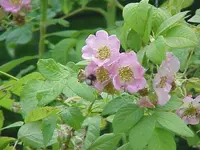
Japanese callicarpa (Callicarpa japonica) is a deciduous shrub valued for its compact form and striking clusters of glossy purple berries in fall and early winter. It typically has arching branches, simple green leaves, and small, light-colored flowers that give way to dense berry displays along the stems.

This species is native to Japan and parts of East Asia, where it grows in woodland edges and thickets. It is generally considered easy to grow in gardens, as long as it receives sufficient light, well-drained soil, and steady moisture. Gardeners who learn how to care for Japanese callicarpa usually find it a reliable ornamental for seasonal color.

Main Plant Requirements

Care Difficulty

Easy Care

Light Preference

Full Sun

Water Requirements

Moderate Water

Temperature Preference

Cold Hardy

Hardiness Zone

5–8

Soil Texture

Loamy, Sandy, Clay

Soil pH

Acidic (5.5–6.5), Slightly acidic (6.5–7.0)

Soil Drainage

Moist but well-drained

Fertilization

Minimal (feed rarely)

Get Personalized Care Plan

Scan your plant to receive care tips personalized for your specific plant

Available on iOS and Android

How to Care for the Japanese callicarpa

This deciduous shrub needs ample light to flower and fruit well.

  • Provide 6–8 hours of sun daily, ideally with morning sun and light afternoon shade in hotter regions to protect foliage from scorch.
  • Tolerates partial shade (around 3–4 hours of direct sun), but Japanese callicarpa will produce fewer berries and more open, leggy growth.
  • In cooler climates, full sun all day is suitable; in very hot summers, use filtered light or dappled shade during peak midday hours.

This shrub prefers steady moisture in well-drained soil, especially during establishment.

  • Water when the top 3–5 cm of soil feels dry, giving a deep soak so moisture reaches the root zone rather than frequent shallow watering.
  • During the first 1–2 growing seasons, monitor closely in dry spells; drooping leaves signal thirst, while yellowing leaves and soft stems suggest overwatering.
  • Ensure soil drains freely; amend heavy clay with compost or grit to prevent standing water, which increases root rot risk for Callicarpa japonica.

This hardy shrub tolerates a broad temperature range but responds best to moderate conditions.

  • Optimal growth occurs around 65–80°F (18–27°C) during the growing season, supporting strong shoots and abundant flowering.
  • Mature plants tolerate winter cold down to about 0°F (−18°C) once established, with leaf drop and dormancy in late fall as temperatures decline.
  • In hot summers above 90°F (32°C), provide soil mulch to keep roots cooler and reduce stress, and avoid planting against highly reflective south-facing walls.

This shrub handles a wide humidity range and usually does not need special humidity management outdoors.

  • Performs well at 30–60% humidity, typical for many temperate outdoor climates.
  • Tolerates short dry spells without damage if soil moisture is kept consistent.
  • Indoors, very dry air may crisp leaf edges; increase humidity slightly with a nearby tray of water and pebbles if needed when caring for Japanese callicarpa.

Callicarpa japonica prefers evenly moist, well‑structured soil that drains freely yet retains some organic moisture.

  • Use a loamy mix with moderate organic matter, such as garden loam blended with compost and leaf mold, to support steady growth.
  • Ensure drainage by incorporating coarse sand or fine grit, especially in heavier clay, to prevent waterlogging around the root zone.
  • Aim for slightly acidic to neutral pH, about 6.0–7.0, which supports nutrient uptake and healthy foliage color.
  • Avoid compacted, poorly drained sites; improve aeration by loosening the top 20–30 cm and working in organic matter before planting.

This species can be grown in containers when given enough root space and stable support for its shrubby form.

  • Choose a deep, heavy pot (ceramic or thick plastic) that resists tipping as the woody stems gain height and mass.
  • Select a pot diameter large enough for a broad root spread so the shrub does not dry out rapidly between waterings.
  • Use a container mix amended with coarse bark or perlite so excess water clears quickly through the drainage holes while roots stay aerated.

This shrub benefits from light, balanced feeding but grows acceptably in average garden soil without heavy fertilization.

  • Use a balanced slow-release granular fertilizer (around 10-10-10) or compost in early spring at the start of active growth.
  • Apply once per year in most garden soils; very poor or sandy soils may benefit from a second light application in midsummer.
  • Reduce or stop feeding Japanese callicarpa from late summer onward to allow stems to harden before winter.
  • If using liquid fertilizer, dilute to 1/2 strength and apply only during the main growing season.

Thoughtful pruning keeps Callicarpa japonica compact, healthy, and with good berry production.

  • Prune in late winter or very early spring before new growth starts, when the plant is still leafless.
  • Remove dead, damaged, crossing, or very weak stems first, cutting back to healthy wood with clean, sharp bypass pruners.
  • Thin out some older stems at the base to open the center, improving light penetration and encouraging vigorous new shoots.
  • Shorten overly long branches to shape the shrub, but avoid cutting all stems hard in one year to maintain flowering.

This species is usually grown in the ground, so focus on careful transplanting rather than frequent repotting.

  • Transplant young shrubs in early spring or early fall, when temperatures are mild and soil moisture is stable.
  • Look for signs such as roots circling a nursery container or water running off quickly, indicating the plant has outgrown its pot.
  • Move up only 1 pot size, disturb roots as little as possible, and keep the original soil level at the same depth in the new location.
  • Water thoroughly after planting, then keep soil evenly moist for several weeks to limit transplant shock and support new root growth.

Callicarpa japonica is commonly propagated by cuttings, layering, or seeds where patience is available.

  • Take semi-ripe cuttings in late spring to midsummer, 8–10 cm long, and remove lower leaves before inserting into moist, free-draining medium.
  • Provide warm conditions around 68–75°F, bright but indirect light, and high humidity to support root formation on cuttings.
  • Use simple ground layering in spring by bending a low branch to the soil, pinning it down, and covering a section with soil until roots form.
  • Sow fresh seed in fall in trays outdoors or in a cold frame, allowing natural winter chilling to break dormancy and improve germination.

This shrub is generally cold hardy in much of the US and needs only modest winter care in typical garden settings.

  • In colder regions, apply a 5–8 cm mulch layer around the root zone in late fall, keeping it slightly away from the stems.
  • Leave berry-bearing shoots uncut until late winter so fruit remains for winter interest and wildlife.
  • For container plants in climates below the shrub’s hardiness, move pots into an unheated garage or sheltered area to avoid deep freezing.

Care Tips

Fruit display renewal

Cut back 1–3 of the oldest, woodiest stems at ground level right after berry drop to encourage strong young shoots that carry heavier and more visible fruit the following autumn.

Branch arching support

Install low, discreet shrub rings or short stakes with soft ties around the plant in late spring to gently support arching branches so that heavy berry clusters stay off the ground and remain cleaner and more ornamental.

Bird browsing management

If birds strip the berries too early, use temporary bird-safe netting on a simple frame set a few inches away from the branches, then remove it as soon as most fruit has colored and been enjoyed visually.

Layering for clones

To propagate an exact copy of a favorite plant, bend a flexible young stem to the ground in late spring, pin it down with a U-shaped wire under 2–3 cm of soil, keep it moist, then detach and transplant the rooted section after 1 growing season.

Partner planting for fruit

For reliable cross-pollination, plant 2 genetically different selections within 1–3 m and record their names and planting positions, which makes future planning for growing Japanese callicarpa in the landscape more effective.

Common Pests and Diseases

Aphids

These insects feed on young shoots and leaf undersides, causing curling, distortion, and sticky honeydew that can lead to sooty mold on leaves and berries.

Solution

Prune off heavily infested shoot tips, then wash remaining stems and leaves with a strong stream of water to dislodge insects; for persistent infestations, use insecticidal soap or a horticultural oil, applied thoroughly to leaf undersides and repeated as needed according to label directions.

Spider mites

These pests thrive in hot, dry conditions and cause fine stippling on leaves, bronzing, and in heavy cases fine webbing between leaves and stems.

Solution

Increase humidity around the shrub and hose down foliage regularly, paying attention to leaf undersides; if damage continues, apply a horticultural oil or miticide labeled for spider mites, making 2–3 treatments at 7–10 day intervals to cover emerging stages.

Leaf spot

This disease produces small brown to purplish spots on leaves that may enlarge and merge, sometimes leading to premature leaf drop late in the season.

Solution

Remove and dispose of affected fallen leaves, avoid overhead watering, and improve air circulation by thinning crowded interior branches; in severe, recurring cases, a preventative copper or chlorothalonil-based fungicide can be applied in spring when new foliage emerges, following label instructions.

Powdery mildew

This disease causes white to gray powdery growth on leaf surfaces, which can lead to distorted new growth and reduced vigor in shaded or poorly ventilated sites.

Solution

Improve light and airflow by selective pruning and avoid dense overcrowding around the shrub; if symptoms are significant, apply a labeled fungicide for powdery mildew, such as a horticultural oil or sulfur product, starting at the first sign of infection and repeating as directed.

Scale insects

These pests appear as small, dome-shaped or flat bumps on stems and sometimes leaves, sucking sap and causing gradual yellowing, poor growth, and sticky honeydew on foliage and berries.

Solution

Gently scrape or prune out heavily infested stems, then treat remaining branches with horticultural oil during the dormant season or at crawler stage, making sure to coat all bark surfaces; monitor for reinfestation and repeat applications as needed according to label guidance for Callicarpa japonica care instructions.

Interesting Facts

Distinct violet winter fruit

This species produces dense clusters of small, glossy violet drupes that persist into winter and are particularly vivid after leaf fall, making it one of the more visually striking fruiting shrubs in its native woodland edges and thickets in Japan and East Asia.

Bird-dispersed seed strategy

The fruits are mildly astringent to humans but are eaten by birds in late autumn and winter, which disperse the seeds through their droppings and help maintain natural populations along forest margins and secondary growth areas.

Seasonal foliage and bark

Leaves are opposite, finely toothed, and can show yellow to purplish tones in autumn, while older stems develop a gray-brown bark that contrasts with the bright fruit, creating a characteristic layered appearance in established shrubs.

Botan icon

Did you know?

Callicarpa japonica played a documented role in early modern Japanese horticulture, being cultivated in temple and courtyard gardens during the Edo period for its winter fruit display and inclusion in traditional seasonal landscape compositions that emphasized color across all four seasons.

FAQs about Japanese callicarpa

Poor flowering usually comes from too much shade, heavy pruning at the wrong time, or nutrient imbalance. Avoid cutting new wood in late winter, maintain moderate fertility, and ensure at least partial sun to support reliable berry display.

Grow Healthy Plants with Botan Care

Keep your plants happy and healthy with plant identification, disease detection, and easy care guidance.

Botan plant care app — identify plants on mobile

Explore More Plants