Train As A Climber
Guide young shoots onto a sturdy trellis or fence and loosely tie them with soft garden ties, which encourages a stable, branching framework and keeps spiny stems away from walkways.

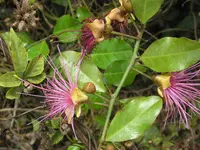
Indian caper (Capparis zeylanica) is a woody, climbing shrub native to India, Sri Lanka, and nearby tropical regions. It often scrambles over rocks, fences, or other plants, forming a dense, thorny tangle.
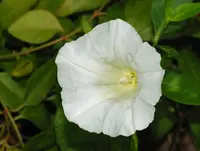
The plant has small, oval leaves and showy white flowers with many long purple-tipped stamens, followed by elongated, fleshy fruits. Its tough nature, heat tolerance, and drought resistance make it suitable for low-maintenance, warm-climate gardens.
In cultivation, it prefers full sun, well-drained soil, and moderate watering, and it copes better with neglect than with overwatering. Understanding how to care for Indian caper helps prevent root problems and supports flowering and fruiting.

Care Difficulty
Moderate Care

Light Preference
Full Sun

Water Requirements
Low Water

Temperature Preference
Tropical / Frost Sensitive

Hardiness Zone
10–12

Soil Texture
Sandy, Loamy, Rocky

Soil pH
Slightly acidic (6.5–7.0), Neutral (7.0)

Soil Drainage
Well-drained

Fertilization
Minimal (feed rarely)
Scan your plant to receive care tips personalized for your specific plant
Available on iOS and Android
Capparis zeylanica grows best in strong light that mimics its native dry, open habitats.
This drought-tolerant shrub prefers infrequent, deep watering rather than frequent light applications.
This species prefers warm climates and does not tolerate frost.
Capparis zeylanica handles a wide humidity range and usually does not need special humidity management.
Capparis zeylanica prefers lean, fast-draining soil that mimics rocky or sandy native habitats.
This species can be grown in containers where space or soil conditions are limiting.
Capparis zeylanica is adapted to low-nutrient soils and needs only light feeding in cultivation.
Pruning Capparis zeylanica helps manage its scrambling habit and maintain a strong framework.
This species is more often grown in the ground, so focus on careful transplanting rather than frequent repotting.
Capparis zeylanica can be propagated, but success is moderate and often slow.
This warm-climate shrub is frost sensitive and needs protection in regions with cold winters.

Plant Health Check
Not sure what's wrong with your plant? Check your plant's health inside the app.
This species naturally grows as a scrambling, woody climber armed with recurved spines that hook onto surrounding vegetation, helping it climb over other plants in dry thickets and forest edges.
Its white, many-stamened flowers typically open in the evening and are short-lived, an adaptation that aligns with nighttime and crepuscular pollinators such as moths.
The leaves serve as a larval food source for several butterfly species in South Asia, including some swallowtails, making the plant an important component of local insect biodiversity.

In parts of its native range, this species is used in living fences, where its dense, thorny, climbing growth habit forms an effective natural barrier for boundaries and to protect fields from grazing animals.
The flowers strongly attract bees, butterflies, and other nectar-feeding insects. Large, showy blooms with many stamens provide abundant pollen and nectar, so planting this shrub supports local pollinator populations and increases biodiversity in dry and coastal gardens.
Keep your plants happy and healthy with plant identification, disease detection, and easy care guidance.