Manage Spreading Habit
Install a shallow root barrier or edging strip 15–20 cm deep around beds to prevent this rhizomatous fern from slowly invading adjacent plantings while still allowing good drainage.

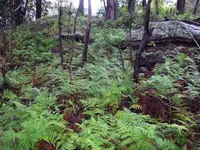
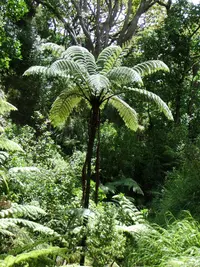
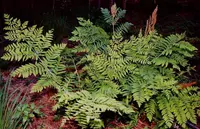
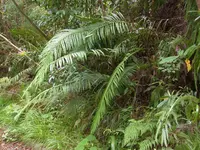
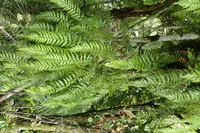
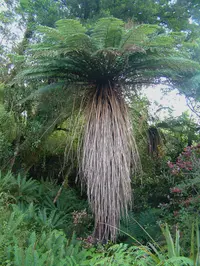
Common ground fern (Calochlaena dubia) is a soft, finely textured fern native to forests and moist woodlands of eastern Australia and nearby regions. It forms dense clumps with arching fronds that create a lush, ground-covering layer.
This species is typically evergreen in mild climates and can spread gradually by short creeping rhizomes, making it effective for filling shaded garden beds. Its main appeal is the combination of fast growth and relatively low maintenance when basic moisture and shade needs are met.
Understanding how to care for Common Ground Fern starts with providing consistently moist, humus-rich soil and protection from hot, direct sun, conditions that mirror its natural habitat on the forest floor.

Care Difficulty
Moderate Care

Light Preference
Partial Shade

Water Requirements
Keep Soil Moist

Temperature Preference
Tropical / Frost Sensitive

Hardiness Zone
9–11

Soil Texture
Loamy, Peaty, Organic-rich

Soil pH
Acidic (5.5–6.5)

Soil Drainage
Moist but well-drained

Fertilization
Minimal (feed rarely)
Scan your plant to receive care tips personalized for your specific plant
Available on iOS and Android
This fern prefers bright, indirect light that mimics a dappled forest floor.
This species prefers consistently moist but not waterlogged soil.
This fern prefers mild, frost-free conditions with only moderate heat.
This fern prefers consistently moist air and reacts quickly to very dry conditions.
This species prefers loose, humus-rich soil that stays evenly moist but never waterlogged.
This fern grows well in containers when moisture and stability are carefully managed.
This fern prefers modest feeding, as overly rich soil can cause weak, floppy fronds in Common Ground Fern.
Pruning Calochlaena dubia focuses on hygiene and keeping the clump tidy rather than shaping.
This fern forms a spreading root system and benefits from occasional transplanting or division in cultivation.
This fern is most reliably propagated by division rather than from spores in home conditions.
In mild climates this fern is fairly tolerant but still benefits from light winter protection, especially in containers.

Plant Health Check
Not sure what's wrong with your plant? Check your plant's health inside the app.
This species has very finely divided, soft-textured fronds covered in short hairs, giving it a slightly fuzzy feel and a duller, matte green appearance compared with many shiny rainforest ferns.
It commonly colonizes disturbed sites such as logged or burnt eucalypt forests and tracksides in eastern Australia, forming dense, spreading colonies that help shade the ground and stabilize soil.
Its tough, creeping rhizomes (underground stems) can spread laterally through the soil, allowing the fern to form extensive clonal patches that re-sprout reliably after cutting or light disturbance.

In parts of southeastern Australia, this fern can dominate the understorey after bushfire, sometimes forming near-monocultures that temporarily suppress tree and shrub seedlings until canopy cover returns.
This species spreads gradually through creeping rhizomes and can form dense clumps over time. It is not usually aggressive, but in mild, moist climates it may need edging or division to stop it encroaching on nearby plants.
Keep your plants happy and healthy with plant identification, disease detection, and easy care guidance.