

Shaded pot placement
Keep pots inside a larger cachepot or tray with taller companion plants around them to shield the delicate fronds from direct air movement and light fluctuations while still allowing bright, indirect light from above.

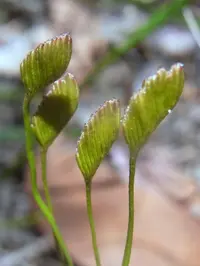
Forked comb fern (Schizaea bifida) is a small, unusual fern known for its fine, forked fronds that resemble a delicate comb. It has a low, tufted growth habit that often forms loose, scattered patches rather than dense clumps.
This species is native to Australia and parts of New Zealand, where it grows in nutrient-poor, sandy or peaty soils, often in heathland or open woodland. It prefers consistently moist but well-drained conditions and is sensitive to drying out or disturbance.
Because it has specific soil and moisture requirements and dislikes root disturbance, it is considered challenging to cultivate. Anyone who wants to care for Forked Comb Fern should focus on providing stable moisture, gentle light, and very free-draining, low-nutrient substrate.

Care Difficulty
Hard Care

Light Preference
Partial Shade

Water Requirements
Keep Soil Moist

Temperature Preference
Warm Climate

Hardiness Zone
Unknown

Soil Texture
Sandy, Loamy, Organic-rich

Soil pH
Acidic (5.5–6.5)

Soil Drainage
Moist but well-drained

Fertilization
Minimal (feed rarely)
Scan your plant to receive care tips personalized for your specific plant
Available on iOS and Android
This fern prefers soft, filtered light that mimics a bright forest floor.
This species needs consistently moist but not waterlogged soil around its fine roots.
This fern is adapted to mild, frost-free conditions with stable, moderate temperatures.
This fern needs consistently moist air to grow well and stay healthy in cultivation.
Schizaea bifida needs a loose, consistently moist, acidic medium that mimics damp, sandy peat or heathland soils.
This species can be grown in containers if moisture and aeration are tightly controlled.
This delicate fern has low nutrient demands, so fertilizer use should be light and carefully controlled.
Pruning needs for Schizaea bifida are minimal and focus on cleanliness rather than reshaping.
This species dislikes frequent disturbance, so repotting or transplanting should be infrequent and gentle.
Schizaea bifida is usually propagated by spores and is considered challenging for home growers.
In mild climates, this fern needs only modest winter care, but it is sensitive to hard frost.

Plant Health Check
Not sure what's wrong with your plant? Check your plant's health inside the app.
This fern produces highly modified fertile fronds that resemble tiny double‑toothed combs, with sporangia (spore cases) packed along the forked tips rather than on expanded leaf blades.
It naturally occurs in nutrient‑poor, sandy heathlands and coastal swales in Australia and New Zealand, often forming small, scattered colonies in open, acidic soils with seasonal moisture.
Schizaea bifida belongs to the Schizaeaceae, an old and relatively small fern family characterized by narrow, grass‑like sterile fronds and unusual reproductive structures that differ markedly from typical broad‑leaf ferns.

In parts of southeastern Australia, Schizaea bifida is considered an indicator of long‑undisturbed heath or woodland, since it often persists only where natural fire and soil conditions have remained relatively stable over extended periods.
Brown tips or fronds usually come from low humidity, drying out between waterings, or excess fertilizer salts. Maintain consistently moist but not soggy substrate, increase humidity, avoid direct hot drafts, and flush the pot occasionally to remove built‑up salts.
Keep your plants happy and healthy with plant identification, disease detection, and easy care guidance.

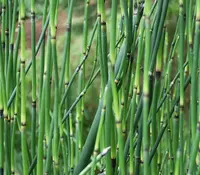
giant horsetail
Equisetum giganteum
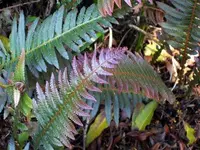
prickly rasp fern
Blechnum neohollandicum
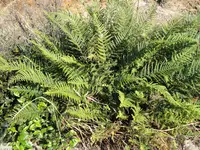
Dixie silverback fern
Pityrogramma calomelanos
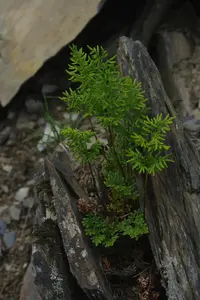
Cryptogramma brunoniana
Cryptogramma brunoniana
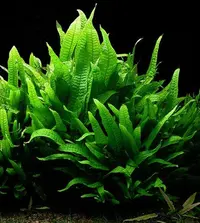
Java fern
Leptochilus pteropus
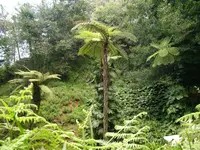
lacy tree fern
Sphaeropteris cooperi
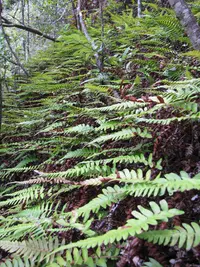
hammock fern
Blechnum occidentale
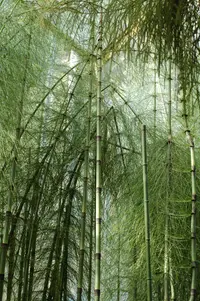
Mexican Giant Horsetail
Equisetum myriochaetum