Protect tender trunk
Wrap the upper trunk and crown base with breathable frost cloth or hessian on forecast cold nights below 30°F to prevent damage to the soft growing point.

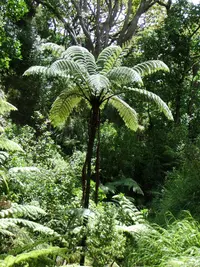
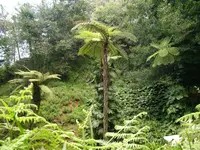
Mamaku, or Sphaeropteris medullaris, is a large tree fern native to New Zealand’s moist forests and stream edges. It forms a tall, dark trunk topped with a broad crown of arching fronds.
The plant creates strong vertical structure and deep shade, so it suits sheltered, woodland-style plantings. Fronds can be damaged by frost or harsh sun, which makes it less suitable for exposed or very dry gardens.
It prefers consistently moist, humus-rich soil and filtered light, so gardeners who care for mamaku need to provide protection from drying winds and prolonged cold.

Care Difficulty
Hard Care

Light Preference
Partial Shade

Water Requirements
Keep Soil Moist

Temperature Preference
Warm Climate

Hardiness Zone
9–11

Soil Texture
Loamy, Peaty, Organic-rich

Soil pH
Acidic (5.5–6.5), Slightly acidic (6.5–7.0)

Soil Drainage
Moist but well-drained

Fertilization
Minimal (feed rarely)
Scan your plant to receive care tips personalized for your specific plant
Available on iOS and Android
This large tree fern prefers bright, filtered conditions that mimic a forest canopy.
This fern needs consistently moist, cool soil without becoming stagnant or waterlogged.
This species thrives in mild, frost-free climates with stable, cool to warm temperatures.
This species needs consistently high humidity to keep fronds lush and prevent tip dieback.
Sphaeropteris medullaris prefers deep, moist, organic-rich soil that stays airy and never waterlogged.
This fern can be grown in large containers if the pot supports its tall, heavy crown and constant moisture needs.
This tree fern benefits from light, consistent feeding but is sensitive to overfertilizing, so focus on gentle inputs when caring for mamaku.
Pruning Sphaeropteris medullaris is minimal and focuses on hygiene rather than shaping.
This tree fern is usually grown in the ground, so attention focuses on careful transplanting rather than frequent repotting.
Propagation of Sphaeropteris medullaris is possible but technically demanding and slow for most home growers.
This tree fern is frost sensitive and needs careful winter management in cooler regions.

Plant Health Check
Not sure what's wrong with your plant? Check your plant's health inside the app.
In its native New Zealand range, this tree fern often forms a dominant mid-canopy layer, creating a shaded, humid microclimate that helps many shade-adapted plants and seedlings establish beneath its umbrella-like fronds.
The species is easily recognized in the wild by its tall, dark to almost black fibrous trunk, which contrasts strongly with the bright green fronds and is used by botanists and local people to distinguish it from other large tree ferns.
As a large tree fern, it represents one of the oldest surviving plant lineages, and its general form is similar to fern-dominated vegetation that was widespread in the Paleozoic and Mesozoic eras, giving modern forests a reminder of pre-flowering-plant ecosystems.

In Māori cultural tradition, the frond of this tree fern, known as mamaku, has long been used as a material and visual motif, and living specimens are sometimes protected near settlements as valued elements of the ancestral landscape.
Growth is relatively fast in mild, moist climates. Young plants can add 30–100 cm of trunk per year once established, but growth slows with age and in cooler, drier, or wind‑exposed sites.
Keep your plants happy and healthy with plant identification, disease detection, and easy care guidance.