Broken Yokes Care (Calogaya decipiens)

Broken Yokes

About Broken Yokes

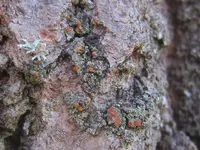
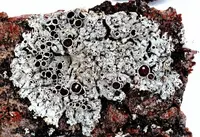
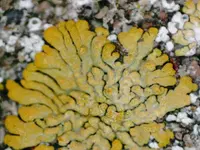
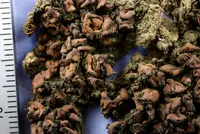
Broken Yokes, the common name for Calogaya decipiens, is a crustose lichen rather than a typical leafy plant. It forms flat, tightly attached patches on rock, with yellow to orange tones that stand out against stone surfaces.

This lichen occurs widely in temperate and arid regions, especially on exposed rocky outcrops, walls, and boulders. It is slow growing but very resilient, tolerating strong light, temperature swings, and poor substrates.

Because it relies on clean air, stable surfaces, and consistent but modest moisture, it can be challenging to keep healthy in artificial settings. Those who want to learn how to care for Broken Yokes should focus on mimicking its natural rocky, well-lit habitat as closely as possible.

Main Plant Requirements

Care Difficulty

Easy Care

Light Preference

Full Sun

Water Requirements

Low Water

Temperature Preference

Cold Hardy

Hardiness Zone

3–9

Soil Texture

Rocky, Sandy

Soil pH

Neutral (7.0), Slightly alkaline (7.0–7.5)

Soil Drainage

Well-drained

Fertilization

Minimal (feed rarely)

Get Personalized Care Plan

Scan your plant to receive care tips personalized for your specific plant

Available on iOS and Android

How to Care for the Broken Yokes

Calogaya decipiens, often called Broken Yokes, is a sun-loving lichen adapted to exposed, rocky habitats.

  • Aim for 4–8 hours of direct sun daily, especially morning and midday sun, to support healthy, compact growth.
  • Tolerates light partial shade, but prolonged shade reduces color intensity and can slow growth or cause thinning patches.
  • In hot, dry regions, some protection from intense late-afternoon summer sun reduces desiccation stress and surface overheating.

This crustose lichen is drought-tolerant and usually satisfies its moisture needs from rain, dew, and ambient humidity.

  • On natural rock or bark, avoid active watering unless conditions are extremely dry; brief, occasional wetting is enough.
  • If growing Calogaya decipiens on a display slab, mist lightly only when the surface is fully dry and ambient humidity is very low.
  • Prolonged saturation, standing water, or constantly wet substrates promote decay of the host surface and favor competing algae or mosses.

This species is adapted to a wide thermal range but performs best without prolonged extreme heat or intense freeze–thaw cycles.

  • Optimal active growth typically occurs around 50–70°F (10–21°C), especially during cool, moist seasons such as fall and spring.
  • It tolerates winter lows down to about 10–15°F (-12– -9°C) on stable rock, provided conditions are not combined with heavy pollution or de-icing salts.
  • Short hot spells up to 90–95°F (32–35°C) are tolerated if the surface is not exposed to constant scorching sun and severe drying winds.

This lichen tolerates a wide humidity range but benefits from moderately dry air.

  • Target 30–50% humidity, similar to a well-ventilated indoor room or dry outdoor exposure.
  • It copes well with dry air but declines in persistently damp, stagnant conditions, where thalli may soften and discolor.
  • If caring for Broken Yokes indoors, increase air movement with a small fan rather than misting to reduce excess surface moisture.

Calogaya decipiens anchors on mineral surfaces and does not need conventional potting soil.

  • Mimic its natural habitat with coarse, sandy or gritty material over stone, brick, or compacted mineral substrate rather than organic-rich mixes.
  • Ensure extremely fast drainage; use 60–80% sharp sand, fine gravel, or crushed stone with only a thin dusting of mineral fines to help attachment.
  • Keep pH neutral to slightly alkaline by incorporating crushed limestone, mortar rubble, or calcareous gravel when establishing it on artificial substrates.
  • Avoid peat-heavy, moisture-retentive, or nutrient-rich soils, which stay wet, reduce aeration, and encourage competing mosses or algae.

This species is not naturally suited to conventional container culture but can be established on stones or rubble placed in shallow trays.

  • Use a wide, shallow, heavy tray so the stone or rubble base remains stable and does not tip as the lichen slowly spreads.
  • Leave drainage holes fully open and avoid saucers holding water so the mineral surface dries rapidly after rain or watering nearby plants.
  • Position the tray where it receives full air circulation, avoiding enclosed or humid spots that keep the substrate surface damp for long periods.

Calogaya decipiens is a nutrient-efficient lichen that usually needs no additional fertilizer in cultivation or on hardscape surfaces.

  • If growth appears unusually pale or stunted on an inert substrate, a very light, balanced NPK solution (at 1⁄8–1⁄4 strength) can be misted nearby, not directly onto thalli.
  • Apply any feed only during the main growth period in mild, moist seasons, then stop during hot, dry spells and winter dormancy.
  • Avoid compost or slow-release granules directly on Broken Yokes, as concentrated nutrients and salts can damage the symbiotic algae.

Pruning is rarely required for Calogaya decipiens, as it naturally maintains a low, crust-like form.

This crustose lichen is normally grown on rocks, wood, or bark, so transplanting is uncommon and slow to succeed.

  • Transplant only when the existing substrate is deteriorating, contaminated, or must be moved, rather than on a fixed schedule.
  • Best timing is during cool, moist periods in spring or fall, which reduce stress and desiccation risk after moving thalli.
  • Gently lift thin flakes of lichen with a clean blade, keeping some original substrate attached to preserve holdfasts and microhabitat.
  • Press the fragments onto the new surface and keep conditions shaded and evenly humid for several weeks to encourage reattachment.

Propagation of Calogaya decipiens is possible but slow, relying mainly on fragment transfer rather than true cuttings or seed-like structures.

  • Carry out propagation in cool, moist seasons so fragments do not dry out before reattaching.
  • Carefully scrape small patches with a sterile blade, taking a thin layer of underlying substrate to maintain the lichen structure.
  • Place fragments onto a clean, similar substrate (rock, bark, or concrete) and press gently so they make close contact.
  • Maintain high ambient humidity, indirect light, and good air movement; visible spreading often takes many months.

This lichen is naturally cold hardy and typically needs no special winter care in outdoor settings.

  • On containers or portable hardscape, ensure good drainage so water does not freeze around the base and lift the substrate.
  • Indoor or greenhouse displays can remain near unheated windows, as freezing temperatures are generally tolerated if drying is not extreme.
  • Avoid de-icing salts and harsh chemical sprays near colonies in winter, since these can damage the symbiotic algae and fungi.

Care Tips

Mimic natural substrates

Attach the lichen to rough, stable, low-nutrient surfaces such as unglazed rock, old concrete, or untreated terracotta rather than rich soil, which helps the thallus anchor and spread more naturally.

Control surface competition

Periodically brush away mosses, algae, and soil splashes around the lichen with a soft dry brush so competing organisms do not shade or overgrow the crust.

Provide good airflow

Position the host surface where there is steady, gentle air movement so the thallus dries promptly after moisture events, which reduces rot and contamination by fast-growing fungi or algae.

Use clean misting water

If you lightly mist to raise short-term moisture, use rainwater or low-mineral filtered water and apply a very fine spray directly to the substrate surface, not to the point of runoff, to avoid salt accumulation around the lichen.

Monitor with magnification

Inspect the thallus a few times a year with a hand lens to check for discoloration, sooty films, or heavy soiling, and intervene early by improving airflow and gently cleaning, which supports long-term Calogaya decipiens plant care.

Common Pests and Diseases

Air pollution damage

Symptoms include bleaching, gray patches, or death of the lichen surface on areas directly exposed to exhaust fumes or industrial emissions. This condition develops gradually as sensitive lichen tissues accumulate pollutants such as sulfur dioxide and nitrogen oxides.

Solution

Reduce exposure by avoiding collection or placement near busy roads, chimneys, or other pollution sources, and favor cleaner-air sites with good air circulation. Once tissue is killed it does not recover, so the only management is to allow the lichen to slowly recolonize cleaner surfaces over time.

Drying and desiccation

Symptoms include brittle, shriveled thalli (lichen bodies) that stay pale and do not rehydrate fully after rain or mist. Extended drought or hot, drying winds can cause long-term damage to exposed colonies on bark, rock, or man-made surfaces.

Solution

Improve microclimate by providing some shelter from strong, hot afternoon sun and wind where possible, such as using nearby plants or rocks as windbreaks. If grown in controlled settings, allow natural wet–dry cycles but avoid intense, prolonged heat and ensure occasional gentle misting so the lichen can rehydrate without remaining waterlogged.

Fungal overgrowth (lichenicolous fungi)

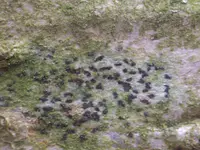
This disease appears as dark spots, pustules, or discolored patches that distort or overgrow the lichen surface. These specialized fungi live on lichens and can weaken or locally kill the thallus over time.

Solution

In light infections, carefully remove the most affected fragments with clean tweezers or scissors, avoiding unnecessary damage to healthy tissue. Support recovery by maintaining good air movement, avoiding nutrient or chemical contamination of the substrate, and favoring a stable, cool to mild, well-lit environment that supports overall Calogaya decipiens plant care.

Mite grazing

This pest causes fine pitting, tiny bite marks, or irregular roughened areas on the lichen surface, sometimes with small fragments detached. These tiny arthropods feed on the lichen tissues and are often more active in warm, dry microhabitats with trapped dust and organic debris.

Solution

Reduce habitat for mites by gently rinsing the substrate with clean water and removing accumulated dust, soil, or decaying organic matter around the lichen. In contained displays, improve ventilation, avoid over-warm locations, and if needed briefly relocate the material outdoors in cooler, moist conditions that favor the lichen but are less favorable to heavy mite buildup.

Interesting Facts

Extremely broad habitat

This lichen occurs on both siliceous and calcareous rocks, old mortar, concrete, and occasionally bark, showing unusually wide tolerance for different mineral substrates compared with many related crustose lichens.

Color-shifting thallus

Its thallus can appear dull yellow, orange, or orange-brown depending on light exposure and moisture, because lichen secondary pigments and the density of algal cells change the way it reflects light.

Nitrogen-sensitive indicator

Populations often increase in areas with slightly elevated atmospheric nitrogen, so field lichenologists sometimes use it as a rough indicator of mild nutrient enrichment near roads, agriculture, or settlements.

Botan icon

Did you know?

This species was long treated within the large genus Caloplaca until molecular phylogenetic studies, which analyze DNA relationships, showed it belongs to a distinct evolutionary lineage now recognized as the genus Calogaya.

FAQs about Broken Yokes

This lichen spreads slowly across suitable rock or bark surfaces through tiny fragments or spores. It is not aggressive and usually forms low, patchy crusts over many years rather than rapidly overtaking nearby vegetation or structures.

Grow Healthy Plants with Botan Care

Keep your plants happy and healthy with plant identification, disease detection, and easy care guidance.

Botan plant care app — identify plants on mobile

Explore More Plants