Mark Dormant Clumps
Flag or label the planting area right after flowering so you do not disturb or dig up the bulbs accidentally once foliage dies back and the site looks bare.

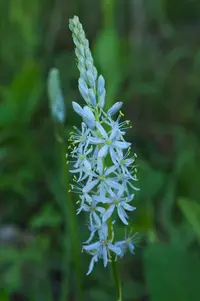
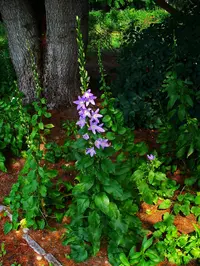
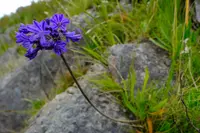
Atlantic camas (Camassia scilloides) is a spring-blooming bulb native to eastern and central North America. It naturally occurs in moist meadows, open woodlands, and prairie edges.
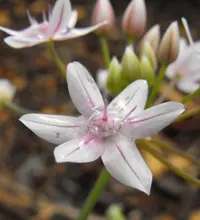
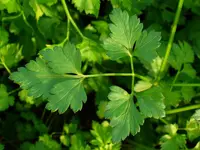
The plant forms clumps of narrow, grass-like leaves and sends up upright flower stalks with star-shaped, pale blue to white blooms. It has a relatively tidy, vertical habit that fits well into mixed borders and naturalized plantings.
This species is generally considered easy to grow in climates with cool, moist springs and well-drained soil. Good air circulation and consistent moisture during active growth make it simpler to care for Atlantic camas.

Care Difficulty
Easy Care

Light Preference
Full Sun

Water Requirements
Moderate Water

Temperature Preference
Cold Hardy

Hardiness Zone
3–8

Soil Texture
Sandy, Loamy, Silty

Soil pH
Acidic (5.5–6.5), Slightly acidic (6.5–7.0)

Soil Drainage
Moist but well-drained

Fertilization
Minimal (feed rarely)
Scan your plant to receive care tips personalized for your specific plant
Available on iOS and Android
Camassia scilloides grows best in locations that mimic open woodlands and sunny meadows.
This bulb prefers evenly moist soil in spring, then drier conditions after flowering.
This hardy native bulb is adapted to climates with cool springs and cold winters.
Humidity is rarely a concern for Camassia scilloides in typical outdoor conditions.
Camassia scilloides prefers loose, moisture-retentive but free-draining soil that does not stay waterlogged.
This species can be grown in containers if the pot mimics deep, cool, well-drained soil conditions.
Camassia scilloides is a low-maintenance bulb that benefits from modest feeding in lean soils.
Pruning needs for Camassia scilloides are minimal and mainly focus on cleanliness rather than shaping.
This species is usually grown in the ground, with transplanting focused on adjusting crowded clumps rather than frequent repotting.
Camassia scilloides is commonly propagated by bulb division and can also be grown from seed for larger restoration plantings.
This North American bulb is cold hardy in much of the US and usually needs little specific winter care in the ground.

Plant Health Check
Not sure what's wrong with your plant? Check your plant's health inside the app.
This species produces starry, pale blue to blue-white flowers that are noticeably lighter than those of most western camas species, and the tepals often twist slightly as they age, giving each flower a loose, open look.
Unlike many camas species of western North America, this plant is native to rich, moist woodlands and prairies of the eastern and midwestern United States, often growing in deciduous forest openings and along woodland edges.
The starchy bulbs were traditionally eaten by some Indigenous peoples of eastern North America after thorough cooking, but careful identification was essential because it can grow near toxic look-alike species in the lily family.

Genetic and morphological studies indicate that this eastern species is one of the more distinct members of the genus, helping botanists clarify the evolutionary split between woodland-adapted eastern camas and the mainly meadow-dwelling western species.
Lack of flowering often comes from insufficient sun, bulbs planted too deep, or overcrowding. Bulbs also need a cold winter rest. Divide congested clumps and avoid cutting foliage until it dies back naturally after blooming.
Keep your plants happy and healthy with plant identification, disease detection, and easy care guidance.