Early vine training
Install a sturdy trellis, fence, or wires before the plant starts rapid spring growth, then loosely tie young stems with soft ties every 20–30 cm to direct the vine where you want it and prevent tangled, wind-damaged growth.

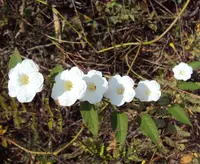
Yellow merremia (Camonea umbellata) is a fast-growing twining vine in the morning glory family, valued for its bright funnel-shaped yellow flowers. It typically climbs over shrubs, fences, or trellises, forming a light, scrambling cover rather than a dense screen.
This species is native to tropical and subtropical regions, where it grows in coastal thickets, forest edges, and disturbed sites. It tends to be vigorous and can spread quickly in warm climates, which makes it easy to establish but sometimes challenging to control.
In gardens, it prefers sun to light shade, moderately moist, well-drained soil, and protection from cold. Anyone learning how to care for yellow merremia should first check its local invasive status before planting outdoors.

Care Difficulty
Moderate Care

Light Preference
Full Sun

Water Requirements
Moderate Water

Temperature Preference
Tropical / Frost Sensitive

Hardiness Zone
10–12

Soil Texture
Sandy, Loamy, Organic-rich

Soil pH
Acidic (5.5–6.5), Slightly acidic (6.5–7.0)

Soil Drainage
Well-drained

Fertilization
Light (every 4–6 weeks)
Scan your plant to receive care tips personalized for your specific plant
Available on iOS and Android
Camonea umbellata grows best with strong light and some direct sun in warm seasons.
This vine prefers evenly moist, well-drained soil that never stays soggy for long periods.
This species thrives in warm, frost-free conditions and reacts quickly to cold snaps.
This vine prefers moderate humidity and usually handles typical indoor air without issue.
This species grows best in loose, free-draining, moderately fertile soil that never stays waterlogged.
This twining vine is suitable for container culture when given enough root space and support.
Camonea umbellata responds well to modest feeding during its active growing season in warm weather.
Pruning helps keep Camonea umbellata vines controlled and encourages more flowering shoots.
This vigorous climber is usually grown in the ground, with transplanting more common than container repotting.
Camonea umbellata is commonly propagated from seeds and soft to semi-ripe stem cuttings.
Camonea umbellata is frost-sensitive and needs protection in regions with cold winters.

Plant Health Check
Not sure what's wrong with your plant? Check your plant's health inside the app.
This species naturally occurs on sandy coasts and littoral thickets across the tropical Indian and Pacific Oceans, where its twining stems scramble over shrubs and rocks just above the high tide line.
The plant shows notable tolerance to salt spray and coastal winds, allowing it to form part of the pioneer vegetation that helps stabilize fragile seaside habitats.
Its bright yellow funnel-shaped flowers are arranged in compact, umbel-like clusters on short stalks, a distinctive feature that helps separate it from many other morning glory relatives with more solitary blooms.

In several tropical island regions, this species is considered a valuable dune-binding vine because its sprawling, rooting stems help trap sand and reduce erosion along exposed shorelines.
This vine can spread quickly in warm climates through vigorous stems and abundant seed set. In mild regions it may become weedy. Regular pruning and removing seed capsules help keep growth controlled and protect nearby plantings.
Keep your plants happy and healthy with plant identification, disease detection, and easy care guidance.