giant bellflower Care (Campanula latifolia)

giant bellflower

About giant bellflower

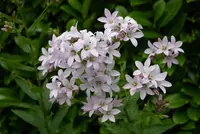
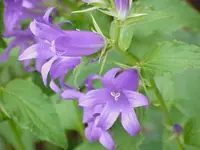
Giant bellflower, Campanula latifolia, is a hardy perennial grown mainly for its tall spires of large, bell-shaped flowers in shades of purple, blue, or white. It forms clumps of upright stems with broad, slightly rough leaves that give a lush, woodland look.

In nature it occurs in woodlands and shaded riverbanks across parts of Europe and western Asia, where soils stay cool and moist. The plant is generally easy to grow if it has partial shade, consistent moisture, and well-drained, fertile soil.

Once established, it can self-seed and slowly spread, which makes it long-lived but sometimes in need of occasional thinning. Gardeners who learn how to care for giant bellflower often find it reliable in mixed borders and naturalistic plantings.

Main Plant Requirements

Care Difficulty

Easy Care

Light Preference

Partial Shade

Water Requirements

Regular Water

Temperature Preference

Cold Hardy

Hardiness Zone

3–7

Soil Texture

Loamy, Silty, Organic-rich

Soil pH

Acidic (5.5–6.5), Slightly acidic (6.5–7.0)

Soil Drainage

Moist but well-drained

Fertilization

Minimal (feed rarely)

Get Personalized Care Plan

Scan your plant to receive care tips personalized for your specific plant

Available on iOS and Android

How to Care for the giant bellflower

Campanula latifolia thrives in bright conditions with protection from harsh midday sun.

  • Provide 4–6 hours of morning sun with light or dappled shade in the afternoon for best flowering outdoors.
  • Tolerates partial shade, especially in hotter regions, but flowering of giant bellflower decreases in dense shade and stems may stretch or flop.
  • Avoid intense all-day sun, which can scorch leaves and dry soil quickly; in summer, use nearby shrubs or taller perennials for filtered light.

Campanula latifolia prefers evenly moist, well-drained soil rather than constant saturation.

  • Water when the top 3–5 cm of soil feels dry, ensuring moisture reaches the root zone but excess drains away freely.
  • In spring and early summer, monitor more often during active growth; reduce watering in late fall and winter as growth slows and rainfall often increases.
  • Watch for yellowing, soft foliage and a sour smell as signs of overwatering; crisp, drooping leaves and very dry soil indicate underwatering.

This hardy perennial tolerates cool climates but grows best in mild temperatures.

  • Active growth is strongest at 60–75°F (16–24°C), supporting sturdy stems and reliable flowering during late spring and summer.
  • Mature plants typically survive down to about 0°F (-18°C) in the ground with mulch; new or shallow-rooted plants benefit from extra winter protection.
  • In hot spells above 85°F (29°C), provide afternoon shade and consistent soil moisture to limit heat stress and prevent premature flowering decline.

This species handles typical indoor humidity but performs best with moderate moisture in the air.

  • Aim for 40–60% humidity, which suits giant bellflower without encouraging fungal problems.
  • Plants tolerate short dry spells but prolonged very dry air can crisp leaf edges and buds.
  • Increase humidity locally with a nearby pebble tray or grouped plants rather than misting foliage.

This plant prefers cool, moist, well-drained, nutrient-rich soil for strong growth.

  • Use a friable loam-based mix enriched with organic matter such as compost or leaf mold for structure and nutrients.
  • Ensure sharp drainage by blending roughly 60–70% loam with 20–30% compost and 10–20% coarse sand or fine grit.
  • Keep pH slightly acidic to neutral, around 6.0–7.0, which suits Campanula latifolia root function and nutrient uptake.
  • Avoid compacted, heavy clay or waterlogged conditions that suffocate roots and increase root rot risk.

This species can grow successfully in containers if the pot is deep and stable enough for tall stems.

  • Choose a container at least 30–35 cm deep to accommodate the long taproot and prevent plants from becoming top-heavy.
  • Select a heavier material pot, such as ceramic, to improve stability in wind and reduce tipping from tall flower spikes.
  • Raise the container on pot feet so drainage holes stay clear and excess water leaves quickly after heavy rain or watering.

Campanula latifolia benefits from modest feeding to support tall growth and flowering in nutrient-poor soils.

  • Use a balanced liquid fertilizer (such as 10-10-10) at 1/2 strength every 4–6 weeks during spring and early summer.
  • Alternatively, mix a thin layer of compost into the soil in early spring as a slow-release nutrient source.
  • Stop feeding by late summer so growth can harden before winter dormancy begins.
  • For giant bellflower in containers, choose a slow-release granular fertilizer and follow the lower label rate.

Pruning Campanula latifolia keeps plants tidy, encourages fresh growth, and can extend blooming.

  • In mid to late summer, deadhead spent flower spikes down to a strong leaf joint to reduce self-seeding and tidy the clump.
  • Remove dead, damaged, or weak stems at the base in late fall or early spring using clean, sharp pruners.
  • Thin crowded stems slightly in early spring to improve air flow and reduce disease risk without overopening the clump.
  • Cut back old flowering stems to near ground level after frost, leaving any green basal foliage intact.

This tall perennial is usually grown in the ground, so focus on careful transplanting rather than frequent repotting.

  • Transplant in early spring or early fall, when temperatures are mild and soil is evenly moist.
  • Move clumps that show congested crowns, reduced flowering, or poor vigor every 3–5 years into refreshed soil.
  • Lift the plant with a wide root ball, disturb roots as little as possible, then water thoroughly to settle soil and reduce shock.
  • Container-grown plants needing more space show roots circling the pot or rapid drying; shift them up just 1 pot size.

Campanula latifolia is commonly propagated by seed or division to renew clumps and increase plant numbers.

  • Divide established clumps in early spring or early fall, replanting vigorous outer sections at the same depth.
  • Sow fresh seed in late winter or early spring on the soil surface; provide 60–70°F, light, and consistent moisture for germination.
  • For divisions, water well after planting and shade lightly for 3–5 days to limit moisture loss while roots re-establish.
  • Allow some flower spikes to set seed if natural self-sowing is acceptable in the garden.

This hardy perennial tolerates typical winters in much of the US and usually needs only minimal winter care.

  • Once hard frost blackens stems, cut them back near ground level, leaving any firm green basal growth.
  • Apply a 5–8 cm layer of mulch around the root zone in late fall to buffer freeze–thaw cycles, keeping mulch off crowns.
  • In very cold or exposed sites, add extra mulch or evergreen boughs over young plants to reduce wind and heaving.
  • Container plants are more vulnerable; overwinter pots in a sheltered, unheated garage or against a protected wall.

Care Tips

Stake Tall Stems

Install discreet stakes or a low wire ring early in the season to support the tall flowering stems and prevent wind damage or flopping when the flowers are fully open.

Manage Self-Seeding

After flowering, remove most spent flower spikes before seed ripens, leaving only a few to mature if you want controlled self-seeding instead of a dense, overcrowded clump.

Divide Aging Clumps

Every 4–5 years, lift and divide congested clumps in early spring or early fall to maintain vigorous growth, larger flower spikes, and better air circulation around the crowns.

Mulch Root Zone

Apply a 3–5 cm layer of fine organic mulch around but not touching the stems each spring to keep roots cool, reduce weed competition, and maintain more even soil moisture when growing giant bellflower.

Monitor Slugs Early

Inspect young shoots in early spring and use barriers or targeted slug treatments at the first sign of chewing to prevent severe damage to new growth before tall stems develop.

Common Pests and Diseases

Slugs and snails

This pest is strongly attracted to the soft foliage and young shoots, often chewing large, irregular holes and stripping seedlings or new growth. Symptoms include ragged leaves, missing flowers, and slime trails on or around the plant.

Solution

Hand-pick slugs and snails in the evening, use iron phosphate slug pellets labeled for ornamental beds, and place beer traps or rough barriers (sharp grit, crushed eggshells) around clumps. Reduce damp hiding spots such as dense debris or boards near the base and protect young plants with collars or cloches until they toughen up.

Powdery mildew

This disease appears as a white or grayish powdery coating on leaves, stems, and sometimes flower buds, often during warm days and cool, humid nights. Symptoms include distorted growth and yellowing or browning leaves that may drop early.

Solution

Thin and divide crowded clumps to increase airflow, water at soil level in the morning, and remove and discard heavily infected leaves. For persistent problems, apply a sulfur or potassium bicarbonate fungicide labeled for ornamentals, starting at the first sign of white patches and repeating as directed.

Leaf spot

This disease causes small water-soaked spots on leaves that enlarge into brown or tan lesions, sometimes with darker edges or a yellow halo. Symptoms include premature leaf drop and general thinning of the foliage, especially in damp, shaded conditions.

Solution

Remove and destroy affected leaves as soon as symptoms appear and avoid overhead watering to keep foliage dry. Improve spacing and airflow around plants; in severe or recurring cases, apply a copper-based or chlorothalonil fungicide following label directions and rotate planting areas if the site stays very wet.

Aphids

These insects cluster on tender stems, buds, and the undersides of leaves, sucking sap and weakening the plant. Symptoms include curled or sticky leaves, distorted flower buds, and the presence of ants attracted to the honeydew they excrete.

Solution

Spray colonies off with a firm stream of water and prune out heavily infested shoot tips. If needed, treat with insecticidal soap or horticultural oil, ensuring full coverage of leaf undersides and repeating at 5–7 day intervals until populations drop, while encouraging natural predators such as lady beetles by avoiding broad-spectrum insecticides.

Leaf and bud aphid gall

This pest causes swollen, blistered, or curled areas on leaves and deformed flower buds due to aphids feeding within folded tissue. Symptoms include puckered leaves, misshapen buds that fail to open normally, and localized distortion instead of general yellowing.

Solution

Cut off and discard distorted leaves and buds that shelter aphid colonies before they spread. For remaining plants, use targeted sprays of insecticidal soap into crevices and folded tissue and maintain good plant vigor through proper Campanula latifolia care so new growth can replace damaged tissues more quickly.

Interesting Facts

Native woodland giant

This species is native to moist deciduous and mixed forests in central and eastern Europe and western Asia, where it naturally grows along forest edges, clearings, and stream banks rather than in open, dry meadows.

Bell shape pollination

Its large, upright, bell-shaped flowers produce abundant nectar and are primarily pollinated by long-tongued bees and bumblebees that can reach into the deep corolla tube.

Biennial-like flowering habit

Although technically a perennial, it often behaves like a short-lived perennial or biennial, putting strong energy into vegetative rosettes before sending up tall flowering spikes that can reach 90–150 cm in favorable conditions.

Botan icon

Did you know?

In parts of northern Europe, this species has become locally naturalized outside its native range and is sometimes monitored because its tall stature and dense growth can outcompete smaller native woodland herbs in lightly managed habitats.

FAQs about giant bellflower

Lack of blooms usually comes from too much shade, rich nitrogen-heavy fertilizer, or overcrowded clumps. Division every 3–4 years, moderate feeding, and ensuring enough light help restore flowering, which supports overall Campanula latifolia plant care.

Grow Healthy Plants with Botan Care

Keep your plants happy and healthy with plant identification, disease detection, and easy care guidance.

Botan plant care app — identify plants on mobile

Explore More Plants