

Manage Natural Spread
Lift and thin clumps every 2–3 years in late summer when foliage has died back, removing extra tubers or bulbils so the plant does not outcompete nearby perennials or groundcovers.

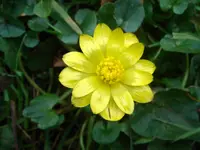
Fig buttercup, also called lesser celandine, is a low-growing spring perennial from Europe and western Asia. It belongs to the buttercup family, Ranunculaceae. Ranunculus ficaria forms dense clumps of glossy, heart-shaped leaves and bright yellow, star-like flowers that appear very early in the year. It often carpets moist woodlands, stream banks, and shaded lawns, and can spread aggressively in suitable climates. The plant favors cool, damp conditions and rich, consistently moist soils, then dies back to underground tubers in late spring. These traits make it resilient but also potentially invasive, so anyone learning how to care for fig buttercup should manage its spread carefully.

Care Difficulty
Easy Care

Light Preference
Partial Shade

Water Requirements
Regular Water

Temperature Preference
Cold Hardy

Hardiness Zone
4–9

Soil Texture
Loamy, Clay, Organic-rich

Soil pH
Acidic (5.5–6.5), Slightly acidic (6.5–7.0)

Soil Drainage
Moist but well-drained

Fertilization
Minimal (feed rarely)
Scan your plant to receive care tips personalized for your specific plant
Available on iOS and Android
This spring woodland perennial prefers cool, soft light rather than intense sun.
This species favors consistently moist, not waterlogged, soil during active growth.
This cool-season perennial grows best in mild spring conditions and goes dormant as temperatures rise.
This species tolerates a wide humidity range and usually does not need special adjustment in homes or gardens.
This plant prefers moist, fertile, fine-textured soil that stays evenly damp without becoming stagnant.
This species can grow in containers, but the pot must manage constant moisture without waterlogging.
Ranunculus ficaria, often called fig buttercup, grows naturally in rich soils and usually needs minimal fertilization in gardens.
Ranunculus ficaria benefits from light cleanup to manage spread and keep groundcover neat.
This small tuberous perennial is more often transplanted in the ground than grown long term in containers.
Ranunculus ficaria is commonly spread by division and tubers, and sometimes by seed, in suitable climates.
This species is generally cold hardy in temperate climates and needs little active winter care once established.

Plant Health Check
Not sure what's wrong with your plant? Check your plant's health inside the app.
This species produces two distinct leaf types on the same plant: early, glossy, heart-shaped basal leaves and later, narrower leaves on flowering stems, an adaptation that helps it capture light efficiently in changing spring conditions.
The plant spreads not only by seed but also through underground tubers and small aerial bulbils in the leaf axils, which detach and root easily, making it a vigorous clonal colonizer in moist soils.
Its bright yellow, highly reflective petals open in late winter to early spring, often before many other flowers, providing one of the first nectar and pollen sources for early-flying bees and other insects.

In several parts of North America, this species has proven so aggressive in damp woodlands and along streams that it can form near-monocultures, displacing native spring ephemerals such as trout lily and trillium, and is now listed as a regulated or prohibited invasive plant in multiple states.
This species spreads very quickly through tubers and bulbils, often forming dense carpets that crowd out other plants. In many regions it is considered invasive, so monitor patches closely and remove unwanted growth before it sets new tubers.
Keep your plants happy and healthy with plant identification, disease detection, and easy care guidance.

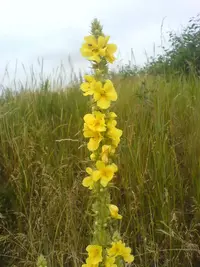
denseflowered mullein
Verbascum densiflorum
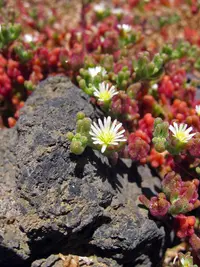
slenderleaf iceplant
Mesembryanthemum nodiflorum
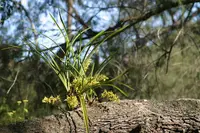
Snake orchid
Cymbidium suave
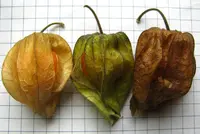
clammy groundcherry
Physalis heterophylla
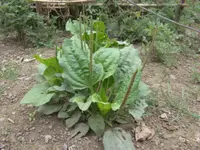
Greater Plantain
Plantago major
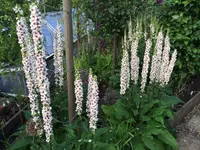
Nettle-leaved Mullein
Verbascum chaixii 'Album'
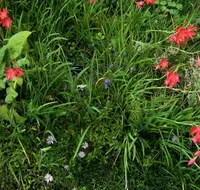
Adenophora morrisonensis
Adenophora morrisonensis
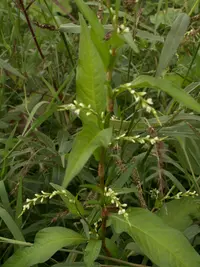
water pepper
Persicaria hydropiper