Control Spreading Rhizomes
Insert a 15–20 cm deep plastic or metal root barrier around clumps to limit underground runners and make lifting and dividing older plants much easier.

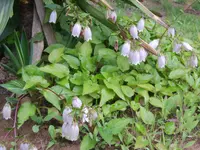
Spotted bellflower, Campanula punctata, is a herbaceous perennial grown for its nodding, bell-shaped flowers marked with speckles inside the blooms. It typically forms clumps and spreads by short rhizomes, creating loose colonies over time.
This species is native to East Asia, especially Japan and Korea, where it grows in meadows, open woodlands, and light shade. In gardens it is valued for its showy flowering stems and ability to fill small borders or cottage-style plantings.
Campanula punctata prefers moderately moist, well-drained soil and light from full sun to partial shade, depending on climate. Its hardiness and willingness to spread make it fairly easy, but gardeners should care for spotted bellflower by monitoring its spread in small spaces.

Care Difficulty
Moderate Care

Light Preference
Partial Sun

Water Requirements
Regular Water

Temperature Preference
Cold Hardy

Hardiness Zone
3–8

Soil Texture
Loamy, Silty, Organic-rich

Soil pH
Acidic (5.5–6.5), Slightly acidic (6.5–7.0)

Soil Drainage
Moist but well-drained

Fertilization
Light (every 4–6 weeks)
Scan your plant to receive care tips personalized for your specific plant
Available on iOS and Android
Campanula punctata grows best in bright, gentle light that avoids harsh midday sun.
Campanula punctata prefers evenly moist but not waterlogged soil with brief drying at the surface.
This hardy perennial tolerates a wide temperature range but flowers best in cool to mild conditions.
Campanula punctata grows well in typical home humidity but benefits from slightly moist air in heated interiors.
Campanula punctata prefers loose, moist but sharply drained soil that does not stay waterlogged.
This species is well suited to container growing outdoors when given stable, well-drained conditions.
Campanula punctata benefits from light, measured feeding to support flowering without producing weak, lush growth.
Pruning helps Campanula punctata stay compact, flower well, and reduce self-seeding.
Campanula punctata is more often transplanted in garden beds than kept long-term in containers.
Campanula punctata is commonly multiplied by division, seeds, or softwood cuttings.
This perennial is generally cold hardy and needs only modest winter care in most temperate climates.

Plant Health Check
Not sure what's wrong with your plant? Check your plant's health inside the app.
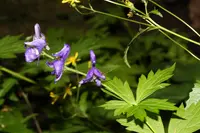
The pale, bell-shaped flowers often show speckled or spotted markings inside the corolla, which act as visual nectar guides that help bees and other insects orient themselves toward the nectar and reproductive organs.
This species spreads slowly by short rhizomes and can form loose colonies over time, allowing a single plant to occupy a wider patch of ground in suitable conditions.
In nature, this plant is native to forest edges and light woodlands in East Asia, which explains its tolerance of partial shade and cooler summer conditions compared with many sun-loving border perennials.

In parts of East Asia, horticultural selection of this species has produced numerous ornamental cultivars with exaggerated spotting, double flowers, or unusual color forms, so many garden bellflowers with heavily speckled interior petals trace back to Campanula punctata as a parent.
This species spreads by creeping rhizomes and self-seeding, so it can become quite vigorous. In small gardens, use root barriers, containers, or regular division to keep it within bounds and prevent unwanted patches.
Keep your plants happy and healthy with plant identification, disease detection, and easy care guidance.