Early framework training
Install sturdy horizontal wires or a trellis before planting and loosely tie new vines as they grow so the plant develops a flat, well-spaced framework that is easier to maintain and flower-promoting in later years.

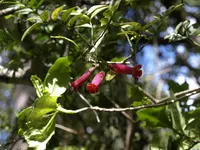
Campsidium valdivianum, commonly called the Chilean trumpet vine, is a woody, evergreen climber from temperate rainforests of Chile and Argentina. It belongs to the Bignoniaceae, the same family as many ornamental trumpet vines.
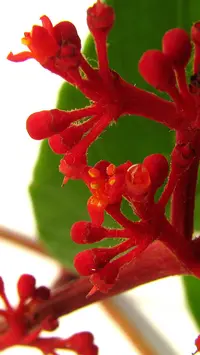
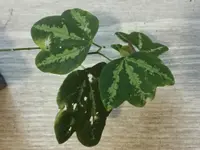
The plant produces tubular, often orange to reddish flowers and glossy green leaves, creating a dense, decorative screen on trellises, pergolas, or fences. It tends to grow vigorously in mild climates.
This species prefers cool to mild conditions, evenly moist but free-draining soil, and sheltered positions. Providing support structures and some protection from harsh frost makes it easier to care for Campsidium in gardens or conservatories.

Care Difficulty
Moderate Care

Light Preference
Partial Sun

Water Requirements
Regular Water

Temperature Preference
Warm Climate

Hardiness Zone
9–11

Soil Texture
Loamy, Sandy, Organic-rich

Soil pH
Acidic (5.5–6.5), Slightly acidic (6.5–7.0)

Soil Drainage
Moist but well-drained

Fertilization
Light (every 4–6 weeks)
Scan your plant to receive care tips personalized for your specific plant
Available on iOS and Android
This vigorous climber prefers bright, gentle sun with some daily shade for balanced growth.
This twining vine prefers consistently moist but never waterlogged soil for steady growth.
This species grows best in mild, frost-free climates with moderate seasonal variation.
This climber prefers moderate to slightly high humidity but copes with typical indoor levels.
Campsidium valdivianum grows best in a loose, airy mix that drains quickly yet holds steady, moderate moisture.
This species suits container cultivation when the pot supports its climbing, vigorous root system.
This vigorous climber benefits from moderate feeding to support steady growth and flowering.
Thoughtful pruning keeps Campsidium valdivianum manageable and flowering well.
This strong-growing climber is usually planted in the ground, with container culture suited mainly to young plants.
This species is most often propagated by semi-ripe cuttings rather than from seed in home conditions.
Campsidium valdivianum prefers mild climates and benefits from some winter protection in colder areas.

Plant Health Check
Not sure what's wrong with your plant? Check your plant's health inside the app.
This species is native to the temperate rainforests of southern Chile and adjacent Argentina, where it grows as a woody climber in cool, humid, forested valleys with high rainfall and mild temperatures.
It produces orange to salmon tubular flowers with a flared trumpet shape, which are adapted for visitation by nectar-feeding birds and large insects in its native range.
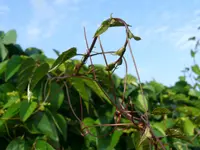
In suitable climates it behaves as an evergreen liana, using twining stems to climb over shrubs and trees, sometimes forming a dense curtain of foliage along forest edges and supports.
This species is a vigorous woody climber that twines around supports using flexible stems. It does not creep as a groundcover. To manage size and direction, provide a sturdy trellis, arbor, or fence and prune regularly.
Keep your plants happy and healthy with plant identification, disease detection, and easy care guidance.