Rough Goldenrod Care (Solidago rugosa 'Fireworks')

Also known as: Goldenrod, Rough-Stemmed Goldenrod
Rough Goldenrod

About Rough Goldenrod

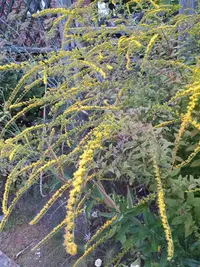
Rough goldenrod, Solidago rugosa 'Fireworks', is a hardy, herbaceous perennial grown mainly for its dramatic late-season flowers. It forms arching stems covered in many small, bright yellow blooms that resemble falling sparks. Plants typically develop into dense clumps that stand out in mixed borders or naturalistic plantings.

This cultivar originates from a North American species found in meadows, woodland edges, and open, sunny slopes. It is generally easy to grow, with strong cold tolerance, good disease resistance, and a reliable flowering habit. Gardeners who want to care for Rough Goldenrod should provide sun, moderately moist but well-drained soil, and space for its spreading habit.

Main Plant Requirements

Care Difficulty

Easy Care

Light Preference

Full Sun

Water Requirements

Moderate Water

Temperature Preference

Cold Hardy

Hardiness Zone

3–9

Soil Texture

Sandy, Loamy, Clay

Soil pH

Acidic (5.5–6.5), Slightly acidic (6.5–7.0)

Soil Drainage

Moist but well-drained

Fertilization

Minimal (feed rarely)

Get Personalized Care Plan

Scan your plant to receive care tips personalized for your specific plant

Available on iOS and Android

How to Care for the Rough Goldenrod

This perennial thrives in open sites with strong light and can handle some partial shade.

  • Provide 6–8 hours of direct sun daily; morning sun with light afternoon shade suits hot summer regions best.
  • Tolerates bright partial shade, but stems may lean and flowering may decrease if daily sun drops below about 4 hours.
  • In cooler climates, full sun all day supports dense, upright growth and abundant blooms on Rough Goldenrod, while extreme reflected heat from pavement can scorch foliage.

This plant prefers consistent moisture in its establishment phase, then tolerates moderate dryness.

  • Water when the top 3–5 cm of soil feel dry, aiming for evenly moist but not saturated soil during the first growing season.
  • Ensure well-drained soil; chronic soggy conditions cause root rot, yellowing leaves, and weak, floppy stems in Solidago rugosa 'Fireworks'.
  • Once established, allow the soil surface to dry between deep waterings; in drought, drooping foliage and slow bud development signal the need for a thorough soak.

This hardy perennial is adapted to outdoor temperate climates with cold winters and warm summers.

  • Active growth is strongest around 65–80°F (18–27°C), with sturdy stems and reliable flowering in late summer to fall.
  • Tolerates winter lows near -20°F (-29°C) in the ground when roots are insulated by soil and mulch, entering full dormancy.
  • Handles summer heat up to about 90–95°F (32–35°C) if soil moisture is maintained; prolonged extreme heat with dry soil can cause leaf scorch and reduced bloom size.

This cultivar is adapted to outdoor conditions and does not have strict humidity requirements.

Solidago rugosa 'Fireworks' performs best in moderately fertile, well-drained but moisture-retentive ground.

  • Use loamy or sandy-loam soil with some organic matter to keep roots evenly moist yet aerated.
  • Blend in compost and a small amount of coarse sand to improve structure and prevent compaction.
  • Aim for slightly acidic to neutral pH around 6.0–7.0, avoiding strongly alkaline or saline sites.
  • Avoid heavy, poorly drained clay or spots that stay waterlogged, which promote root rot and weak growth.

This species can be grown in containers outdoors, though large, stable pots are needed for its tall, arching growth.

  • Choose a deep, heavy pot to counterbalance the tall flower stalks and reduce tipping in wind.
  • Fill the container with a freely draining, compost-enriched mix so the root zone does not stay saturated after rain.
  • Raise the pot on feet or bricks so drainage holes stay clear and excess water escapes quickly in wet weather.

This hardy perennial usually needs modest feeding, especially in lean or sandy soil, when caring for Rough Goldenrod.

  • Apply a light layer of compost or a balanced slow-release fertilizer (around 10-10-10) in early spring to support strong growth.
  • In average garden soil, 1 application per growing season is enough; avoid high-nitrogen products that cause floppy stems.
  • If using liquid fertilizer, dilute to 1/2 strength and apply no more than once a month during active growth.
  • Stop feeding in late summer to early fall so stems harden before winter and the plant enters dormancy naturally.

Pruning supports sturdy growth and abundant blooms on Solidago rugosa 'Fireworks'.

  • In early spring, cut back old stems to just above ground level with clean, sharp pruners.
  • During summer, remove dead, damaged, or badly crossing stems to maintain airflow and reduce disease risk.
  • Deadhead spent flower clusters if self-seeding is not desired, or leave some for wildlife value.
  • Every few years, thin congested clumps by removing a portion of the oldest stems to keep the plant compact.

This goldenrod is usually grown in the ground, with transplanting more common than repotting.

  • Transplant in early spring or fall when temperatures are mild and soil is moist but not waterlogged.
  • Move plants when growth declines, clumps become crowded, or roots circle inside a container.
  • Lift the clump carefully, keep as much root ball intact as possible, and replant at the same soil depth.
  • Water thoroughly after transplanting, then keep soil evenly moist for 1–2 weeks to limit transplant shock.

Solidago rugosa 'Fireworks' is most often propagated by division, with seed and cuttings as secondary options.

  • Divide mature clumps in early spring or early fall, replanting healthy sections with strong buds and roots.
  • For stem cuttings, take non-flowering shoots in late spring, use a rooting hormone, and keep in moist, airy media.
  • Sow seeds in fall or use cold stratification, then provide bright light and consistently moist, not soggy, soil.
  • Label new plantings, keep them weed-free, and water regularly during the first growing season for firm establishment.

This cold-hardy perennial usually needs minimal winter care in typical garden conditions.

  • In zones with severe freezes, apply a 5–8 cm mulch layer after the ground cools to insulate roots.
  • Allow dry stems to stand over winter to provide habitat and extra crown protection, then cut back in early spring.
  • For container-grown plants, move pots to a sheltered spot and prevent the root ball from freezing solid.

Care Tips

Staking Outer Stems

Install low, discreet ring stakes or short bamboo canes around the clump in late spring to keep the arching flowering stems upright and prevent flopping after heavy rain.

Divide To Rejuvenate

Lift and divide dense clumps every 3–4 years in early spring, replanting only the younger, more vigorous outer sections to maintain strong flowering and reduce self-seeding spread.

Targeted Deadheading

Shear off spent flower sprays just as they fade if you want to limit volunteer seedlings, but leave some seedheads if you rely on them for late-season wildlife food.

Airflow For Mildew

Space plants so mature clumps do not touch and remove congested, weak interior stems in early summer to improve airflow and reduce powdery mildew risk.

Integrated Pest Monitoring

Check stems and leaf undersides weekly during warm weather for aphids and leaf-chewing insects, using a strong water spray or insecticidal soap at the first signs rather than waiting for heavy damage when growing Rough Goldenrod.

Common Pests and Diseases

Rust

This disease causes orange, yellow, or brown powdery pustules on leaf undersides and can lead to premature leaf drop in humid conditions.

Solution

Remove and dispose of heavily infected leaves, avoid overhead watering, and improve spacing for better airflow; in recurring cases, apply a sulfur or chlorothalonil-based fungicide labeled for ornamental perennials at the first sign of spotting. Clean up all fallen foliage in autumn to reduce overwintering spores and support long-term Solidago rugosa 'Fireworks' care instructions.

Powdery mildew

This disease produces a white, dusty coating on leaves and stems, often appearing late in the season during warm days and cool, humid nights.

Solution

Thin crowded stems and nearby plants to increase air circulation, water at soil level, and remove the worst-affected foliage; if needed, use a potassium bicarbonate or horticultural oil product labeled for powdery mildew and apply according to label directions before the infection becomes severe.

Leaf spot

Symptoms include small dark or tan spots that may merge into larger blotches, sometimes with yellow halos, often starting on lower, older leaves.

Solution

Cut off and discard affected leaves, avoid wetting foliage, and keep the plant on a regular cleanup schedule; in wet summers or persistent cases, use a copper-based fungicide labeled for leaf spot on ornamentals, applied during extended rainy periods to protect new growth.

Goldenrod gall fly

This pest causes distinctive round or oval swellings (galls) on stems where larvae feed inside, usually not killing the plant but distorting stems and flower display.

Solution

Prune out and destroy galled stems in late winter or early spring before adult flies emerge, and leave unaffected stems intact; avoid unnecessary insecticide use, since the damage is mostly cosmetic and beneficial insects help keep other pests in balance.

Aphids

These insects cluster on stem tips and undersides of leaves, sucking sap and leaving behind sticky honeydew that can attract sooty mold and ants.

Solution

Spray stems and leaves with a strong stream of water to dislodge colonies, then follow with insecticidal soap or neem oil, ensuring thorough coverage of undersides; encourage natural predators like lady beetles by avoiding broad-spectrum insecticides in the surrounding planting area.

Interesting Facts

Late-season pollinator magnet

This cultivar produces hundreds of small nectar-rich flowers in dense arching sprays from late summer into fall, providing an important food source for native bees, wasps, hoverflies, and butterflies when many other perennials have finished blooming.

Distinctive arching habit

Unlike many other goldenrods, it forms graceful, fountain-like stems that bend outward under the weight of the blooms, creating the visual effect that gave rise to its cultivar name Fireworks.

Selected from rough goldenrod

Solidago rugosa 'Fireworks' was selected from the North American species Solidago rugosa for its compact size, heavy branching, and showy inflorescences, which make it more suitable for ornamental borders and designed pollinator gardens than typical wild populations.

FAQs about Rough Goldenrod

This species spreads by both seed and short rhizomes, forming sizable clumps over time. It is vigorous but usually manageable in home gardens if spent flower heads are removed and clumps are divided every few years.

Grow Healthy Plants with Botan Care

Keep your plants happy and healthy with plant identification, disease detection, and easy care guidance.

Botan plant care app — identify plants on mobile

Explore More Plants