

Trumpet vine Identification (Campsis radicans)

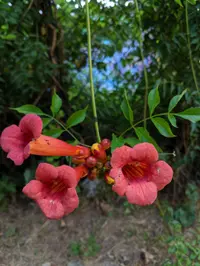
Recognize Trumpet vine by its climbing woody stems with many short aerial rootlets, opposite pinnate leaves with 7 to 11 sharply toothed leaflets, and large trumpet-shaped flowers about 3 inches (8 cm) long.

It usually grows as a vigorous vine that clings directly to bark, fences, or walls.

Campsis radicans Identification

Check Your Plant ID

Upload a clear photo to check your plant identification with Botan.

Clear images work best. Avoid photos taken too close or too far away

Check Trumpet vine for a woody climbing habit with obvious aerial rootlets on the stems.

  • Leaves are opposite and pinnate, usually 4-12 inches (10-30 cm) long with 7-11 toothed leaflets.
  • Flower clusters sit at stem tips; each bloom is a long orange to red-orange trumpet about 2-3 inches (5-8 cm) long.
  • The trumpet ends in five short, flared lobes, giving the flower a wide, open mouth.
  • Seed pods are narrow, beanlike capsules, often 4-8 inches (10-20 cm) long, hanging after flowering.

A climbing vine with rootlets, pinnate leaves, trumpet flowers, and long pods is a strong visual match.

Trumpet vine shows clear visual shifts from climbing shoots to flowering and seed-bearing growth.

  • Young plant: Young plants form slender, twining or sprawling green shoots with opposite leaves becoming pinnate, before thicker woody stems and dense branching develop.
  • Mature plant: Mature plants become heavy woody vines, often climbing by aerial rootlets, with rough gray-brown stems and larger compound leaves bearing 7-11 leaflets.
  • Flowering stage: Flowering shoots end in clustered orange to red-orange trumpet flowers about 3 inches (8 cm) long, making the vine’s outline more upright and terminally branched.
  • Fruiting stage: After flowering, narrow beanlike seed capsules replace the flower clusters and hang visibly from shoot tips, adding a straighter, pod-bearing outline.

Several named selections of Trumpet vine are distinct enough to identify by flower color or growth habit.

  • 'Flava': Flowers are clear yellow rather than the typical orange to red-orange, with the same long trumpet shape.
  • 'Atropurpurea': Blooms are deeper red to reddish-maroon than the usual orange-red form, giving the vine a darker overall flowering display.
  • 'Madame Galen': Flowers are larger and usually salmon-orange to apricot with a yellow throat, rather than the stronger orange-red common in the species.

In spring, Campsis radicans leafs out with opposite to alternate, compound leaves that quickly cover the vine. By early to midsummer, large orange to red trumpet-shaped flowers become the main clue, standing out at stem tips. After flowering, long beanlike seed pods may hang into fall and sometimes winter. Once leaves drop in late fall, the plant shows a woody, climbing framework with many clinging aerial rootlets on the stems.

A few vines can be mistaken for trumpet vine at a glance.

crossvine(Bignonia capreolata)

Both are woody climbers with orange-red trumpet flowers. Crossvine usually has leaves in two leaflets, often with a tendril between them; Campsis radicans has pinnate leaves with many leaflets. Crossvine flowers are shorter and broader at the mouth.

cape honeysuckle(Tecoma capensis)

This plant can resemble it by carrying clusters of orange tubular flowers and compound leaves. It is usually a sprawling shrub, not a clinging vine, and its leaves have fewer leaflets, often 5 to 9 rather than 7 to 15.

Native to the eastern and southeastern United States, Campsis radicans occurs from woodland edges and streambanks to bottomland forests, fencerows, and disturbed thickets. It is especially associated with moist, lowland habitats but also appears in openings and along roadsides. That setting can help with identification. A vigorous woody vine scrambling over trees, fences, or riverbank vegetation in the eastern US is more likely to be Campsis radicans than a tropical look-alike grown only in cultivation.

  • Skin contact: Sap from leaves and stems can cause contact dermatitis in some people. The risk is from skin contact rather than ingestion.
  • Pet exposure: Campsis radicans is listed as toxic to dogs and cats. Ingestion of plant parts is the concern for pets.

Confirm It from a Photo

Use Botan to identify or verify the plant from an image so you can rule out lookalikes with more confidence.

FAQ

Yes. This plant can be identified by opposite, pinnate leaves with 7 to 11 toothed leaflets and by woody climbing stems that attach with small aerial rootlets. Those traits are useful when identifying Trumpet vine without blooms.

More Plant Identification Guides

Find the Plant. Get the Details.

Identify it from a photo with Botan, then see plant details, care information, and common problems for that species.

Botan app identifying a plant from a photo
How to Clean Plant Leaves: A Simple Care Guide

6 min read · 4 Aug 2026

How to Clean Plant Leaves: A Simple Care Guide

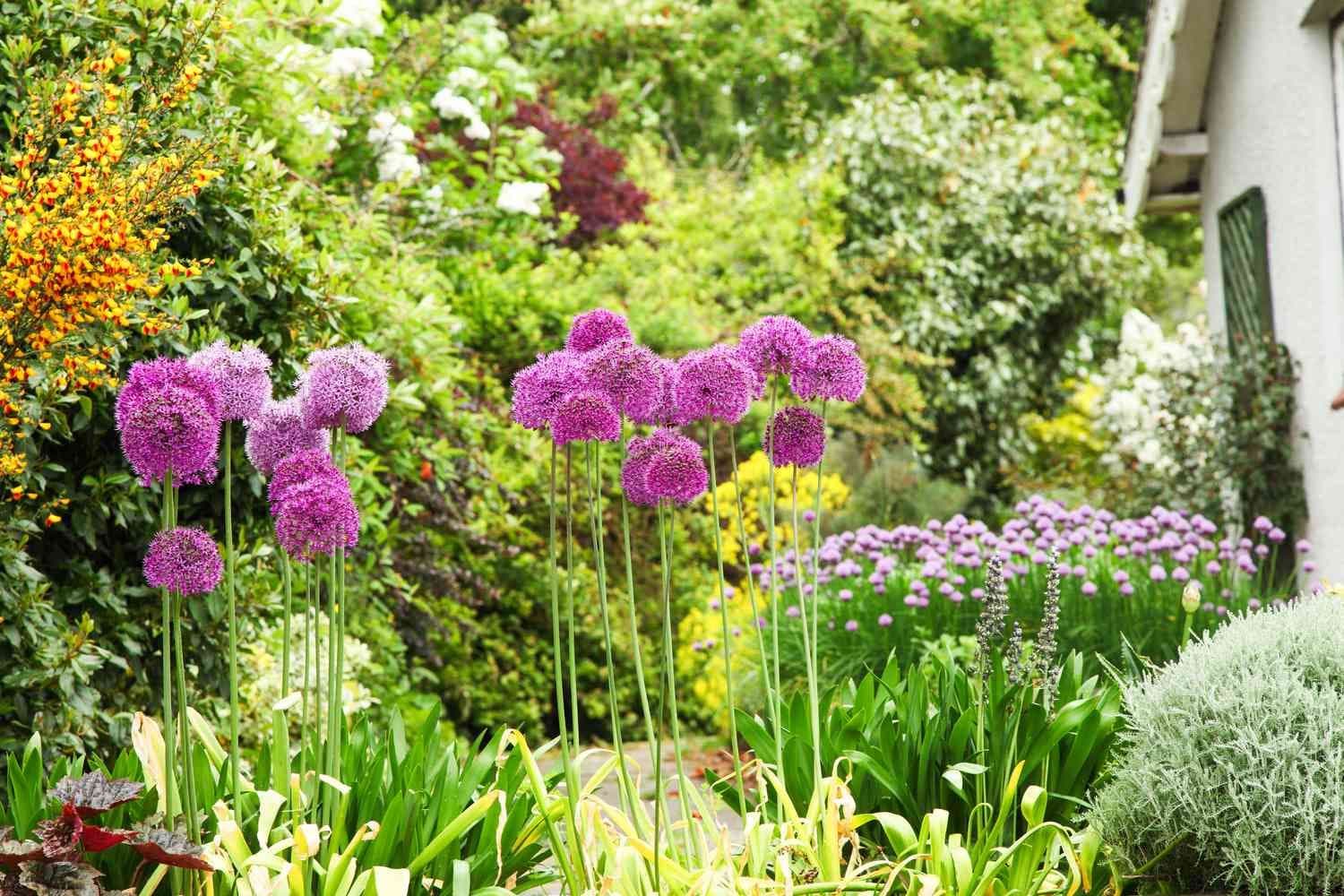
Dusty leaves look dull and don't absorb light well. Below, you'll find simple ways to clean them, which tools are truly effective, how often you should do it, and what causes damage.

Beginner Guides
How to Clean Plant Leaves: A Simple Care Guide
Plants That Repel Bugs – 20 Effective Options

12 min read · 16 Jul 2026

Plants That Repel Bugs – 20 Effective Options

Mosquitoes on the patio? Gnats in the kitchen? Some plants keep them away with the scent of their own leaves. Here are 20 that deal with mosquitoes, flies, aphids, and more, plus where to put them so they help.

Plant Recommendations
Plants That Repel Bugs – 20 Effective Options
8 Glow-in-the-Dark Plants and Fungi That Really Exist

8 min read · 6 Nov 2026

8 Glow-in-the-Dark Plants and Fungi That Really Exist

Plants that glow in the dusk really exist. Some of them produce their own light, while others need UV exposure or special treatments. Explore eight fascinating examples, including glowing petunias, bioluminescent mushrooms, fluorescent flowers, and experimental succulents.

Plant Recommendations
8 Glow-in-the-Dark Plants and Fungi That Really Exist