Capparis quiniflora Care

About Capparis quiniflora

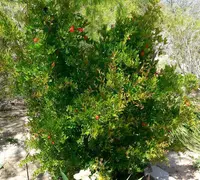
Capparis quiniflora is a woody shrub or small tree from the caper family, typically found in dry, open habitats of northern Australia and nearby regions. It often has a somewhat sparse, branching crown with small leaves and showy white to pale flowers that open at night or in the early morning.

This species is adapted to heat and seasonal drought, which makes it relatively tolerant of sun and poor, well-drained soils. However, it can be slow-growing and may resent prolonged waterlogging, so planning how to care for Capparis quiniflora should account for its dry-climate origin.

Main Plant Requirements

Care Difficulty

Moderate Care

Light Preference

Full Sun

Water Requirements

Moderate Water

Temperature Preference

Warm Climate

Hardiness Zone

10–12

Soil Texture

Sandy, Loamy, Rocky

Soil pH

Slightly acidic (6.5–7.0), Slightly alkaline (7.0–7.5)

Soil Drainage

Well-drained

Fertilization

Minimal (feed rarely)

Get Personalized Care Plan

Scan your plant to receive care tips personalized for your specific plant

Available on iOS and Android

How to Care for the Capparis quiniflora

This species prefers bright, open conditions similar to its native dry scrub and woodland habitats.

  • Provide 6–8 hours of direct sun daily, ideally strong morning sun with some light afternoon shade in very hot climates.
  • Tolerates light partial shade, but flowering of Capparis quiniflora decreases if it receives less than about 4–5 hours of direct sun.
  • In summer, monitor for leaf scorch on exposed, reflective sites; in winter, avoid dense shade from buildings or trees that can reduce vigor over time.

This drought-tolerant shrub prefers deep, infrequent watering rather than constantly moist soil.

  • Allow the top 5–8 cm of soil to dry before watering, then soak the root zone thoroughly so water penetrates 15–20 cm deep.
  • In hot, dry seasons increase frequency based on soil checks and slight leaf softening; in cool or rainy periods, pause irrigation to prevent root rot.
  • Signs of overwatering include yellowing leaves and soft stems; persistent wilting, crisp leaves, and very dry soil indicate the need for a deep drink.

This plant is adapted to warm to hot climates and is sensitive to cold, especially prolonged frost.

  • Optimal growth occurs around 70–90°F (21–32°C), with best performance in consistently warm, dry areas.
  • Tolerates short spikes up to about 100°F (38°C) if soil is well-drained and the plant is not waterlogged during heatwaves.
  • Growth slows below 55°F (13°C); foliage and young stems may be damaged near 32°F (0°C), so avoid planting in frost pockets or unprotected low spots.

This species tolerates a wide humidity range and rarely needs special humidity management indoors or outdoors.

  • Ideal humidity is around 30–60%, matching most home and dry garden conditions.
  • Dry air is usually tolerated, but prolonged very low humidity with high heat can crisp leaf edges.
  • Humidity stress appears as browning tips and edge curl; improve air moisture with nearby water trays or grouped plants.

This species favors mineral, sharply draining soil that mimics dry, rocky habitats.

  • Use a sandy or gravelly loam with high mineral content and low to moderate organic matter to prevent waterlogging.
  • Aim for slightly alkaline to neutral pH around 7.0–8.0, adding crushed limestone or garden lime if soil is acidic.
  • Create a mix such as 40% coarse sand, 40% grit or small gravel, and 20% composted material for structure and nutrients.
  • Avoid compacted clay, peat-heavy, or constantly moist mixes, and incorporate coarse particles to improve aeration and rapid drainage for healthy roots.

This species can be grown in containers if given a deep, very free-draining setup suitable for a woody root system.

  • Choose a heavy, stable pot or place the container in a heavier outer cachepot to prevent tipping in wind as the canopy develops.
  • Use a deep container rather than a wide shallow one so the primary roots can extend downward without circling tightly.
  • Select a pot material with faster drying, such as unglazed terracotta, when using mineral-rich, sandy mixes to avoid excess moisture retention.

This drought-adapted shrub usually needs minimal feeding in the ground, but light supplementation improves vigor in poor soils.

  • For Capparis quiniflora in containers or very poor soil, apply a balanced slow-release fertilizer (around 10-10-10) at the start of spring.
  • Use a light application rate, about half the label recommendation, to avoid soft, weak growth in this naturally tough species.
  • In the main growing season, one additional light feeding with diluted liquid balanced NPK (at 1/2–1/4 strength) can support growth.
  • Do not feed in late fall or winter, as the plant is less active and excess nutrients may stress roots.

Pruning keeps this shrub compact and removes stressed wood without reducing its natural resilience.

  • Prune Capparis quiniflora at the end of winter or very early spring, before strong new growth begins.
  • Remove dead, diseased, crossing, or storm-damaged branches first, cutting back to healthy wood with clean, sharp bypass pruners.
  • Thin crowded interior shoots to improve airflow and light penetration, which supports healthier foliage and flowering.
  • Limit pruning to light shaping of outer growth, preserving the plant’s natural form and avoiding heavy cuts into old, woody stems.

This species is more often grown in the ground, but young container plants or nursery stock may need careful transplanting.

  • Plan to transplant Capparis quiniflora in late winter to early spring, when temperatures are mild and growth is just starting.
  • Look for signs such as roots circling the pot drainage holes, very slow growth, or rapid drying of the potting mix.
  • Lift the plant gently, tease apart circling roots without tearing, and trim only damaged or rotten sections with clean tools.
  • Replant at the same depth in a well-drained, gritty soil, water thoroughly once, then keep soil just slightly moist to reduce transplant shock.

Propagation is possible but somewhat specialized, with both seed and semi-woody cuttings used by growers.

  • Collect ripe seeds from mature fruits, then sow in a sharply drained, sandy mix kept warm at 70–80°F with moderate moisture.
  • Lightly scarify the seed coat or use a brief soak in warm water to encourage more even germination.
  • Take semi-hardwood cuttings in late spring to summer, using non-flowering shoots 8–10 cm long with several nodes.
  • Dip cut ends in rooting hormone, place in a fast-draining mix under bright, indirect light, and maintain high humidity with careful ventilation.

This shrub prefers warm, frost-free climates and benefits from simple measures in regions with occasional cold.

  • Capparis quiniflora is sensitive to hard frost, so growth may be damaged when temperatures drop below about 28–30°F.
  • In the ground, apply a 5–8 cm layer of dry mulch around the root zone, keeping it slightly away from the stem base.
  • For container plants in cooler areas, move pots into a bright, frost-free space before the first hard frost and reduce watering.

Care Tips

Establish strong framework

In the first 2–3 years, selectively retain 3–5 well-spaced main branches and remove weak, crossing, or congested shoots to build a sturdy, open canopy that supports long-term flowering and easier maintenance.

Encourage flowering wood

After the main flush of flowers, lightly tip-prune only the spent flowering shoots, leaving young, sun-exposed stems intact so they can mature into next season’s flowering wood.

Use heat-reflective surfaces

In marginal climates, site the plant near a south- or west-facing masonry wall or rock bed that reflects and stores heat, helping stabilize root-zone temperatures and extend the growing season.

Monitor scale and borers

Inspect woody stems several times a year for scale insects, small entry holes, or frass (sawdust-like residue), and promptly remove and destroy affected twigs or apply an appropriate horticultural oil before damage spreads.

Optimize root establishment

When planting, create a wide, shallow planting zone with loosened soil extending at least 30–45 cm beyond the root ball and apply a 3–5 cm inorganic mulch layer (such as gravel) to reduce weed competition while keeping the woody crown dry, which supports stable establishment when growing Capparis quiniflora.

Common Pests and Diseases

Scale insects

This pest attaches to stems and young shoots, sucking sap and causing yellowing, leaf drop, and general decline, especially in dry, sheltered conditions. Symptoms include small, dome-shaped or flat brown bumps that do not move when touched.

Solution

Prune out heavily infested twigs, then gently scrub remaining scales from stems with a soft brush dipped in insecticidal soap or a light horticultural oil. Repeat treatments every 7–10 days until new growth is clean, and reduce plant stress by providing full sun and avoiding excess nitrogen fertiliser as part of Capparis quiniflora care instructions.

Leaf miners

These insects tunnel within the leaf tissue, creating winding, pale trails that distort foliage and reduce photosynthetic area. This pest tends to affect young, tender leaves most severely on plants growing in hot, exposed sites.

Solution

Remove and dispose of mined leaves promptly to reduce larval numbers and break the life cycle. Encourage natural predators, avoid broad-spectrum insecticides that kill beneficial insects, and if necessary apply a targeted systemic product labeled for leaf miners according to directions on new flushes of growth.

Caterpillars

These insects chew irregular holes in leaves and young shoots, sometimes skeletonizing foliage when populations are high. Symptoms include fresh green droppings on lower leaves or around the base and visible larvae on the plant at dusk or early morning.

Solution

Hand-pick and remove caterpillars where practical, inspecting stems and the undersides of leaves regularly. For larger infestations, use a biological control containing Bacillus thuringiensis (Bt) directed onto actively feeding larvae, and maintain good plant vigor so the shrub can replace damaged foliage quickly.

Sooty mold

This disease is a dark, superficial fungal growth that develops on honeydew secreted by sap-sucking insects such as scale or aphids. Symptoms include black, soot-like coating on leaves and stems, which can reduce light reaching the leaf surface and interfere with photosynthesis.

Solution

Address the underlying insect problem first by controlling scale or other honeydew producers, then gently wash affected leaves and stems with water and a small amount of mild soap to remove the fungal coating. Improve air circulation around the plant and avoid overhead watering to keep foliage drier and discourage reinfection.

Leaf spot

This disease causes small to medium brown or tan lesions on leaves, sometimes with a darker margin and a pale center, and can lead to premature leaf drop in humid or poorly ventilated conditions. Symptoms include clustered spots on older foliage and occasional yellowing around the lesions.

Solution

Remove and discard affected leaves and fallen debris to reduce the source of spores, and water at the base rather than over the foliage to limit leaf wetness. If the problem recurs in warm, humid weather, apply a copper-based or other labeled ornamental fungicide according to directions and maintain adequate spacing and airflow around the shrub.

Interesting Facts

Nocturnal floral display

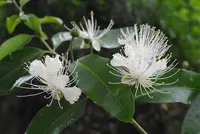
This Australian shrub opens its showy white flowers at night, with long radiating stamens that make the blossoms highly visible to nocturnal insects and other pollinators.

Rocky habitat specialist

In the wild, it often grows on rocky slopes and sandstone outcrops in northern Australia, anchoring itself in shallow, well-drained soils where many other woody plants struggle to establish.

Distinctive fruit development

After flowering, it forms elongated, often curved fruits that split open as they mature, revealing seeds embedded in a fleshy pulp that attracts animals and aids seed dispersal.

Botan icon

Did you know?

Within its native range in northern Australia, this species is part of the natural flora of tropical monsoon woodlands, where it has adapted to marked wet–dry seasonal cycles, tolerating long dry periods once established.

FAQs about Capparis quiniflora

This species usually blooms in the warmer months, often late spring through summer, depending on climate. In suitable warm, dry regions it can flower more than once a year, especially when not stressed by waterlogging or cold.

Grow Healthy Plants with Botan Care

Keep your plants happy and healthy with plant identification, disease detection, and easy care guidance.

Botan plant care app — identify plants on mobile

Explore More Plants