Siberian peashrub Care (Caragana arborescens)

Also known as: Siberian Pea-tree
Siberian peashrub

About Siberian peashrub

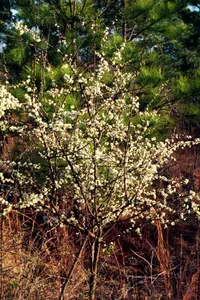
Siberian peashrub (Caragana arborescens) is a hardy, fast-growing deciduous shrub from cold, dry regions of Siberia and northern Asia. It is often used as a windbreak or hedge in tough climates.

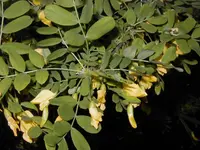
The plant has fine, compound leaves, yellow pea-like flowers in spring, and narrow seed pods. It forms a dense, upright to arching thicket and can tolerate poor, sandy, or dry soils.

This shrub fixes nitrogen in the soil, which supports growth even where nutrients are low. Its strong tolerance of cold, drought, and pruning makes it relatively easy to establish and care for Siberian peashrub in exposed sites.

It prefers full sun and moderately well-drained soil, and usually needs little attention once established.

Main Plant Requirements

Care Difficulty

Easy Care

Light Preference

Full Sun

Water Requirements

Low Water

Temperature Preference

Cold Hardy

Hardiness Zone

2–7

Soil Texture

Sandy, Loamy, Clay

Soil pH

Slightly acidic (6.5–7.0), Alkaline (7.5–8.5)

Soil Drainage

Well-drained

Fertilization

Minimal (feed rarely)

Get Personalized Care Plan

Scan your plant to receive care tips personalized for your specific plant

Available on iOS and Android

How to Care for the Siberian peashrub

This hardy shrub performs best in open, bright conditions with long daily sun exposure.

  • Provide 6–8 hours of direct sun daily; full sun promotes dense growth and abundant flowering for Siberian peashrub.
  • Plant in an open site with unshaded morning and midday sun; light afternoon shade is acceptable in very hot, dry climates.
  • In areas with long, low-light winters, choose the brightest, south- or west-facing position to avoid weak, leggy shoots and sparse foliage.

This shrub prefers dry to moderately moist soil and is highly drought tolerant once established.

  • Water newly planted Caragana arborescens when the top 5–7 cm of soil is dry, then soak the root zone deeply and let the soil dry again.
  • After the first 1–2 growing seasons, rely mainly on rainfall, watering only during prolonged dry spells when leaves begin to dull or slightly wilt.
  • Use free-draining soil or a slope to prevent standing water, which can cause root rot, yellowing leaves, and dieback from chronic overwatering.

This cold-hardy shrub tolerates a wide temperature range and is well suited to continental climates.

  • Optimal growth occurs around 60–75°F (16–24°C) during the active spring–summer season, with good air movement and moderate humidity.
  • The plant withstands severe winter cold down to about -40°F (-40°C), making it suitable for USDA Zones 2–7 without special frost protection.
  • Mature shrubs handle short hot spells up to about 95°F (35°C) if soil is not waterlogged; extended extreme heat can slow growth and scorch exposed foliage.

Humidity is not a major factor for Caragana arborescens, which thrives in dry, open conditions.

Caragana arborescens prefers lean, well-drained mineral soils rather than rich, moisture-retentive substrates.

  • Use sandy or sandy-loam soil with 20–30% coarse sand or grit to keep the structure open.
  • Ensure very fast drainage; avoid compacted clay and any site or mix that stays wet for more than 24 hours after rain or watering.
  • Aim for slightly acidic to moderately alkaline conditions, roughly pH 6.0–8.0, as the species tolerates calcareous soils.
  • In heavy native soil, improve aeration and drainage by incorporating coarse sand, fine gravel, or small crushed stone instead of peat-based amendments.

This species can be grown in large outdoor containers, mainly for temporary or controlled planting situations.

  • Choose a deep, heavy container (such as thick-walled ceramic or concrete) to counter the shrub’s height and wind leverage.
  • Use a sharply draining mix combining standard potting substrate with at least 40% coarse sand or fine gravel to prevent prolonged saturation.
  • Position the container where wind exposure is reduced or where it can be secured, as the woody top growth can make the pot unstable in strong gusts.

Caragana arborescens generally needs minimal feeding, especially when grown in the ground, because it fixes nitrogen in its roots.

  • In average garden soil, skip routine fertilizer and focus on maintaining well-drained conditions and moderate organic matter.
  • For poor soils, apply a light layer of compost around the drip line in early spring, avoiding direct stem contact.
  • Container plants benefit from a balanced, slow-release fertilizer at 1/2 strength once in spring and once mid-summer.
  • Do not fertilize in fall or winter, as new soft growth may be damaged by cold and the plant is semi-dormant.

Pruning Caragana arborescens helps manage size, encourage dense branching, and remove weak wood.

  • Carry out main pruning in late winter to very early spring before buds break, when structure is easy to see.
  • Remove dead, diseased, or crossing branches first, cutting back to healthy wood with clean, sharp bypass pruners or loppers.
  • Thin crowded interior stems to improve light and air flow, which supports healthier foliage and flowering.
  • Shorten overly long shoots to maintain the desired shrub or small-tree form, always cutting just above a bud or side branch.

This species is usually grown in the ground, so care focuses on transplanting young plants rather than frequent repotting.

  • Transplant in early spring or fall when temperatures are mild and soil is workable, which reduces stress on roots.
  • Look for roots circling the container, tight root balls, or stalled top growth as signals to move seedlings or young shrubs up a size.
  • Loosen and gently tease apart circling roots before planting, then set the root flare at soil level in a hole wider than the root ball.
  • Water thoroughly after transplanting and keep soil evenly moist (not waterlogged) for several weeks to support re-establishment.

Caragana arborescens is commonly propagated from seed, with additional options using semi-hardwood cuttings in summer.

  • Collect ripe pods in late summer, dry them, then sow scarified or briefly soaked seeds in fall or early spring for better germination.
  • Use a free-draining seed mix, keep it lightly moist, and provide cool to moderate temperatures around 60–70°F.
  • Take semi-hardwood cuttings in mid to late summer, dip bases in rooting hormone, and place in a well-aerated, moist, sandy medium.
  • Maintain high humidity and bright, indirect light for cuttings until roots form, then gradually acclimate plants to lower humidity.

This shrub is very cold hardy and usually needs little winter care once established in the landscape.

  • Hardy to severe cold, it tolerates typical winter conditions in most northern regions without stem dieback.
  • Apply a 5–8 cm mulch layer around the root zone in late fall to moderate soil temperature and moisture fluctuations.
  • For young or newly planted shrubs in exposed sites, use a breathable windbreak to limit desiccating winter winds.
  • Container-grown Siberian peashrub should be placed in a sheltered, unheated but frost-free or slightly protected spot to avoid root freeze-thaw cycles.

Care Tips

Windbreak establishment

When planting as a hedge or windbreak, stagger shrubs in a zigzag double row spaced 60–90 cm apart to create a denser barrier and reduce wind tunneling at ground level.

Root zone protection

Mulch a 60–90 cm radius around the base with a 5–8 cm layer of wood chips or coarse bark to protect the shallow feeder roots from mowing damage and soil compaction while still keeping mulch pulled back 5–8 cm from the stem.

Nitrogen-fixing support

Avoid using high-nitrogen fertilizer and instead lightly incorporate compost in the surrounding planting area so the shrub’s nitrogen-fixing root nodules develop fully and can improve soil for neighboring plants.

Renewal pruning cycle

Every 3–4 years, remove 20–30% of the oldest, thickest stems at ground level in late winter to maintain a dense, youthful framework and reduce the risk of storm breakage.

Sucker and seed control

Inspect the base and surrounding soil twice a year, cutting off basal suckers and removing unwanted seedlings promptly to keep the shrub contained and make caring for Siberian peashrub easier in small landscapes.

Common Pests and Diseases

Pea aphids

This pest feeds on young shoots and leaf undersides, extracting sap and causing curling, yellowing, and sticky honeydew that can lead to sooty mold. Symptoms include distorted new growth and clusters of soft, greenish insects on tender stems.

Solution

Prune out heavily infested shoot tips and hose down plants with a strong stream of water to dislodge aphids. For persistent colonies, use insecticidal soap or a light horticultural oil, making sure to cover leaf undersides and repeating every 5–7 days until populations drop.

Pea leaf weevil

These insects notch and skeletonize leaves, while larvae feed on root nodules, which can reduce nitrogen fixation and overall vigor. Symptoms include scalloped leaf edges and general thinning of the canopy on younger shrubs.

Solution

Monitor foliage in spring and early summer and shake branches over a light-colored sheet to confirm adult presence. Encourage ground beetles and other predators by avoiding broad-spectrum insecticides, and where damage is high, use targeted foliar insecticides labeled for weevils, applied in the evening when adults are actively feeding.

Caragana blister beetle

These insects chew irregular holes in leaves and can rapidly defoliate sections of the shrub when populations are high. This pest often appears in groups and may move through a planting in waves.

Solution

Hand-pick beetles into soapy water where practical and remove nearby flowering weeds that attract adults. In larger plantings, consider a spot treatment with a selective insecticide when beetles first appear, focusing on affected branches rather than the whole shrub.

Powdery mildew

This disease produces white to gray powdery growth on leaves, especially in shaded or crowded areas, leading to premature leaf drop and reduced vigor. Symptoms include dull, coated foliage and sometimes distorted young leaves.

Solution

Thin and prune shrubs to improve light penetration and airflow, and avoid overhead watering late in the day. Remove and discard heavily infected leaves, and if mildew recurs yearly, apply a horticultural oil or sulfur-based fungicide at the first sign of white patches, repeating as label directions indicate.

Cytospora canker

This disease causes sunken, discolored patches on stems and branches that may ooze resin, leading to dieback of affected limbs. Symptoms include scattered dead twigs, thinning in parts of the crown, and rough cankers along the bark.

Solution

Prune out infected branches 15–20 cm below visible cankers during dry weather, disinfecting tools between cuts with alcohol or a 10% bleach solution. Reduce plant stress by watering during prolonged drought, mulching to moderate soil temperature, and avoiding mechanical injury to bark, which lowers the risk of new infections and supports long-term Caragana arborescens plant care.

Interesting Facts

Cold-climate nitrogen fixer

Siberian peashrub forms nodules on its roots that host nitrogen-fixing bacteria, allowing it to enrich poor, cold-climate soils where many shrubs struggle. This trait has led to its use in shelterbelts and soil improvement plantings across northern regions.

Extreme frost tolerance

Mature plants tolerate very low winter temperatures, surviving in regions down to roughly USDA hardiness zone 2. This cold hardiness makes it one of the few leguminous shrubs that thrives in continental climates with long, harsh winters.

Edible pea-like seeds

The shrub produces small pods containing pea-like seeds that have been used as a famine or survival food in parts of its native and introduced range. The seeds are high in protein but are small and typically not used as a major crop.

Botan icon

Did you know?

Siberian peashrub has been widely planted as a living fence and windbreak in prairie and steppe regions because its dense branching structure slows wind, traps snow, and stabilizes soil, which can significantly reduce erosion in open, exposed landscapes.

FAQs about Siberian peashrub

Growth is generally fast, especially in the first 5–10 years. In suitable outdoor conditions, it often adds 30–60 cm per year, sometimes more, then gradually slows as the root system and branching structure mature.

Grow Healthy Plants with Botan Care

Keep your plants happy and healthy with plant identification, disease detection, and easy care guidance.

Botan plant care app — identify plants on mobile

Explore More Plants