Encourage Single Leader
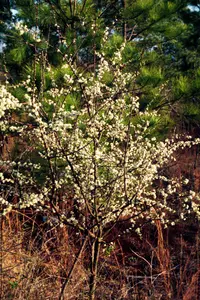
Select one strong central stem early on and gently stake it upright, removing competing vertical shoots so the tree develops a straight, wind‑resistant trunk.

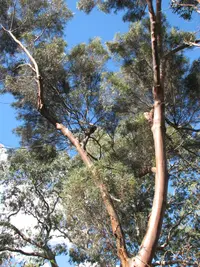
Eucalyptus spathulata, often called swamp mallet, is a small to medium Australian tree known for its smooth bark and narrow, glossy, aromatic leaves. It often forms a single, straight trunk with a rounded, open canopy.
This species is native to southwestern Western Australia, where it grows in low-lying, sometimes seasonally wet areas and well-drained sandy or loamy soils. It is generally fast-growing and can be quite resilient once established, but young plants need protection from severe frost and prolonged drought.
Understanding how to care for eucalyptus includes providing strong light, good air movement, and soil that drains well while never staying waterlogged for long periods.

Care Difficulty
Moderate Care

Light Preference
Full Sun

Water Requirements
Low Water

Temperature Preference
Warm Climate

Hardiness Zone
8–10

Soil Texture
Sandy, Loamy, Rocky

Soil pH
Acidic (5.5–6.5), Slightly acidic (6.5–7.0)

Soil Drainage
Well-drained

Fertilization
Minimal (feed rarely)
Scan your plant to receive care tips personalized for your specific plant
Available on iOS and Android
This species thrives in open, bright conditions with strong, direct light.
This tree prefers infrequent, deep watering once established, with soil allowed to dry between waterings.
This species is adapted to warm, dry climates but tolerates a moderate range of temperatures once established.
This species handles low humidity well and rarely needs special humidity management indoors.
Provide sharply drained, mineral-based soil to support healthy Eucalyptus spathulata growth and root health.
This species can be grown in containers when given enough root space and very rapid drainage.
This species is adapted to lean soils, so use fertilizer sparingly and only to support container or young Eucalyptus spathulata.
Pruning Eucalyptus spathulata is mainly done to control size, maintain structure, and remove weak growth rather than for flowering.
This species is usually grown in the ground, so focus on careful transplanting of young trees rather than frequent repotting.
Eucalyptus spathulata is most often propagated from seed, as cuttings root unreliably for most home growers.
Mature Eucalyptus spathulata is fairly cold tolerant in mild climates but young or potted plants benefit from basic winter protection.

Plant Health Check
Not sure what's wrong with your plant? Check your plant's health inside the app.
This species typically grows as a multi-stemmed mallee rather than a tall single-trunk tree, rarely reaching the heights of many other eucalypts and forming a low, spreading structure adapted to fire-prone environments.
It is naturally restricted to ironstone gravel and lateritic soils in southwestern Western Australia, showing strong adaptation to very nutrient-poor, well-drained, mineral-rich substrates.
In trials outside its native range, this species has shown notable tolerance to both summer drought and light to moderate frosts, which is why some forestry and shelterbelt programs test it for tough, low-rainfall sites when studying how to take care of eucalyptus in challenging climates.

The bark of this species often develops a distinctive rough, grey, fibrous base with smooth, peeling upper sections, creating a two-textured trunk that can help distinguish it from many other mallee eucalypts in the field.
This species can adapt to large, deep containers if given full sun, fast-draining soil, and regular root pruning. Container culture helps control ultimate size and is often the most practical way of growing eucalyptus in small gardens.
Keep your plants happy and healthy with plant identification, disease detection, and easy care guidance.

.5912-200x133.webp)