
eucalyptus Identification (Eucalyptus spathulata)

Recognize Eucalyptus spathulata by its narrow, spoon-shaped adult leaves, often 2 to 5 inches (5 to 13 cm) long, set alternately along slender stems, and by its many-stemmed mallee habit rather than a single tall trunk.

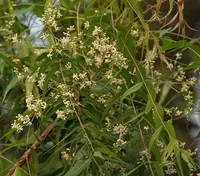
It also shows clusters of small white flowers in the leaf axils, followed by small cup-shaped woody capsules.

Eucalyptus spathulata Identification

Confirm What Plant You Have

Take or upload a photo to confirm your plant ID with Botan.

Clear images work best. Avoid photos taken too close or too far away

Check the overall shape and leaf form of Eucalyptus spathulata first.

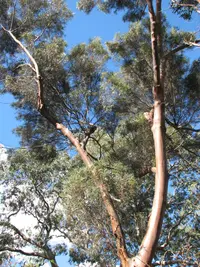
  • Usually a small tree or mallee with several stems from low on the plant, forming a rounded crown.
  • Adult leaves are narrow to spoon-shaped, often slightly curved, and about 2-5 inches (5-13 cm) long.
  • Leaves are arranged alternately along the stems and often hang somewhat downward.
  • Buds and woody capsules are clustered together on short stalks rather than appearing singly.

The low branching habit and short, spoon-shaped leaves are the quickest clues.

Eucalyptus spathulata shows distinct leaf, bark, and reproductive changes as plants age.

  • Juvenile plant: Young plants carry broader, shorter leaves in opposite pairs, often duller and less sickle-shaped than the narrow adult foliage.
  • Mature plant: Older plants form a mallee or small tree to about 15 feet (4.5 m), with smoother bark and narrower, alternate, spoon- to lance-shaped leaves.
  • Flowering stage: Flowering branches show clusters of pale, fluffy blossoms from rounded buds, making the crown look softer and more open than nonflowering growth.
  • Fruiting stage: After flowering, conspicuous woody capsules replace the blossoms; their cup-shaped form and persistent position along branchlets are easier to spot than buds.

A few mallee eucalypts can be confused with Eucalyptus spathulata at a glance.

swamp mallet(Eucalyptus spathulata subsp. spathulata)

This is a form of the same species, so it does not belong in this section.

warty-fruited mallee(Eucalyptus corrugata)

Both are mallee shrubs with broad, smooth-edged leaves and large red buds. Eucalyptus corrugata is usually told by its strongly ribbed, warty buds and fruit; Eucalyptus spathulata has smoother buds and cup-shaped fruit.

red-flowering mallee(Eucalyptus macrocarpa)

Both have showy red flowers and glaucous, blue-gray leaves. Eucalyptus macrocarpa has much larger, rounder leaves and very large buds and fruit, while Eucalyptus spathulata has narrower spoon-shaped leaves and smaller fruit.

Eucalyptus spathulata is native to southwestern Western Australia. It occurs inland from the south coast, including parts of the Wheatbelt and nearby semi-arid districts. In the wild it is found in mallee shrubland and open woodland, often on sandy or loamy soils, sometimes with gravel. That geographic focus helps narrow identification because many similar small mallee eucalypts are also regional, and a plant tied to southwestern Western Australia fits Eucalyptus spathulata more closely than eastern Australian species.

  • Leaves and oil: Eucalyptus leaves contain essential oils that are harmful if ingested by humans or pets. The concern is greatest with leaves and concentrated oil, especially for dogs, cats, and livestock.
  • Skin contact: Handling crushed leaves or sap can irritate skin in some people. This is a contact risk rather than a poisoning risk, and it is mainly a concern for humans.

Check Your Plant ID

Upload a photo to Botan to identify the plant or confirm your match before making care decisions.

FAQ

Recognize eucalyptus in this species by its broad, spoon-shaped adult leaves with a blue-green to gray-green tone, often held in opposite pairs on younger growth, plus smooth bark and clusters of small white flowers.

More Plant Identification Guides

Identify Your Plant with Botan

Use a photo to identify it, then review plant details, care information, and common problems matched to that species.

Botan app identifying a plant from a photo
How to Increase Humidity for Plants – 8 Simple Ways That Work

8 min read · 14 Aug 2026

How to Increase Humidity for Plants – 8 Simple Ways That Work

Dry indoor air stresses a lot of houseplants. You usually notice it first in the browning leaf tips. This guide describes 8 simple ways to raise the moisture around your plants, from humidifiers to pebble trays.

Plant Care
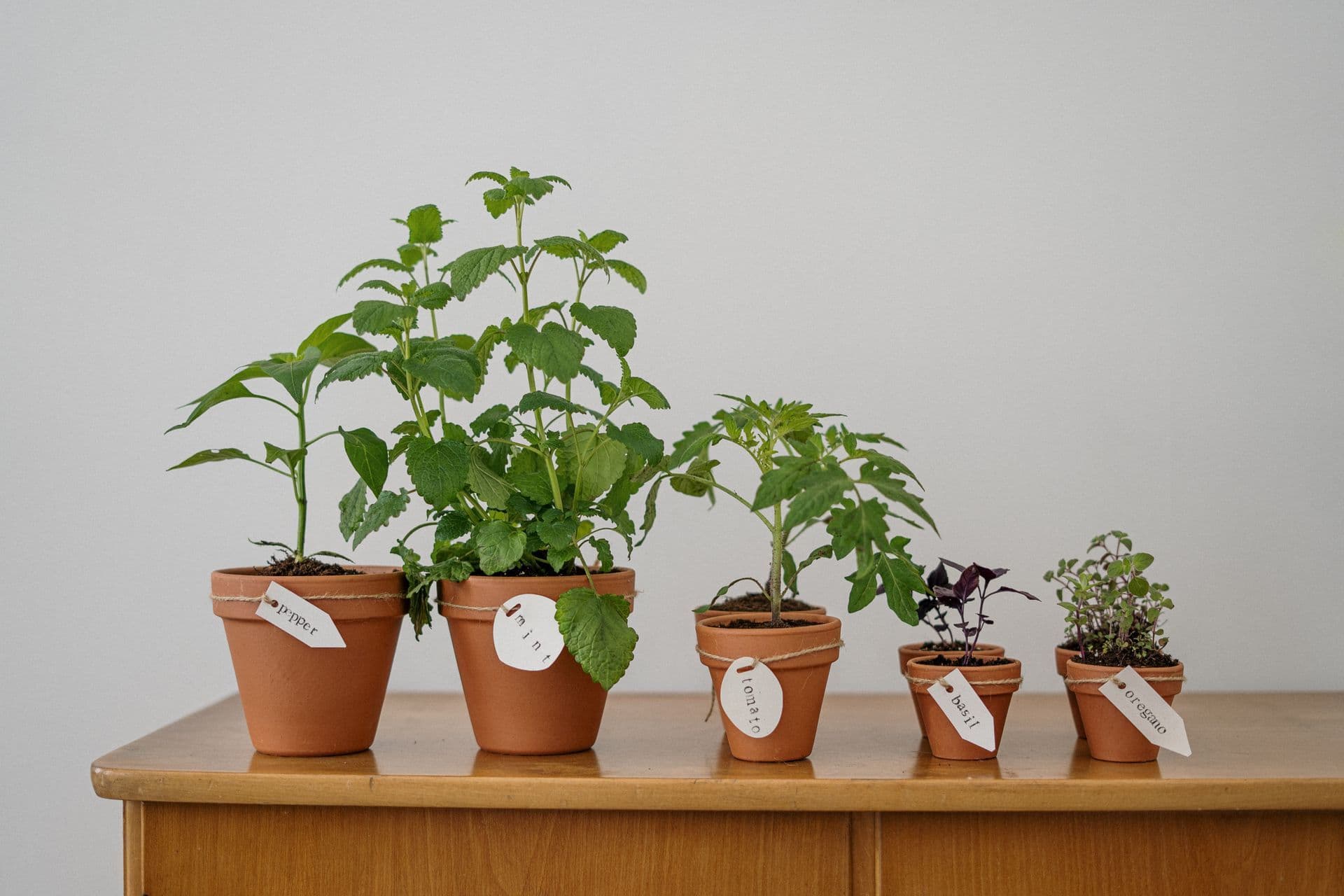
How to Increase Humidity for Plants – 8 Simple Ways That Work
Plant Pot Sizes: How to Choose the Right Plant Container

7 min read · 20 Aug 2026

Plant Pot Sizes: How to Choose the Right Plant Container

Plant pot sizes can be confusing because the number on the label only tells you part of the required information. A container may look spacious but actually be too shallow. So, how to choose pot size for plant species?

Beginner Guides
Plant Pot Sizes: How to Choose the Right Plant Container
12 Best Cold-Hardy Vegetables for Cold Weather

7 min read · 13 Oct 2026

12 Best Cold-Hardy Vegetables for Cold Weather

Cold-hardy vegetables can keep a garden productive through chilly fall, winter, and early spring weather. This guide covers 12 reliable crops, their frost tolerance, and practical growing tips for better cold-season harvests.

Plant Recommendations
12 Best Cold-Hardy Vegetables for Cold Weather