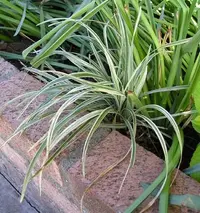
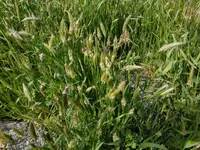
Edge Containment
In garden beds, install a shallow root barrier 10–15 cm deep along paths and borders to keep clumps from creeping into lawn or paving while still allowing natural spread within the planting area.

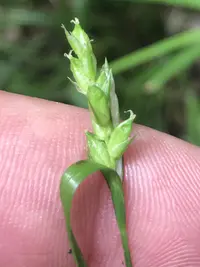
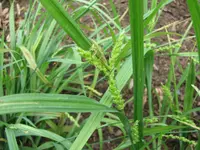
Eastern narrowleaf sedge (Carex amphibola) is a small, clumping woodland sedge native to eastern North America. It typically forms low, arching tufts of narrow, grass-like leaves that create a soft, fine-textured groundcover.
In nature it grows on moist, shaded forest floors and along stream banks, where soils are rich in organic matter and stay evenly damp. Its ability to tolerate shade, competition from tree roots, and occasional dryness makes it a practical choice for naturalistic gardens.
Gardeners who learn how to care for eastern narrowleaf sedge often use it as a low-maintenance alternative to traditional turf in lightly shaded areas.

Care Difficulty
Easy Care

Light Preference
Partial Shade

Water Requirements
Regular Water

Temperature Preference
Cold Hardy

Hardiness Zone
4–8

Soil Texture
Loamy, Silty, Organic-rich

Soil pH
Acidic (5.5–6.5), Slightly acidic (6.5–7.0)

Soil Drainage
Moist but well-drained

Fertilization
Minimal (feed rarely)
Scan your plant to receive care tips personalized for your specific plant
Available on iOS and Android
This woodland sedge prefers bright, indirect light to light shade, similar to a forest edge.
This sedge prefers consistently moist, but not saturated, soil.
This cool-season sedge handles a wide temperature range once established.
This woodland sedge handles a broad humidity range and usually does not need special humidity management outdoors.
Carex amphibola prefers consistently moist, humus-rich soil with structure that holds water yet drains steadily.
This sedge is suitable for containers, especially in shaded patios or balcony plantings.
Carex amphibola has modest nutrient needs but benefits from light feeding in poor or very sandy soils.
Carex amphibola needs only light pruning to keep the clump tidy and healthy.
This sedge is usually grown in the ground, so care focuses on dividing and transplanting crowded clumps.
Carex amphibola is most commonly propagated by division, which keeps clumps vigorous and uniform.
This species is cold hardy in much of its native range and generally needs minimal winter care in the ground.

Plant Health Check
Not sure what's wrong with your plant? Check your plant's health inside the app.
This species is naturally found in rich, deciduous floodplain forests of eastern North America, especially along small streams where soils stay moist but not permanently flooded.
Unlike many sedges that spread aggressively by rhizomes, this plant forms tight, slowly expanding clumps that are well adapted to dappled woodland shade.
Its early-season flowers and developing seeds provide structure and habitat in the leaf-litter layer, supporting small invertebrates and indirectly benefiting insectivorous birds in woodland stream corridors.

Botanists use the shape and hairiness of its perigynia, the sac-like structures enclosing each tiny fruit, as key diagnostic characters to distinguish Carex amphibola from closely related woodland sedges in the Carex grisea complex.
This species spreads slowly by short rhizomes and self-seeding, forming loose clumps rather than running aggressively. It can gently naturalize in suitable conditions but is usually easy to keep within boundaries with occasional edging or division.
Keep your plants happy and healthy with plant identification, disease detection, and easy care guidance.