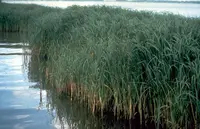
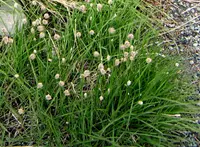
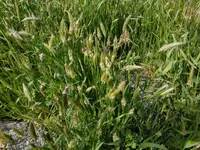
Divide aging clumps
Every 3–4 years, lift and divide overcrowded clumps in early spring or early fall to renew vigor, reduce disease pressure, and quickly create more plants for a uniform groundcover.

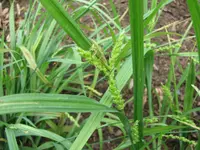
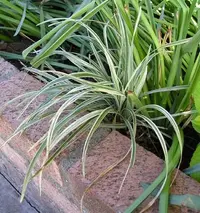
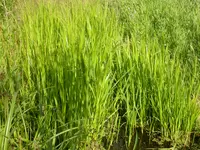
Thinfruit sedge, Carex flaccosperma, is a low, clumping woodland sedge valued as a fine-textured groundcover. It forms arching, grass-like foliage with a soft, slightly blue-green tone.
This species is native to moist woodlands and stream margins in the southeastern United States, where it grows in partial shade and consistently damp soils. It stays relatively compact and spreads slowly by short rhizomes, which makes it easier to control in gardens.
Carex flaccosperma adapts well to shaded borders, rain gardens, and naturalistic plantings, provided the soil does not dry out for long periods. Its tolerance of shade, moisture, and varying soil types makes it straightforward to care for thinfruit sedge in many temperate landscapes.

Care Difficulty
Easy Care

Light Preference
Partial Shade

Water Requirements
Keep Soil Moist

Temperature Preference
Cold Hardy

Hardiness Zone
5–9

Soil Texture
Loamy, Clay, Organic-rich

Soil pH
Acidic (5.5–6.5), Slightly acidic (6.5–7.0)

Soil Drainage
Moist but well-drained

Fertilization
Minimal (feed rarely)
Scan your plant to receive care tips personalized for your specific plant
Available on iOS and Android
This woodland sedge prefers bright shade conditions that mimic its natural forest-floor habitat.
This sedge thrives in consistently moist soil and tolerates occasional short-term flooding better than drought.
This cool-season sedge handles a wide temperature range and is notably cold hardy in temperate climates.
This sedge prefers moderate to high humidity but adapts well to most outdoor conditions.
This species prefers consistently moist, fine-textured soil with high organic matter content.
This sedge grows reliably in containers when moisture and stability are managed carefully.
This native sedge usually grows well in average soil, so fertilizing Carex flaccosperma should stay light and targeted.
Pruning Carex flaccosperma is mainly about tidying and renewing foliage rather than reshaping the plant.
Carex flaccosperma is most often grown in the ground, with transplanting used to adjust spacing or rejuvenate clumps.
New plants of Carex flaccosperma are most reliably produced by division of established clumps.
This sedge is cold hardy in most temperate climates and usually needs only basic winter care outdoors.

Plant Health Check
Not sure what's wrong with your plant? Check your plant's health inside the app.
This sedge naturally occurs on shaded floodplains, stream banks, and wet woodlands in the southeastern and south‑central United States, showing a strong adaptation to seasonally wet, heavy soils that many grasses cannot tolerate.
Among ornamental sedges, it is notably shade tolerant and can form stable colonies where light levels are too low for most turfgrasses, especially under deciduous trees in moist sites.
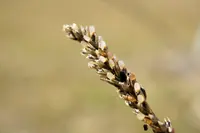
Its common name thinfruit sedge refers to the relatively slender, elongated achenes (dry fruits), which help distinguish it from similar blue sedge species with plumper fruits.
This species spreads slowly by short rhizomes and clumping growth. It can form a loose ground cover over time but is not considered aggressive. Division or edging controls spread easily in typical garden settings.
Keep your plants happy and healthy with plant identification, disease detection, and easy care guidance.