Clump Division Timing
Divide mature clumps every 3–5 years in early spring or early fall to keep growth dense, reduce central die-out, and quickly generate healthy new plants for filling gaps.

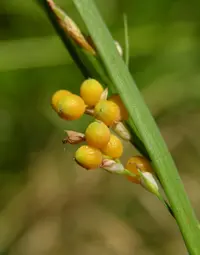
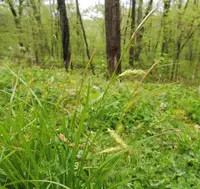
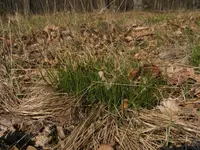
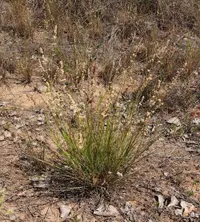
Golden sedge, Carex aurea, is a small, clump-forming sedge grown mainly for its fine texture and warm yellow-green foliage. It has narrow, grasslike leaves and a tidy, tufted habit that works well at the edge of ponds, in rock gardens, or in naturalistic meadow-style plantings.
This species is native to moist habitats across parts of North America, often found in wet meadows, stream banks, and open woodland clearings. It is generally robust and low-maintenance if provided with consistent moisture and reasonably cool conditions.
Golden sedge prefers sun to light shade and soil that does not dry out for long periods. These traits make it relatively straightforward to care for golden sedge in suitable climates.

Care Difficulty
Easy Care

Light Preference
Partial Sun

Water Requirements
Regular Water

Temperature Preference
Cold Hardy

Hardiness Zone
3–8

Soil Texture
Sandy, Loamy, Silty

Soil pH
Slightly acidic (6.5–7.0), Neutral (7.0)

Soil Drainage
Moist but well-drained

Fertilization
Minimal (feed rarely)
Scan your plant to receive care tips personalized for your specific plant
Available on iOS and Android
Carex aurea prefers consistent light conditions that balance sun exposure and moisture retention.
This sedge favors evenly moist soil and reacts quickly to prolonged drought or waterlogging.
This cool-season sedge handles a wide temperature range but grows best in moderate conditions.
This species grows well in typical outdoor humidity, with only minor sensitivity to very dry air.
Carex aurea prefers consistently moist, well-aerated soil that does not stay waterlogged.
This sedge is suitable for container growing in outdoor settings.
Carex aurea is a low-feeding native sedge that benefits from modest nutrition in poor soils or containers.
Pruning Carex aurea is mainly cosmetic and helps keep the clump tidy and vigorous.
Carex aurea is more often transplanted in the ground than repotted, but container plants still need attention over time.
Carex aurea is most reliably propagated by division, with seeds as a slower secondary method.
This sedge is cold hardy in much of its native range and usually needs only minimal winter care outdoors.

Plant Health Check
Not sure what's wrong with your plant? Check your plant's health inside the app.
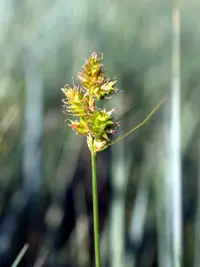
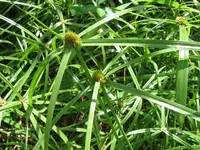
The most distinctive feature of Carex aurea is its golden to orange-brown perigynia, the sac-like structures around each seed, which give the plant its common name and help with species identification in the field.
This sedge often grows in calcareous wetlands, fens, and moist meadows where groundwater is rich in dissolved calcium carbonate, making it an indicator of lime-influenced, mineral-rich habitats in many regions of North America.
Carex aurea occurs across a broad band of northern North America, from parts of Alaska and Canada into the northern United States, showing strong adaptation to cool climates and short growing seasons.
This species spreads slowly by short rhizomes and seed, forming small clumps rather than large, running colonies. It is not usually considered aggressive, but in moist, open sites it can gradually self-seed into nearby bare soil.
Keep your plants happy and healthy with plant identification, disease detection, and easy care guidance.