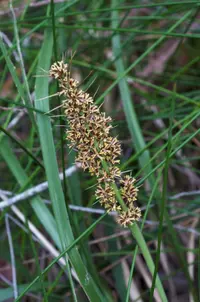
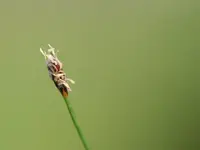
brome-like sedge Care (Carex bromoides)

Also known as: dropseed of the woods, brome-sedge
brome-like sedge

About brome-like sedge

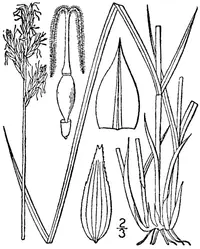
Carex bromoides, commonly called brome-like sedge, is a small, fine-textured, clumping sedge native to moist woodlands and wetlands in eastern North America. It forms loose tufts of narrow, arching leaves that give a soft, grassy look. Plants often grow in shaded or dappled light, along stream edges, boggy spots, and wet forest floors. This species is relatively undemanding if kept in consistently moist soil with organic matter. It adapts well to naturalistic gardens, rain gardens, and shaded borders where the soil does not dry out. Gardeners who learn how to care for brome-like sedge usually find it a reliable, low-fuss accent plant.

Main Plant Requirements

Care Difficulty

Moderate Care

Light Preference

Partial Shade

Water Requirements

Keep Soil Moist

Temperature Preference

Cold Hardy

Hardiness Zone

3–8

Soil Texture

Loamy, Silty, Organic-rich

Soil pH

Acidic (5.5–6.5)

Soil Drainage

Waterlogged tolerant

Fertilization

Minimal (feed rarely)

Get Personalized Care Plan

Scan your plant to receive care tips personalized for your specific plant

Available on iOS and Android

How to Care for the brome-like sedge

This sedge prefers bright but gentle light that mimics open woodland edges or moist meadows.

  • Provide 2–4 hours of direct morning sun with dappled or high bright shade the rest of the day; avoid strong afternoon sun in hot climates to prevent leaf scorch.
  • Tolerates partial to full shade, but in deep shade growth becomes looser and plants may flop; choose a site with at least bright indirect light for denser clumps.
  • In hotter regions, use filtered light under deciduous trees so brome-like sedge gets more sun in spring and softer, shaded light in summer.

This species is adapted to consistently moist to wet soils and dislikes drying out.

  • Aim for soil that stays evenly moist; in the ground, water when the top 1–2 cm feels just barely damp, especially during dry spells longer than 3–4 days.
  • Increase watering in late spring–summer when growth is active, and reduce slightly in late fall–winter, allowing only the surface to dry between rains or irrigations.
  • Watch leaves for cues: browning tips and folding indicate drought stress, while yellowing, limp foliage and a sour smell suggest waterlogged, poorly drained soil around Carex bromoides.

This cool- to mild-climate sedge tolerates a broad temperature range once established.

  • Best active growth occurs around 55–75°F (13–24°C), typical of mild spring and fall conditions in many temperate regions.
  • Cold hardy to about -20°F (-29°C) in the ground, where roots are insulated by soil and mulch; foliage may burn or mat under snow but usually resprouts in spring.
  • Handles summer highs up to about 85–90°F (29–32°C) if soil stays consistently moist; prolonged heat with dry soil can cause browning and partial dormancy.

This sedge prefers consistently moist air but usually adapts to typical outdoor humidity in temperate regions.

  • Aim for 50–80% humidity, especially in sheltered or partially shaded plantings and near water features.
  • In prolonged dry air, leaf tips may brown and edges may curl, indicating humidity or moisture stress.
  • To increase local humidity, group brome-like sedge near other plants, mulched beds, or shallow water features without flooding roots.

This species favors consistently moist, organic-rich soil with low to moderate drainage.

  • Use a fine-textured mix of loam, leaf mold or compost, and a small amount of sand to mimic wet meadow or streambank soils.
  • Keep drainage slow but not stagnant; soil should stay damp after watering yet not form standing water for long periods.
  • A slightly acidic to neutral pH of about 5.5–7.0 supports healthy root and foliage development in Carex bromoides.
  • In heavier soils, improve aeration by incorporating fibrous compost and fine bark, avoiding high perlite levels that dry the root zone too quickly.

This sedge can be grown in containers if moisture and stability are carefully managed.

  • Choose a wide, relatively shallow pot so the fibrous roots can spread while the full root zone stays evenly moist.
  • Use a heavier material such as ceramic or clay to keep the container stable as the clump spreads and catches wind.
  • Stand the pot in a shallow outer tray with a few centimeters of water, but allow the inner pot base to sit slightly above the waterline to avoid full submersion.

Carex bromoides is light-feeding and usually needs only modest nutrition in average, moist soil.

  • Apply a balanced, slow-release fertilizer (around 10-10-10) at half strength once in early spring.
  • In lean or sandy soils, add a thin layer of compost around the clump during the growing season.
  • Avoid high-nitrogen products that cause weak, floppy growth in brome-like sedge.
  • Stop feeding by late summer to allow growth to harden before winter.

Carex bromoides benefits from light, periodic cleanup rather than structural pruning.

  • In late winter or very early spring, trim back winter-burned or tattered foliage with clean shears.
  • Remove dead, yellow, or damaged leaves at the base to maintain a tidy, fresh-looking clump.
  • Thin out congested sections by cutting a few outer tufts, which encourages air flow and new growth.
  • Use sharp scissors or hand pruners, cutting just above soil level without scalping the crown.

This sedge is most often transplanted in garden beds rather than kept long term in containers.

  • Plan transplanting for early spring or early fall when temperatures are mild and soil stays evenly moist.
  • Divide and move clumps every 3–4 years, especially if growth becomes crowded or centers thin out.
  • In containers, repot when roots circle the pot or growth slows, stepping up only 1 pot size.
  • Lift with a generous soil ball, keep roots shaded and damp, then water thoroughly to reduce transplant stress.

Carex bromoides is commonly propagated by division, with seed used mainly for restoration or larger projects.

  • Divide established clumps in early spring or early fall when soil is cool and moisture is reliable.
  • Use a sharp knife or spade to separate small sections, each with healthy roots and several shoots.
  • Replant divisions at original depth in consistently moist soil, then water well until new growth resumes.
  • For seed, sow fresh in cool, moist conditions outdoors and allow natural stratification over winter.

Carex bromoides is cold hardy in much of its native range and usually needs minimal winter care in the ground.

  • Tolerates freezing temperatures when planted in moist, well-drained soil.
  • Leave foliage standing over winter to shield crowns, cutting back in late winter if desired.
  • Apply a 3–5 cm layer of leaf mulch around clumps in colder zones to moderate soil temperature.
  • Move containers into a sheltered, unheated area where roots stay moist but not waterlogged.

Care Tips

Create microclumps

When planting, set small plugs in tight groups of 3–5 only 5–8 cm apart to form quick, natural-looking tufts that knit together into a soft groundcover faster.

Use shallow mulch

Apply a very thin mulch layer (0.5–1 cm) of fine shredded bark or leaf mold, keeping it slightly back from the crowns, to conserve moisture without smothering new shoots.

Edge against invasion

Install a shallow edging strip (5–8 cm deep) between this sedge and aggressive lawn grasses to prevent runners from creeping in and outcompeting the looser clumps.

Seasonal thinning

Every 2–3 years, lift and divide the thickest clumps in early spring, discarding woody centers and replanting only the freshest outer sections to maintain vigor and a fine texture.

Streambank stabilization

On gentle slopes or along water edges, plant in staggered rows on 20–30 cm centers so the fibrous root systems help hold soil in place while growing brome-like sedge into a low-maintenance matrix.

Common Pests and Diseases

Rust

This disease causes small yellow to orange pustules on leaves, often leading to premature browning and decline of the foliage. Symptoms include scattered spots that may merge under humid, crowded conditions.

Solution

Remove and discard heavily infected leaves to reduce spore spread, and thin or divide dense clumps to improve airflow and light penetration. Avoid overhead watering, irrigate at soil level in the morning, and if the problem persists in landscape settings, consider a labeled fungicide for ornamental grasses used according to local regulations.

Leaf spot

This disease produces tan to dark brown spots on foliage, sometimes with purple margins, which can coalesce and cause leaf tips to die back. Symptoms include cosmetic damage and gradual thinning of the clump when conditions stay damp for long periods.

Solution

Cut back and dispose of affected foliage to remove infected tissue, and keep the plant in a site with good air circulation and well-drained but consistently moist soil. Water early in the day at the base of the plants and, in severe recurring cases in mass plantings, a targeted ornamental grass fungicide may be applied following label directions.

Aphids

These insects cluster on tender stems and leaf bases, sucking sap and sometimes causing slight distortion or yellowing of new growth. This pest can also leave behind sticky honeydew that encourages sooty mold on nearby foliage.

Solution

Rinse colonies off with a firm stream of water and repeat as needed, focusing on the lower parts of the plant where aphids hide. Encourage or protect natural predators such as lady beetles, and if populations stay high, use an insecticidal soap or horticultural oil, ensuring full coverage of infested areas.

Spider mites

These pests are tiny sap-feeding arachnids that cause fine stippling and a dull, dusty look to leaves, sometimes with delicate webbing between blades in hot, dry weather. Symptoms include gradual loss of color and vigor rather than obvious chewing damage.

Solution

Increase humidity around the plant and wash foliage thoroughly with water, paying attention to the leaf bases where mites shelter. For persistent infestations, apply insecticidal soap or a light horticultural oil, repeating at intervals to target newly hatched mites while avoiding treatments during high heat above about 85°F to prevent leaf injury.

Foliar blight

This disease leads to rapid browning and collapse of leaf tips or entire blades, often starting in low, poorly drained or overcrowded patches. Symptoms include irregular water-soaked lesions that quickly turn brown and dry, giving the clump a scorched appearance.

Solution

Remove blighted foliage promptly and improve site drainage by loosening soil or slightly raising planting areas. Avoid excessive nitrogen fertilization, reduce overcrowding by dividing dense stands, and in consistently wet, disease-prone sites consider rotating to a slightly drier or better-aerated location for long-term Carex bromoides care.

Interesting Facts

Specialist wetland sedge

This species naturally forms loose clumps in saturated soils along streams, seeps, and swampy forest edges in eastern North America, indicating consistently moist, low-competition microhabitats.

Indicator of habitat quality

Populations of this sedge are often used by botanists as indicators of relatively intact, shaded wetland forests, because it tends to decline where hydrology is altered or where heavy disturbance increases light and soil drying.

Adapted to low light

Its fine, arching foliage is adapted to dappled or low woodland light, and plants are most often found under deciduous tree canopies where seasonal leaf fall briefly increases light in spring before full canopy closure.

FAQs about brome-like sedge

This species forms small, loose clumps and spreads slowly by short rhizomes. It can gradually widen into a soft patch but is not considered aggressive. Edges are easy to manage with hand-division or light edging.

Grow Healthy Plants with Botan Care

Keep your plants happy and healthy with plant identification, disease detection, and easy care guidance.

Botan plant care app — identify plants on mobile

Explore More Plants