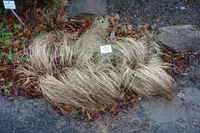
Divide clumps lightly
Divide mature plants every 3–5 years in early spring by slicing off small outer sections with a sharp spade and replanting immediately at the same depth to keep growth vigorous and prevent crowded, declining centers.

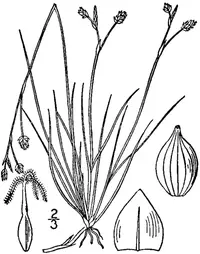
Bristleleaf sedge (Carex eburnea) is a small, fine-textured clumping sedge native to rocky woodlands and limestone outcrops in North America. It forms dense tufts of narrow, hair-like leaves that create a soft, arching mound.
The plant stays compact and tidy, which makes it useful for shady borders, naturalized woodland gardens, and areas with thin, dry, or rocky soil. Its toughness and slow, steady growth make it relatively simple to care for bristleleaf sedge in suitable conditions.
It generally prefers partial shade, consistent but not waterlogged moisture, and well-drained, often calcareous or sandy soil.

Care Difficulty
Easy Care

Light Preference
Partial Shade

Water Requirements
Moderate Water

Temperature Preference
Cold Hardy

Hardiness Zone
2–8

Soil Texture
Sandy, Loamy, Rocky

Soil pH
Acidic (5.5–6.5), Slightly acidic (6.5–7.0)

Soil Drainage
Moist but well-drained

Fertilization
Minimal (feed rarely)
Scan your plant to receive care tips personalized for your specific plant
Available on iOS and Android
This fine-textured sedge prefers cool, filtered light similar to open woodland conditions.
This species prefers consistently moist but not saturated soil, especially during active growth.
This hardy sedge is adapted to cool to mild climates with pronounced seasonal changes.
Humidity is rarely a limiting factor for Carex eburnea in most homes and gardens.
Carex eburnea prefers loose, well‑drained, organic‑rich soil that still retains moderate moisture.
This sedge adapts well to container growing when provided with stable moisture and firm anchoring.
Carex eburnea is a low-nutrient woodland sedge; bristleleaf sedge grown in lean soil needs only light feeding.
Carex eburnea benefits from light, periodic cleanup rather than heavy pruning.
This fine-textured sedge is usually grown in the ground, so focus on careful transplanting rather than frequent repotting.
This sedge is commonly propagated by division, with seed used mainly for larger restoration projects.
This woodland sedge is cold hardy in much of the US and generally needs minimal winter care in the ground.

Plant Health Check
Not sure what's wrong with your plant? Check your plant's health inside the app.
This species is strongly associated with calcareous habitats and is most often found on limestone cliffs, outcrops, and thin soils over bedrock rather than in typical wet sedge meadows.
Its extremely narrow, threadlike leaves and delicate tufts give it a distinctive, mosslike appearance that is unusual among North American sedges and helps distinguish it from coarser Carex species.
In much of its range it grows under open conifer or mixed forests, forming small clumps in dry, shaded microsites where many other sedges fail, which is useful knowledge for Carex eburnea care in woodland gardens.

The species epithet eburnea means ivory-like and refers to the pale, ivory-colored perigynia (the saclike structures around the fruits) that are a key diagnostic feature used by botanists to identify this sedge.
This species spreads slowly by short rhizomes and forms small, fine-textured clumps. It can lightly self-seed in suitable conditions but is not considered aggressive. Simple edging or occasional thinning usually keeps it neatly contained.
Keep your plants happy and healthy with plant identification, disease detection, and easy care guidance.