Edge containment
Install shallow plastic or metal edging 5–8 cm deep around planting areas to prevent rhizomes from spreading into lawns or beds where the sedge is not wanted.

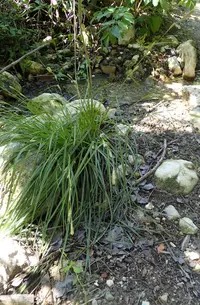
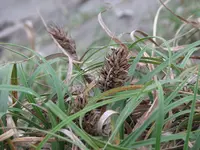
Hispid sedge, Carex hispida, is a small, clumping perennial grass-like plant belonging to the sedge family. It forms dense tufts with narrow, rough-textured leaves and fine flower spikes.
This species is typically found in damp meadows, stream banks, and woodland edges across parts of Europe and western Asia, often in cool, moist habitats. It is generally undemanding if its need for consistent moisture is met, which makes it moderate in difficulty for gardeners.
It tolerates partial shade and prefers humus-rich, moist soil, so learning how to care for Hispid Sedge focuses mainly on providing suitable moisture and avoiding very dry, exposed sites.

Care Difficulty
Moderate Care

Light Preference
Partial Shade

Water Requirements
Keep Soil Moist

Temperature Preference
Cold Hardy

Hardiness Zone
5–8

Soil Texture
Loamy, Silty, Organic-rich

Soil pH
Acidic (5.5–6.5), Slightly acidic (6.5–7.0)

Soil Drainage
Waterlogged tolerant

Fertilization
Minimal (feed rarely)
Scan your plant to receive care tips personalized for your specific plant
Available on iOS and Android
This cool-season sedge prefers bright conditions similar to open woodland edges or moist meadows.
This moisture-loving sedge prefers consistently damp but not stagnant soil.
This hardy sedge is adapted to cool, temperate climates with distinct seasons.
This sedge prefers moderately moist air but usually adapts to typical outdoor humidity in temperate regions.
Carex hispida grows best in consistently moist, air-filled soil that mimics a damp meadow or stream edge.
This species is suitable for containers when kept in a consistently moist, stable setup.
This sedge is modest in its nutrient needs but responds to light feeding on poor soils during active growth.
Pruning Carex hispida focuses on tidying old foliage and maintaining a neat clump.
Carex hispida is more often transplanted in the ground than repotted, but container plants may need attention every few years.
Carex hispida is most reliably propagated by division, with seed used mainly for larger restoration projects.
This sedge is generally cold hardy and needs only minimal winter care in most temperate climates.

Plant Health Check
Not sure what's wrong with your plant? Check your plant's health inside the app.
This sedge is naturally associated with maritime sand dunes and sandy coastal grasslands in parts of western and northern Europe, where it helps stabilize loose, shifting substrates with its fibrous root system.
Populations of this species often occur on calcareous, or lime-rich, sandy soils, which distinguishes it from several related Carex species that prefer more acidic substrates.
Although widespread at a broad European scale, this sedge often occurs in scattered, local colonies tied to very specific dune microhabitats, making it a useful indicator of relatively undisturbed coastal sand systems.
This species forms loose clumps and spreads slowly by short rhizomes and self-seeding. It usually stays where planted in garden settings. In moist, undisturbed ground it can gradually form patches but rarely becomes difficult to manage.
Keep your plants happy and healthy with plant identification, disease detection, and easy care guidance.